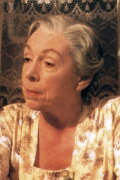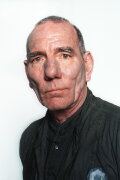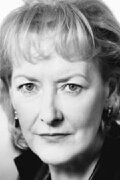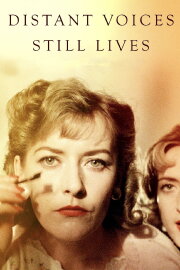
The second film in Terence Davies's autobiographical series ('Trilogy', 'The Long Day Closes') is an impressionistic view of a working-class family in 1940s and 1950s Liverpool, based on Davies's own family. The first part, 'Distant Voices', opens with grown siblings Eileen (Angela Walsh), Maisie (Lorraine Ashbourne) and Tony (Dean Williams), and their mother (Freda Dowie) arranged in mourning clothes before the photograph of their smiling father (Pete Postlethwaite). Soon af... (Full plot summary below)
Enjoy FREE movies and series with your Prime (USA) subscription or when you start a 30-day free trial!
| Movie Source | Available | Offers | Added | Views | Quality | Format | Rating | Link | Share |
|---|---|---|---|---|---|---|---|---|---|
 | UK only | 1 Month Free Trial | 25 Feb 2013 | 4298 | HD | Watch OnlineStream Instantly | 77% |  Report: Broken Link Report: Broken Link |   |
| USA only | 1 Month Free Trial | 03 Nov 2022 | 3389 | HD | Watch OnlineStream Instantly | 85% | Report: Broken Link | |
| IRELAND only | 1 Month Free Trial | 08 Sep 2023 | 2806 | HD | Watch OnlineStream Instantly | 90% | Report: Broken Link | |
 | UK only | 30 Day Free Trial | 20 Feb 2014 | 435 | HD | Watch OnlineStream Instantly | 94% | Report: Broken Link | |
![Its HD [Distant Voices, Still Lives]](/images/logos/icons/itshd.png) | WORLDWIDE | ? | 23 May 2014 | 3853 | HD | Watch OnlineStream Instantly | 93% | Report: Broken Link | |
 | UK only | 30 Day Free Trial | 12 Jun 2019 | 229 | HD | Watch OnlineStream Instantly | 50% | Report: Broken Link | |
 | UK only | Free Credit | 30 Apr 2015 | 140 | HD | Watch OnlineStream Instantly | 48% | Report: Broken Link | |
 | WORLDWIDE | ? | 27 Feb 2025 | 121 | HD | Watch OnlineStream Instantly | 38% | Report: Broken Link | |
 | WORLDWIDE | ? | 29 Apr 2019 | 25 | SD / TV | Watch OnlineStream Instantly | 19% | Report: Broken Link | |
 | WORLDWIDE | ? | 05 Jun 2018 | 228 | HD | Watch OnlineStream Instantly | 10% | Report: Broken Link | |
 | WORLDWIDE | ? | 16 Mar 2017 | 39 | SD / TV | Watch OnlineStream Instantly | 17% | Report: Broken Link | |
Links compiled using automated software. Availability of offers subject to change / might be region specific / out of date.
| Movie Source | Available | Offers | Added | Views | Quality | Format | Rating | Link | Share |
|---|---|---|---|---|---|---|---|---|---|
| UK only | 30 Day Free Trial | 17 Jun 2015 | 1831 | SD / DVD | DVD RentalRent by Post | 71% |  Report: Broken Link Report: Broken Link | |
 | UK only | N/A | 17 Jun 2015 | 16 | SD / DVD | DVD RentalRent by Post | 26% | Report: Broken Link | |
 | USA only | 1 Month Free Trial | 17 Jun 2015 | 255 | SD / DVD | DVD RentalRent by Mail | 9% | Report: Broken Link | |
| USA only | 1 Month Free Trial | 17 Jun 2015 | 9524 | SD / DVD | DVD RentalRent by Mail | 84% | Report: Broken Link | |
| Movie Source | Available | Offers | Added | Views | Quality | Format | Rating | Link | Share |
|---|---|---|---|---|---|---|---|---|---|
| UK only | 30 Day Free Trial | 13 Jul 2015 | 272 | HD / BR | Blu Ray RentalRent by Post | 80% | Report: Broken Link | |
| UK only | N/A | 13 Jul 2015 | 22 | HD / BR | Blu Ray RentalRent by Post | 43% | Report: Broken Link | |
| USA only | 1 Month Free Trial | 17 Jun 2015 | 222 | HD / BR | Blu Ray RentalRent by Mail | 10% | Report: Broken Link | |
| USA only | 1 Month Free Trial | 13 Jul 2015 | 8317 | HD / BR | Blu Ray RentalRent by Mail | 80% | Report: Broken Link | |
The second film in Terence Davies's autobiographical series ('Trilogy', 'The Long Day Closes') is an impressionistic view of a working-class family in 1940s and 1950s Liverpool, based on Davies's own family. The first part, 'Distant Voices', opens with grown siblings Eileen (Angela Walsh), Maisie (Lorraine Ashbourne) and Tony (Dean Williams), and their mother (Freda Dowie) arranged in mourning clothes before the photograph of their smiling father (Pete Postlethwaite). Soon after, the family poses in a similar tableau, but for a happier occasion - Eileen's wedding. While relatives sing at her reception, Eileen hysterically grieves for her dad, and recalls happy times of her youth. Tony and Maisie's memories, however, are more troubled. Davies intermingles and contrasts scenes like the family peacefully lighting candles in church with the brutal man beating his wife and terrorizing his young children. In 'Still Lives', set (and filmed) two years later, the siblings are settled in life, but not all happily. For Eileen, relief from her drab existence comes only when singing at the pub. With his skillfully composed frames and evocative use of music in place of dialogue, Davies creates a lovely, affecting photo album of a troubled family wrestling with the complexity of love.
Leave your thoughts about Distant Voices, Still Lives.
| Village VoiceDanny KingThis combination of intimacy and remove — the startling emotional jolt of seeing a family in mourning stare toward you in silence, an image of the felled patriarch hanging on the wall behind them — characterizes Davies’s enthralling thirty-year-old debut feature, an autobiographically informed but hardly event-reliant memory piece. |
| Daily Telegraph (UK)Sukhdev SandhuIt appears impossibly mannered, a cross between knock-off Dennis Potter and an episode of Bread. |
| The Globe and Mail (Toronto)Jay ScottDavies recalls all these sights and sounds -- so horrifying, so beautiful -- and, with his unflinching style, turns anecdote into artistry. The distant voices still live. |
| Slant MagazineFernando CroceDavies transcends the facile trap of misery-porn by tapping into the basic notion that could make musicals so enlivening—music as direct expression, music as emotion felt. One of the most profoundly spiritual films in recent decades. |
| The GuardianPeter BradshawIts austere beauty, artistry and wrenching sadness are undimmed after 30 years, and there is nothing distant or still about it. |
| The GuardianAndrew PulverFew British film-makers have dared to attempt such a thoroughly poetic treatment of their native land, and Terence Davies is the only one to have succeeded so spectacularly. |
| Christian Science MonitorDavid SterrittIt's a movie of astonishing power and bold originality, marked by poignant humor and a stream of transcendent song that tempers the frequent harshness of the story. |
| Time OutDave CalhounIt’s a heartbreaking work. Its cast are phenomenal; its songs flow through the film like blood; and Davies is unflinching in his hunt for truth and full of nothing but love and understanding for his characters. A masterpiece. |
| Slant MagazineFernando F. CroceNot the least among its achievements, Terence Davies's wondrous Distant Voices, Still Lives offers a crystallization of the appeal of the musical. |
| VarietyVariety StaffThis isn't a film based on nostalgia, though; its very special qualities stem from the beautiful simplicity of direction, writing and playing, and the accuracy of the incidents depicted. |