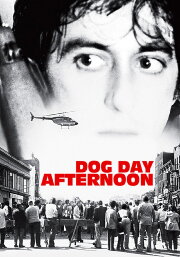
Based upon a real-life incident which occurred in August 1972 in which a Chase Manhattan Bank branch in Gravesend, Brooklyn, New York, was held siege by Sonny, a Vietnam veteran turned bank robber determined to steal enough money ($2500) for his "wife" (Leon, a man; the two, were, according to an onscreen TV news report, married in a church by a priest who was defrocked shortly after, although Leon says to the police that Sal is "married and has children") to undergo a sex ch... (Full plot summary below)
Enjoy FREE movies and series with your Prime (USA) subscription or when you start a 30-day free trial!
| Movie Source | Available | Offers | Added | Views | Quality | Format | Rating | Link | Share |
|---|---|---|---|---|---|---|---|---|---|
 | UK only | 1 Month Free Trial | 30 Mar 2023 | 3891 | HD | Watch OnlineStream Instantly | 83% |  Report: Broken Link Report: Broken Link |   |
| USA only | 1 Month Free Trial | 12 Jul 2023 | 4836 | HD | Watch OnlineStream Instantly | 85% | Report: Broken Link | |
| IRELAND only | 1 Month Free Trial | 31 Dec 2020 | 3004 | HD | Watch OnlineStream Instantly | 73% | Report: Broken Link | |
 | UK only | 30 Day Free Trial | 23 Sep 2019 | 964 | HD | Watch OnlineStream Instantly | 93% | Report: Broken Link | |
![Its HD [Dog Day Afternoon]](/images/logos/icons/itshd.png) | WORLDWIDE | ? | 06 Mar 2025 | 3050 | HD | Watch OnlineStream Instantly | 89% | Report: Broken Link | |
 | UK only | 30 Day Free Trial | 03 Feb 2025 | 795 | HD | Watch OnlineStream Instantly | 48% | Report: Broken Link | |
 | UK only | Free Credit | 23 Aug 2024 | 159 | HD | Watch OnlineStream Instantly | 49% | Report: Broken Link | |
 | WORLDWIDE | ? | 17 Apr 2017 | 36 | HD | Watch OnlineStream Instantly | 33% | Report: Broken Link | |
 | WORLDWIDE | ? | 02 Feb 2018 | 17 | SD / TV | Watch OnlineStream Instantly | 11% | Report: Broken Link | |
 | WORLDWIDE | ? | 20 Sep 2018 | 157 | HD | Watch OnlineStream Instantly | 16% | Report: Broken Link | |
 | WORLDWIDE | ? | 21 Mar 2016 | 21 | SD / TV | Watch OnlineStream Instantly | 11% | Report: Broken Link | |
Links compiled using automated software. Availability of offers subject to change / might be region specific / out of date.
| Movie Source | Available | Offers | Added | Views | Quality | Format | Rating | Link | Share |
|---|---|---|---|---|---|---|---|---|---|
| UK only | 30 Day Free Trial | 10 Jul 2024 | 1120 | SD / DVD | DVD RentalRent by Post | 66% |  Report: Broken Link Report: Broken Link | |
 | UK only | N/A | 10 Jul 2024 | 84 | SD / DVD | DVD RentalRent by Post | 57% | Report: Broken Link | |
 | USA only | 1 Month Free Trial | 10 Jul 2024 | 258 | SD / DVD | DVD RentalRent by Mail | 7% | Report: Broken Link | |
| USA only | 1 Month Free Trial | 10 Jul 2024 | 4610 | SD / DVD | DVD RentalRent by Mail | 79% | Report: Broken Link | |
| Movie Source | Available | Offers | Added | Views | Quality | Format | Rating | Link | Share |
|---|---|---|---|---|---|---|---|---|---|
| UK only | 30 Day Free Trial | 13 Aug 2013 | 219 | HD / BR | Blu Ray RentalRent by Post | 75% | Report: Broken Link | |
| UK only | N/A | 13 Aug 2013 | 78 | HD / BR | Blu Ray RentalRent by Post | 46% | Report: Broken Link | |
| USA only | 1 Month Free Trial | 10 Jul 2024 | 182 | HD / BR | Blu Ray RentalRent by Mail | 17% | Report: Broken Link | |
| USA only | 1 Month Free Trial | 13 Aug 2013 | 9172 | HD / BR | Blu Ray RentalRent by Mail | 91% | Report: Broken Link | |
Based upon a real-life incident which occurred in August 1972 in which a Chase Manhattan Bank branch in Gravesend, Brooklyn, New York, was held siege by Sonny, a Vietnam veteran turned bank robber determined to steal enough money ($2500) for his "wife" (Leon, a man; the two, were, according to an onscreen TV news report, married in a church by a priest who was defrocked shortly after, although Leon says to the police that Sal is "married and has children") to undergo a sex change operation. (The real life character upon whom Leon is based did, in fact, get the operation.) On a hot summer afternoon, Sonny and two cohort, Stevie and Sal, go to rob the (fictional) First Savings Bank of Brooklyn. Stevie soon gets nervous and flees. Although the bank manager and female tellers agree not to interfere with the robbery, Sonny finds there is not much to steal, as most of the cash has been picked up for the day. Sonny then gets an unexpected phone call from Captain Moretti of the NYPD, who tells him the place is surrounded by the city's entire police force. Having few options under the circumstances, Sonny nervously bargains with Moretti, demanding safe escort to the airport and a plane out of the country in return for the bank employees' safety.
Leave your thoughts about Dog Day Afternoon.
| DVDTalk.comGil Jawetz[Dog Day Afternoon is] so perfectly executed that it almost feels like the wall of art is being pulled back slightly, revealing the reality of life, in all its messy, contradictory, confusing wonder. |
| Filmcritic.comChristopher Nullcaptures perfectly the zeitgeist of the early 1970s, a time when optimism was scraping rock bottom and John Wojtowicz was as good a hero as we could come up with. |
| Cinema SightWesley LovellStrong performances and forward-thinking situations make this political thriller an exceptionally vibrant experience. |
| Salt Lake City WeeklyScott Renshaw[Dog Day Afternoon] speaks to a particular moment in an edgy early 1970s New York City -- a post-Stonewall city of people figuring out identities, and bubbling with anti-establishment anger and a nascent culture of exploitation media. |
| The TelegraphTim RobeyA masterly reconstruction of a Brooklyn bank siege on August 22, 1972, built around arguably Al Pacino's finest screen performance. |
| The A.V. ClubChuck BowenDog Day Afternoon is a frank social melodrama that’s also a celebration of quotidian bravery. The camera might linger on guns and barely restrained violence, but it also dwells upon the love and the support that’s extended in the weirdest and most unexpected of places. |
| Empire MagazineAdam SmithPacino simmers in this daring and brilliantly constructed treatise on the many facets of a crime. |
| San Francisco ChronicleMick LaSalleThe film's tone is extraordinarily flexible, holding within the same reality elements of the absurd, the ridiculous and the comic while sustaining a sense of tension and dread throughout. This is, of course, one of the classic Pacino roles - he's so appealing - but don't overlook the late John Cazale as his accomplice, who gives us a character who's stupid and scared, troubled and dangerous, and disturbingly inscrutable. |
| The New YorkerPauline KaelDog Day Afternoon is a melodrama, based on fact, about a disastrously illplanned Brooklyn bank robbery, and it's beautifully acted by performers who appear to have grown up on the city's sidewalks in the heat and hopelessness of an endless midsummer. |
| The NationRobert HatchI was entertained but somewhat less than satisfied, and I hope I can say that and still convey the idea that I think well of the film. |