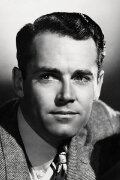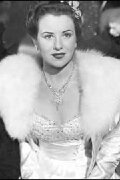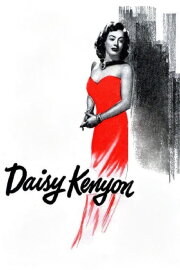
Daisy Kenyon (Joan Crawford) is a commercial artist living in New York City and having a 'back street' affair with a married lawyer, Dan O'Mara (Dana Andrews), whom she hopes to marry as soon as he divorces his nagging wife Lucille (Ruth Warrick). Meanwhile, she meets a returning world-war-two veteran, Peter Lapham (Henry Fonda), a nice and decent man, whom she marries. Dan gets his divorce and then tries to persuade Daisy to leave her loving husband.... (Full plot summary below)
Enjoy FREE movies and series with your Prime (USA) subscription or when you start a 30-day free trial!
| Movie Source | Available | Offers | Added | Views | Quality | Format | Rating | Link | Share |
|---|---|---|---|---|---|---|---|---|---|
 | UK only | 1 Month Free Trial | 28 Oct 2016 | 5456 | HD | Watch OnlineStream Instantly | 82% |  Report: Broken Link Report: Broken Link |   |
| USA only | 1 Month Free Trial | 20 Feb 2025 | 2803 | HD | Watch OnlineStream Instantly | 85% | Report: Broken Link | |
| IRELAND only | 1 Month Free Trial | 21 Aug 2016 | 4893 | HD | Watch OnlineStream Instantly | 67% | Report: Broken Link | |
 | UK only | 30 Day Free Trial | 14 Aug 2014 | 592 | HD | Watch OnlineStream Instantly | 91% | Report: Broken Link | |
![Its HD [Daisy Kenyon]](/images/logos/icons/itshd.png) | WORLDWIDE | ? | 21 May 2026 | 3573 | HD | Watch OnlineStream Instantly | 86% | Report: Broken Link | |
 | UK only | 30 Day Free Trial | 29 Jun 2024 | 737 | HD | Watch OnlineStream Instantly | 45% | Report: Broken Link | |
 | UK only | Free Credit | 18 Aug 2018 | 127 | HD | Watch OnlineStream Instantly | 43% | Report: Broken Link | |
 | WORLDWIDE | ? | 21 May 2022 | 119 | HD | Watch OnlineStream Instantly | 16% | Report: Broken Link | |
 | WORLDWIDE | ? | 30 Jun 2015 | 25 | SD / TV | Watch OnlineStream Instantly | 16% | Report: Broken Link | |
 | WORLDWIDE | ? | 12 Feb 2018 | 223 | HD | Watch OnlineStream Instantly | 10% | Report: Broken Link | |
 | WORLDWIDE | ? | 26 Jun 2017 | 16 | SD / TV | Watch OnlineStream Instantly | 17% | Report: Broken Link | |
Links compiled using automated software. Availability of offers subject to change / might be region specific / out of date.
| Movie Source | Available | Offers | Added | Views | Quality | Format | Rating | Link | Share |
|---|---|---|---|---|---|---|---|---|---|
| UK only | 30 Day Free Trial | 15 Aug 2013 | 3157 | SD / DVD | DVD RentalRent by Post | 63% |  Report: Broken Link Report: Broken Link | |
 | UK only | N/A | 15 Aug 2013 | 16 | SD / DVD | DVD RentalRent by Post | 25% | Report: Broken Link | |
 | USA only | 1 Month Free Trial | 15 Aug 2013 | 121 | SD / DVD | DVD RentalRent by Mail | 17% | Report: Broken Link | |
| USA only | 1 Month Free Trial | 15 Aug 2013 | 5791 | SD / DVD | DVD RentalRent by Mail | 78% | Report: Broken Link | |
| Movie Source | Available | Offers | Added | Views | Quality | Format | Rating | Link | Share |
|---|---|---|---|---|---|---|---|---|---|
| UK only | 30 Day Free Trial | 30 Mar 2018 | 185 | HD / BR | Blu Ray RentalRent by Post | 79% | Report: Broken Link | |
| UK only | N/A | 30 Mar 2018 | 70 | HD / BR | Blu Ray RentalRent by Post | 12% | Report: Broken Link | |
| USA only | 1 Month Free Trial | 15 Aug 2013 | 207 | HD / BR | Blu Ray RentalRent by Mail | 4% | Report: Broken Link | |
| USA only | 1 Month Free Trial | 30 Mar 2018 | 3437 | HD / BR | Blu Ray RentalRent by Mail | 88% | Report: Broken Link | |
Daisy Kenyon (Joan Crawford) is a commercial artist living in New York City and having a 'back street' affair with a married lawyer, Dan O'Mara (Dana Andrews), whom she hopes to marry as soon as he divorces his nagging wife Lucille (Ruth Warrick). Meanwhile, she meets a returning world-war-two veteran, Peter Lapham (Henry Fonda), a nice and decent man, whom she marries. Dan gets his divorce and then tries to persuade Daisy to leave her loving husband.
Leave your thoughts about Daisy Kenyon.
| EmanuelLevy.ComEmanuel LevyThough one of Preminger's weaker films, it's still interesting to watch as a sampler of the woman's picture and star vehicle for Joan Crwaford. |
| New YorkerRichard BrodyRarely have love and madness seemed so fruitfully allied. |
| Ozus' World Movie ReviewsDennis SchwartzThe women's pic is given a far better treatment than it deserved. |
| User ReviewVJ BNow that's a film, honeybunch. Fonda is out of place like Crawford was out of place in Our Dancing Daughters. That is to say, in a brilliant, gender ahead of one's time kind of way. |
| User ReviewDavid C95/100 A strange, fascinating melodrama as much about post-WWII life as it is about affairs and love triangles. The dualities continue beyond its purposes and number of suitors, however- it throws itself wholeheartedly into both heightened and realistic sensibilities, and actually pulls that off, believe it or not. Kenyon establishes the resulting tone early and with aplomb by introducing itself with a romantic flourish of a musical score, then revealed to be a song playing on a radio and promptly switched off. Kenyon, for the most part, maintains an ambiguity that constantly keeps one on their feet, so a bit of dissapointment results when the ending leaves things on a pretty wrapped-up note, especially coming right after a moment that feels like an ending suitable for the film's own tastes. Ah, well; this is one of those marvelous films that makes one wish for perfection. |
| User ReviewSoon-Ho SSlightly off-kilter, but nonetheless fun. Joan Crawford is out of control and Dana Andrews is hot. And the love story is sophisticated. Makes you like married guys who are having affairs. Which is a good thing. |
| User ReviewDaniel KMy God, there's another one. Another wonderful Joan Crawford movie that has been completely forgotten. I've lost count now of how many I have found. "Daisy Kenyon" from director Otto Preminger may have a bad title, but it's an interesting film. It's a serious drama looking at the complexities of the human heart. Crawford plays a woman in love with a married man (Dana Andrews). Whereas most 1940s films took a melodramatic approach to this subject matter, "Daisy" never becomes a weepie. It looks relatively deeply into its characters to examine their struggles. It wrestles in a very adult way with the complexities of imperfect marriages. Made just after World War II, the film includes Henry Fonda as a somewhat shell-shocked vet trying to reintegrate into domestic life, feeling just a bit off-kilter. Fonda's lonely, disoriented character provides wonderful added dimensions that compassionately consider the plight of a million young men trying to deal with inner demons while acting as normal as possible. Why has a movie with so much intelligence and heart been so forgotten? I suspect that that "Mommie Dearest" thing did irrevocable damage to Crawford's reputation. Americans can't see her anymore without thinking of that. It's too bad. She may have been a monster at home. But she had an extraordinary movie career and made a stunning array of films that were wonderful. |
| User ReviewGreg WThough one of Preminger's weaker films, it's still interesting to watch as a sampler of the woman's picture and star vehicle for Joan Crwaford. |
| User ReviewBlake PJoan Crawford continued her winning streak with "Daisy Kenyon," following the massive successes of two delicious women's pictures, "Mildred Pierce" and "Humoresque." It's not one of her most gloriously over-the-top performances, but "Daisy Kenyon" works well because it's a low-key romance film and is much more classy than most Hollywood melodramas. Otto Preminger has made many better films than this one, but it shows a more commercial side of him that's better than most. Daisy Kenyon (Crawford) is a New York based artist that is stuck in the middle of a stressful love-triangle: she's torn between Dan (Dana Andrews), a powerful attorney that is unhappily married with two children, and Peter (Henry Fonda), a WWII veteran that is dissatisfied with life after the war. Though most would follow their moral compass and go with Peter, Daisy cannot decide easily. Even when she eventually marries one of the men. Crawford was groundbreaking for her time because she was one of the few actresses who could still be sexy and independent after 40. But even more mesmerizing was the fact that she became a draw once again AT 40, after she was labeled "box-office poison" in the late '30s. Even today this is a remarkable achievement. But during that period, Crawford starred in some of the best women's pictures and film noirs of all time, this being one of them. Daisy normally would be played by an actress in her 20s, but Crawford makes it work. You can see why men like her: she's smart, pretty, and quick-witted. Crawford manages to keep her status as Queen of the Melodramas, even though she gives up her normally sudsy acting for a more subtle performance. Her chemistry with Andrews and Fonda is magnetic, and the love-triangle is interesting and believable. The film as a whole is very ahead of its time. Having a romance with two different men was already scandalous in the '40s, but that isn't what is so modern in its thinking. Andrews' character is cheating on his wife, so in response, she takes out her sexual frustration and misery on her children. At the time, cheating husbands' wives in movies were written mean or cloying, so then it would therefore make it okay for the leading lady to have a relationship with the man in question. But here, it's a realistic characterization. In the meantime, Andrews' character is a lawyer that is defending a Japanese man who has lost his property, without racism. That in itself is a triumph, considering the racism at the time. Is "Daisy Kenyon" a film noir? It has all the right aspects. It has slithery cinematography, the characters live within a gritty world that always looks down but not up, and of course, it's directed by Preminger, one of the finest noir directors. But "Daisy Kenyon" is much to A-picture-esque and three-dimensional to be called so. It's instead a great Crawford vehicle. |
| User ReviewWilliam WPreminger was an excellent match for Joan Crawford, who's work I also adore, because he was pretty good, though not great, at the melodrama. This is a fine love triangle, and you root for Henry Fonda, even though every warm-blooded woman would pick Dana Andrews over him in a heartbeat. I found this in my 10-DVD Henry Fonda Collection, and it's a great set well worth purchasing. I'm not a huge fan of his work, but he's definitely done some great films and amassed a fine body of work. Preminger and Crawford are always solid for me, and they certainly don't disappoint in collaborating in this early work of his. Eventually, I hope to see every film of each of these three cinematic giants. |