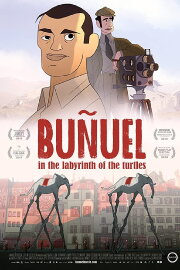
Paris, 1930. Salvador Dalí and Luis Buñuel are already the main figures of the Surrealist movement. Unexpectedly, Buñuel is left moneyless after the scandal surrounding his film The Golden Age. In this difficult situation, he cannot even tackle his next project, a documentary about one of the poorest Spanish regions, Las Hurdes. However, his good friend, sculptor Ramón Acín, buys a lottery ticket with the promise that, if he wins, he will pay for the film. Incredibly, lu... (Full plot summary below)
Enjoy FREE movies and series with your Prime (USA) subscription or when you start a 30-day free trial!
Paris, 1930. Salvador Dalí and Luis Buñuel are already the main figures of the Surrealist movement. Unexpectedly, Buñuel is left moneyless after the scandal surrounding his film The Golden Age. In this difficult situation, he cannot even tackle his next project, a documentary about one of the poorest Spanish regions, Las Hurdes. However, his good friend, sculptor Ramón Acín, buys a lottery ticket with the promise that, if he wins, he will pay for the film. Incredibly, luck is on their side. Reality, memories of his childhood, Salvador Dalí and dreams are mixed in his mind, endangering the film and his friendship with Ramón. From there will arise the Buñuel of the future. But what is left on the way? How much will that step cost?
Leave your thoughts about Buñuel in the Labyrinth of the Turtles.
| TheWrapCarlos AguilarIn animation, Simó finds the ideal canvas, one that allows him to recount the most gruesome instances of strenuous filmmaking in more palatable form while also ingeniously enlivening the surreal sequences with glorious hand-drawn work. |
| IndieWireDavid EhrlichFor all of its heady ideas, some of which it explores to greater effect than others, Buñuel in the Labyrinth of the Turtles is most striking for how it illustrates that animation isn’t a mere subcategory of cinema. That movies have always been a unique medium for how they see reality and unreality as two overlapping roads towards the same truth. |
| Paste MagazineAndrew CrumpSimó “gets” Buñuel’s drives, and his animation lends the story a layer of romanticism while emphasizing that talent isn’t a hall pass. Buñuel in the Labyrinth of the Turtles treats genius as a knottier idea. Las Hurdes: Tierra Sin Pan is a masterpiece, sure, but “masterpiece” takes on layers of new meaning once we see how the sausage is made. |
| RogerEbert.comBrian TallericoAs “Las Hurdes” blurred documentary and fiction, this film blurs what we traditionally expect from animation. As for why to tell this story, it’s all really there in an opening discussion about the impact of art and what is gained from dissecting it vs. just experiencing it. |
| The Hollywood ReporterJonathan HollandBunuel is above all a good story elegantly told. |
| VarietyPeter DebrugeThough undeniably charming, Buñuel can be a difficult character to like here, but that’s the point: The movie dares to imagine the exact moment when Buñuel the callow prankster became Buñuel, engaged anthropologist of the human condition, whose later Mexico City masterpiece “Los Olvidados” was clearly informed by what he witnessed in Las Hurdes. |
| The PlaylistSteven AllisonAt its heart, the film tells an incredibly touching – and altogether unexpected – human story. Entertaining and educational in equal parts, Simó’s animated film is one you don’t want to skip. |
| The New York TimesGlenn KennyThe animation is handsome, the graphic settings understated but intelligently detailed. |
| The Film StageJared MobarakIt’s an interesting glimpse at his process with Buñuel doing despicable things alongside beautiful ones. |
| Los Angeles TimesRobert AbeleAt its most absorbing, Buñuel in the Labyrinth of the Turtles makes it clear there are no easy answers, perhaps especially when the art itself isn’t easy. |