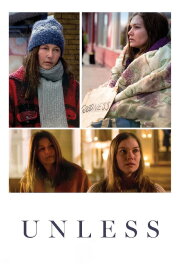
Reta Winters has many reasons to be happy. Then, suddenly, all the quiet satisfactions of her well-lived life disappear in a moment: her eldest daughter Norah inexplicably drops out of college and is found on a Toronto street corner, pan-handling and refusing to speak, with a cardboard sign reading GOODNESS around her neck.... (Full plot summary below)
Enjoy FREE movies and series with your Prime (USA) subscription or when you start a 30-day free trial!
| Movie Source | Available | Offers | Added | Views | Quality | Format | Rating | Link | Share |
|---|---|---|---|---|---|---|---|---|---|
 | UK only | 1 Month Free Trial | 31 Dec 2014 | 3560 | HD | Watch OnlineStream Instantly | 81% |  Report: Broken Link Report: Broken Link |   |
| USA only | 1 Month Free Trial | 09 Apr 2021 | 5113 | HD | Watch OnlineStream Instantly | 85% | Report: Broken Link | |
| IRELAND only | 1 Month Free Trial | 11 Jan 2014 | 198 | HD | Watch OnlineStream Instantly | 92% | Report: Broken Link | |
 | UK only | 30 Day Free Trial | 27 Jun 2018 | 967 | HD | Watch OnlineStream Instantly | 98% | Report: Broken Link | |
![Its HD [Unless]](/images/logos/icons/itshd.png) | WORLDWIDE | ? | 11 Sep 2022 | 3678 | HD | Watch OnlineStream Instantly | 95% | Report: Broken Link | |
 | UK only | 30 Day Free Trial | 08 Jul 2025 | 438 | HD | Watch OnlineStream Instantly | 65% | Report: Broken Link | |
 | UK only | Free Credit | 07 Mar 2014 | 132 | HD | Watch OnlineStream Instantly | 36% | Report: Broken Link | |
 | WORLDWIDE | ? | 11 May 2024 | 82 | HD | Watch OnlineStream Instantly | 34% | Report: Broken Link | |
 | WORLDWIDE | ? | 07 May 2014 | 10 | SD / TV | Watch OnlineStream Instantly | 15% | Report: Broken Link | |
 | WORLDWIDE | ? | 13 Feb 2024 | 265 | HD | Watch OnlineStream Instantly | 32% | Report: Broken Link | |
 | WORLDWIDE | ? | 06 Dec 2022 | 14 | SD / TV | Watch OnlineStream Instantly | 10% | Report: Broken Link | |
Links compiled using automated software. Availability of offers subject to change / might be region specific / out of date.
| Movie Source | Available | Offers | Added | Views | Quality | Format | Rating | Link | Share |
|---|---|---|---|---|---|---|---|---|---|
| UK only | 30 Day Free Trial | 10 Apr 2019 | 2828 | SD / DVD | DVD RentalRent by Post | 90% |  Report: Broken Link Report: Broken Link | |
 | UK only | N/A | 10 Apr 2019 | 80 | SD / DVD | DVD RentalRent by Post | 11% | Report: Broken Link | |
 | USA only | 1 Month Free Trial | 10 Apr 2019 | 182 | SD / DVD | DVD RentalRent by Mail | 6% | Report: Broken Link | |
| USA only | 1 Month Free Trial | 10 Apr 2019 | 16351 | SD / DVD | DVD RentalRent by Mail | 99% | Report: Broken Link | |
| Movie Source | Available | Offers | Added | Views | Quality | Format | Rating | Link | Share |
|---|---|---|---|---|---|---|---|---|---|
| UK only | 30 Day Free Trial | 03 Mar 2016 | 270 | HD / BR | Blu Ray RentalRent by Post | 64% | Report: Broken Link | |
| UK only | N/A | 03 Mar 2016 | 67 | HD / BR | Blu Ray RentalRent by Post | 49% | Report: Broken Link | |
| USA only | 1 Month Free Trial | 10 Apr 2019 | 537 | HD / BR | Blu Ray RentalRent by Mail | 18% | Report: Broken Link | |
| USA only | 1 Month Free Trial | 03 Mar 2016 | 9257 | HD / BR | Blu Ray RentalRent by Mail | 81% | Report: Broken Link | |
Sorry, we can't find any suggestions at the moment.
Reta Winters has many reasons to be happy. Then, suddenly, all the quiet satisfactions of her well-lived life disappear in a moment: her eldest daughter Norah inexplicably drops out of college and is found on a Toronto street corner, pan-handling and refusing to speak, with a cardboard sign reading GOODNESS around her neck.
Leave your thoughts about Unless.
| Irish IndependentPaul WhitingtonIt's a handsome film, soulful but efficient, and Keener and Hannah Gross deliver fine performances. |
| Sunday Times (UK)Katy HayesThe film is a beautiful piece of work with a searing truthfulness. Keener plays the parental helplessness with subtle intelligence. |
| Georgia StraightKen EisnerEverything then leads to a "gotcha" ending that feels exploitative rather than illuminating. |
| NOW TorontoSusan G. ColeKeener is great as usual, convincingly conveying confusion and grief, and the film is visually intense, its handheld cameras relying on close-ups. |
| RTÉ (Ireland)Paddy KehoeAlan Gilsenan's adaptation of Carol Shields' final novel Unless has the delicate touch and the humanity that characterise his documentaries. Yet somehow one is left wanting more. |
| Film Ireland MagazineSarah CullenAs it goes, the conclusion to Unless is too cut-and-dry to offer any lasting commentary regarding homeless issues. |
| Globe and MailMark MedleyWhat worked in Shields's quiet, contemplative novel about a family in crisis falls flat on screen. |
| National PostChris KnightThe best adaptations stand on their own. Unless, adapted by director Alan Gilsenan from Carol Shields' novel, doesn't stand so much as slowly slide to the ground. |
| Cinema ScopeAngelo MureddaFailing to articulate the feminist argument that sets the novel apart, if anything does, Gilsenan is instead doggedly loyal to Shields' worst impulses. |