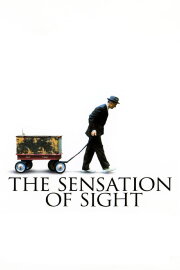
This off-beat drama about man's search for meaning amidst the ache of despair chronicles Finn, an introspective English teacher entering a mid-life crisis impelled by a recent tragedy, as he sets afoot selling encyclopedias to the town locals.... (Full plot summary below)
Enjoy FREE movies and series with your Prime (USA) subscription or when you start a 30-day free trial!
| Movie Source | Available | Offers | Added | Views | Quality | Format | Rating | Link | Share |
|---|---|---|---|---|---|---|---|---|---|
 | UK only | 1 Month Free Trial | 07 Dec 2023 | 4945 | HD | Watch OnlineStream Instantly | 83% |  Report: Broken Link Report: Broken Link |   |
| USA only | 1 Month Free Trial | 13 Sep 2018 | 1498 | HD | Watch OnlineStream Instantly | 79% | Report: Broken Link | |
| IRELAND only | 1 Month Free Trial | 09 Nov 2017 | 475 | HD | Watch OnlineStream Instantly | 61% | Report: Broken Link | |
 | UK only | 30 Day Free Trial | 03 Jun 2018 | 482 | HD | Watch OnlineStream Instantly | 78% | Report: Broken Link | |
![Its HD [The Sensation of Sight]](/images/logos/icons/itshd.png) | WORLDWIDE | ? | 07 Mar 2014 | 3583 | HD | Watch OnlineStream Instantly | 95% | Report: Broken Link | |
 | UK only | 30 Day Free Trial | 16 Jul 2020 | 737 | HD | Watch OnlineStream Instantly | 41% | Report: Broken Link | |
 | UK only | Free Credit | 21 Dec 2015 | 163 | HD | Watch OnlineStream Instantly | 38% | Report: Broken Link | |
 | WORLDWIDE | ? | 27 Sep 2022 | 178 | HD | Watch OnlineStream Instantly | 39% | Report: Broken Link | |
 | WORLDWIDE | ? | 17 Mar 2020 | 10 | SD / TV | Watch OnlineStream Instantly | 19% | Report: Broken Link | |
 | WORLDWIDE | ? | 20 Jul 2019 | 124 | HD | Watch OnlineStream Instantly | 13% | Report: Broken Link | |
 | WORLDWIDE | ? | 23 Jan 2025 | 24 | SD / TV | Watch OnlineStream Instantly | 5% | Report: Broken Link | |
Links compiled using automated software. Availability of offers subject to change / might be region specific / out of date.
| Movie Source | Available | Offers | Added | Views | Quality | Format | Rating | Link | Share |
|---|---|---|---|---|---|---|---|---|---|
| UK only | 30 Day Free Trial | 17 Nov 2019 | 3229 | SD / DVD | DVD RentalRent by Post | 79% |  Report: Broken Link Report: Broken Link | |
 | UK only | N/A | 17 Nov 2019 | 19 | SD / DVD | DVD RentalRent by Post | 12% | Report: Broken Link | |
 | USA only | 1 Month Free Trial | 17 Nov 2019 | 155 | SD / DVD | DVD RentalRent by Mail | 11% | Report: Broken Link | |
| USA only | 1 Month Free Trial | 17 Nov 2019 | 16228 | SD / DVD | DVD RentalRent by Mail | 83% | Report: Broken Link | |
| Movie Source | Available | Offers | Added | Views | Quality | Format | Rating | Link | Share |
|---|---|---|---|---|---|---|---|---|---|
| UK only | 30 Day Free Trial | 14 Jul 2025 | 198 | HD / BR | Blu Ray RentalRent by Post | 72% | Report: Broken Link | |
| UK only | N/A | 14 Jul 2025 | 56 | HD / BR | Blu Ray RentalRent by Post | 31% | Report: Broken Link | |
| USA only | 1 Month Free Trial | 17 Nov 2019 | 223 | HD / BR | Blu Ray RentalRent by Mail | 14% | Report: Broken Link | |
| USA only | 1 Month Free Trial | 14 Jul 2025 | 5971 | HD / BR | Blu Ray RentalRent by Mail | 92% | Report: Broken Link | |
This off-beat drama about man's search for meaning amidst the ache of despair chronicles Finn, an introspective English teacher entering a mid-life crisis impelled by a recent tragedy, as he sets afoot selling encyclopedias to the town locals.
Leave your thoughts about The Sensation of Sight.
| NewsBlazePrairie MillerDavid Strathairn's Finn is the nearly broken, perplexed, downcast, and also oddly humorous Chaplinesque figure, whose own transformative experienced 'sensation of sight' imparts a tentative metaphorical healing vision of a restored life. |
| Flick FilosopherMaryAnn Johanson[I]t's a terrible pity that this ensemble drama about people hurting and coping in small-town America is so relentlessly dull... |
| New York TimesNathan LeeThe really oppressive thing here is the filmmaking itself. |
| User ReviewJason MI first saw this at the Stony Brook Film Festival and loved it! Notice the similairities to its a wounderful life. Enough said. |
| User ReviewGregory WThe opening shot thrilled me?for a rather personal reason. I recognized the scene as the one that?s been fascinating my brother and me since we were kids. It?s an old stone barn we used to drive past on the way to visit our grandfather. After admiring the barn, I realized that nothing was really happening. Nothing much, anyway. I waited while the movie?s dawn turned to daylight around the barn and the morning mists burned off. I began to wish I hadn?t bought it. But it gets better. We meet a man named Finn (David Strathairn) and watch as he tells his wife he?s going away. Finn seems to be tortured and have a driving need to search for some sort of answer. His message is ambiguous and almost confusing--as it should be. In another scene, two guys come together to wash cars, and they?re discussing the fact that one is working and the other is not. But there are three guys there, and the third one isn?t working, either. And he?s wearing a suit. I wondered why. And I wondered why, in the age of the internet, Finn decides to go-to-door selling encyclopedias. Eventually I learned that the third guy is a ghost. It?s not that this is a ?paranormal? movie. It?s just that Finn?s burden of unresolved tragedy is as real to him as any physical presence could be. The people around him can?t see the ghost?most of them, anyway. What they can see, can touch, are the encyclopedias. Finn is not glamorous. He?s not fabulous. He?s not even successful or collected or sexy, at least in the classic sense. He?s real. In fact, he?s so real, so imperfect, so nakedly human that I relate to him. I identify. I feel. ?The Sensation of Sight? contains no pat answers. It depicts life, complete with anxieties and uncertainties. But it leaves us with a sense that we need not be its victims: we can be its participants. |
| User ReviewJames KThe movie starts out a little disconjointed and is almost difficult at first to figure out what is going on. By the end you realize it's deliberatly done. The effect of loss you feel for everyone involved and how no one person's pain is greater than anothers is captured well. The acting was great and the mood of the film was wonderfully sad.:up: |
| User ReviewGerard GWe're heading down to New York to see The Sensation of Sight again, (it opens at the Pioneer Theater tomorrow.) This will be the 6th time we've seen this movie, so I guess we like it! At 2 hours 14 minutes it's fairly long, and the pace is slow, so it's not for everyone. Impatient people should probably avoid it. But for the rest of us it's a rewarding journey through desperation and grief towards a sense of purpose. |
| User ReviewDamian C?Sensation of Sight? tells the story of Finn, a man who is overwhelmed by a tragic event, the exact nature of which remains a mystery until the end of the film. This personal storm destroys his inner compass and leaves him drifting without a sense of purpose. He resolves to leave career, home, and family and set out on the quest for ?Why?? Aaron J. Wiederspahn the American writer/director of this film weaves a tapestry of seemingly disparate lives, which are all connected just under the surface. The film is divided into 4 sections, called verses, plus a prologue and epilogue. Upon this loom the story is slowly woven until the final pattern is revealed in a powerful climactic moment. Throughout the film the director employs long takes and sustained moments, while he manages to eschew cliché and go against the audience?s expectations. For any film, this would be its crowning achievement, but ?Sensation? holds us close and thus gradually pulls the audience into its world and characters. Each section begins with a black and white memory. These are not so much flashbacks as psychic imprints of moments too painful or joyous to forget. Without allowing us a crutch of information with which to protect ourselves and form judgments, Wiederspahn refrains from manipulating us, but rather treats us as equals?which may actually disturb the audience member who likes to ?get it? immediately. But this isn?t the same old film stencil. We are allowed into a man?s private thoughts, into his world, and through him, into the lives of others. However, structure alone could not sustain us through a prolonged period when we have more questions than answers. The characters generate the interest and therefore the patience to wait?the patience to be open and curious. Released from the understanding of the full context of the characters? behavior we are free to admire the humor and strangeness of everyday moments. David Strathairn [Academy Award nominee for Best Actor for ?Good Night and Good Luck?] develops a physicality for his character, Finn, that expresses thoughts that remain unspoken as effectively as it sustains the spoken dialogue. He is sure footed but burdened; meticulous and methodical but lost in his own logic. The acting becomes invisible, as Strathairn morphs into Finn. For Strathairn [Finn is] ?a bit of a fool?not a silly person, but a fool in the tradition of the great fools who are out there slipping on banana peels ? and laughing about it?or like Beckett?s great image of a man face down in the mud laughing.? ?A Prologue to ?Why? begins with a blurry black and white memory, a sad dispute between a husband and wife. The audience doesn?t know why there is sadness and confusion, but we are allowed through an uninterrupted take, to witness the despair of these people without knowing why they are in distress. Finn says ? would you prefer me feigning some locked grasp on the Seed of Wisdom?? ?Who ever understands the complexities of ?why??? asks his wife Deanna played by Ann Cusack. At moments the dialogue moves into poetry, where the context weighs both the specific and the universal. Throughout the movie Finn pulls a wooden box ferried on a child?s wagon. The box contains the only worldly possessions he has chosen to take with him on his quest. Among these is a set of encyclopedias that he sells one by one to each of the supporting characters in turn. Ironically, the encyclopedias are of no use to Finn because they do not hold the answers to his questions. In this sense they are a meaningless burden. However, they do serve the purpose of giving him a reason to get up in the morning and an activity to carry him through the day. They are also a link to the past, an anchor, an inheritance, a promise? We meet each of the characters in beautifully composed single takes absorbing their lives through the spaces they inhabit, and all the while gaining an intuitive sense of these people, of a connection, or commonality that is present and accessible but never obvious. We meet Dylan, Daniel Gillies , (Spiderman II, and Bride and Prejudice) surrounded by American floral patterns in a house where the objects have accumulated over time; The Drifter, Ian Somerhalder, (Lost, the Vampire Diaries) and Tripp, Joseph Mazzello, sitting in front of a fireplace listening to a record; Tucker, Scott Wilson (In Cold Blood, Dead Man Walking, and The Last Samurai.?) saying goodnight to his daughter, Daisy, Elisabeth Waterston; Alice, Jane Adams,(Eternal Sunshine of the Spotless Mind, Little Children ,HBO series Hung) playing with her daughter, Ruthie, Cassidy Hinkle. Through these full figured portraits we form a first impression of these characters and their individual joys and struggles. Dylan (Daniel Gillies) sees Finn at the local dinner and invites himself to sit down. His manner is bitter, confused, even blatantly cynical and condescending. ?Are you still having trouble figuring things out?? He asks Finn. Dylan speaks of everything Finn is trying to avoid?his teaching job, his wife, and painful memories. This interaction deftly exposes their failure to communicate or understand one another in spite of a common history in the same hometown. Even the minor characters in the film are played by talented actors who contribute greatly to the tone of the film. Dylan asks a Police Officer played by Lisa Bostnar ?you wanna box? ? Leaning in slightly, she replies with a cold deftness ?you don?t want none of this son?. As outright annoying to his fellow man as Dylan can sometimes be, his haphazard lack of tact provides a pivotal comedic counterpoint to the film. Simultaneously his tragedy, his estrangement from his wife and child, is at the root of the film?s central dialogue and exploration. A young boy coasts through the landscape on his bicycle. He?s alone and out of sync with the world ? a world that isolates the lonely even more. Although the film focuses on themes of loss and isolation, it also explores a diverse array of human interaction: Mother and daughter, husband and wife, father and daughter; and centrally, the relationship of a father towards his son. It?s a story that manages to deal with tragedy as well as find sweet redemption for it?s main character. The ending doesn?t pretend to universally cure the loneliness of all the characters. Instead the satisfaction comes from a plot that has been intelligently tied together and characters that continue to live on in our minds far after the screen goes black. |
| User ReviewTor MExcellent film! (You don't think I'm biased, do you? I'm also the Director of Marketing & Media for Either/Or Films, so don't give me grief for doing my job!) And if you STILL haven't seen it...what are you waiting for?! SEE IT TONIGHT! Thanks~ :) |
| User ReviewGopal Aamazing film, cinemtography is very good, good acting overall touching film that builds from side plots and fuses into a very well thought out finish, i highly recommend it. |