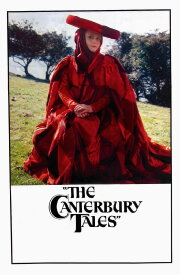
Pasolini's artistic, sometimes violent, always vividly cinematic retelling of some of Chaucer's most erotic tales.... (Full plot summary below)
Enjoy FREE movies and series with your Prime (USA) subscription or when you start a 30-day free trial!
| Movie Source | Available | Offers | Added | Views | Quality | Format | Rating | Link | Share |
|---|---|---|---|---|---|---|---|---|---|
 | UK only | 1 Month Free Trial | 19 Nov 2025 | 3208 | HD | Watch OnlineStream Instantly | 68% |  Report: Broken Link Report: Broken Link |   |
| USA only | 1 Month Free Trial | 01 Jun 2021 | 5377 | HD | Watch OnlineStream Instantly | 73% | Report: Broken Link | |
| IRELAND only | 1 Month Free Trial | 23 Sep 2014 | 344 | HD | Watch OnlineStream Instantly | 90% | Report: Broken Link | |
 | UK only | 30 Day Free Trial | 04 Feb 2025 | 871 | HD | Watch OnlineStream Instantly | 79% | Report: Broken Link | |
![Its HD [The Canterbury Tales]](/images/logos/icons/itshd.png) | WORLDWIDE | ? | 02 Jan 2018 | 3562 | HD | Watch OnlineStream Instantly | 96% | Report: Broken Link | |
 | UK only | 30 Day Free Trial | 28 Nov 2025 | 701 | HD | Watch OnlineStream Instantly | 36% | Report: Broken Link | |
 | UK only | Free Credit | 06 Jan 2025 | 170 | HD | Watch OnlineStream Instantly | 36% | Report: Broken Link | |
 | WORLDWIDE | ? | 26 Jul 2019 | 114 | HD | Watch OnlineStream Instantly | 24% | Report: Broken Link | |
 | WORLDWIDE | ? | 24 Aug 2013 | 21 | SD / TV | Watch OnlineStream Instantly | 26% | Report: Broken Link | |
 | WORLDWIDE | ? | 06 Apr 2015 | 129 | HD | Watch OnlineStream Instantly | 27% | Report: Broken Link | |
 | WORLDWIDE | ? | 08 Jul 2017 | 23 | SD / TV | Watch OnlineStream Instantly | 10% | Report: Broken Link | |
Links compiled using automated software. Availability of offers subject to change / might be region specific / out of date.
| Movie Source | Available | Offers | Added | Views | Quality | Format | Rating | Link | Share |
|---|---|---|---|---|---|---|---|---|---|
| UK only | 30 Day Free Trial | 28 Mar 2015 | 1107 | SD / DVD | DVD RentalRent by Post | 75% |  Report: Broken Link Report: Broken Link | |
 | UK only | N/A | 28 Mar 2015 | 24 | SD / DVD | DVD RentalRent by Post | 54% | Report: Broken Link | |
 | USA only | 1 Month Free Trial | 28 Mar 2015 | 66 | SD / DVD | DVD RentalRent by Mail | 12% | Report: Broken Link | |
| USA only | 1 Month Free Trial | 28 Mar 2015 | 7030 | SD / DVD | DVD RentalRent by Mail | 78% | Report: Broken Link | |
| Movie Source | Available | Offers | Added | Views | Quality | Format | Rating | Link | Share |
|---|---|---|---|---|---|---|---|---|---|
| UK only | 30 Day Free Trial | 23 Dec 2017 | 289 | HD / BR | Blu Ray RentalRent by Post | 82% | Report: Broken Link | |
| UK only | N/A | 23 Dec 2017 | 82 | HD / BR | Blu Ray RentalRent by Post | 32% | Report: Broken Link | |
| USA only | 1 Month Free Trial | 28 Mar 2015 | 214 | HD / BR | Blu Ray RentalRent by Mail | 18% | Report: Broken Link | |
| USA only | 1 Month Free Trial | 23 Dec 2017 | 10450 | HD / BR | Blu Ray RentalRent by Mail | 87% | Report: Broken Link | |
Pasolini's artistic, sometimes violent, always vividly cinematic retelling of some of Chaucer's most erotic tales.
Leave your thoughts about The Canterbury Tales.
| Chicago ReaderDave KehrIf Pasolini had something more than grubby fantasy on his mind -- and presumably he did -- it isn't immediately apparent. |
| Not Coming to a Theater Near YouLeo GoldsmithIn contrast to the Italy of Pasolini's Decameron, the England of The Canterbury Tales is much more harsh in its treatment of vice of all kinds. |
| Q Network Film DeskJames Kendrickthe brash, arguably campy manner in which Pasolini transcribes Chaucer's medieval bawdiness to the screen, coupled with the film's various technical faults (particularly the lousy dubbed dialogue), tends to make the film a chore to watch. |
| User ReviewEvan SYou'll laugh, you'll cry, you'll cream in your jeans. Perfecto. |
| User ReviewValentin NAs ridiculous as this movie might look at times, this was a film that talks heavily on the youth, by slanting a piece of literature to modern times and yet retaining its medieval settings, we see a beautiful and dangerous work on the troubles of youth in their time. |
| User ReviewQuiche EGreat series of shameless and colorful novels on sex, morals and a certain idea of innocence and youth in Middle Age's England. Truly enjoyable Pasolini classic, malicious most of the time, hilarious or incredibly crude at its moments. |
| User ReviewZoi KPier Paolo Pasolini breathes barnyard caricatures and cartoonish charm into Geoffrey Chaucer's classic Canterbury Tales, the second feature in the director's 'Trilogy of Life'. Pasolini's maxims may not be as clear-cut as they were in his adaptation of The Decameron, but his sophomore effort is certainly no less fun, and no less audacious. Highlights include lascivious students using "lights-out" to their advantage, Ninetto Davoli doing a bit of Charlie Chaplin, and a bizarro depiction of hell, which sees Friars farted full-speed out of Satan's backside. Fans of the poet-filmmaker hybrid will be in their element. |
| User ReviewAlex BSlapstick humor, pranks, and fart jokes: comic relief in a society in which everybody is trying to screw everybody else, in the living hell of bourgeois society. |
| User ReviewHuw G"Ah, but between a jest and a joke, many a truth can be told". These are the words spoken by a man who butts heads, literally, with storied author G. Chaucer (played by Pasolini himself) in the opening scene of this raunchy but boldly observant middle piece to the director's so-called "Trilogy of Life". The words speak loudly for the vignettes that follow, all of which are a little less funny than those found in the preceding film, THE DECAMERON, but a little more telling. Like THE DECAMERON, this film's stories are linked both by strands of animalistic sex and humiliation, themes Pasolini would explore more seriously and to a more depraved extent in his final film, the infamous SALO. But here they work nearly as effectively, if more delicately. Chaucer's tales flow together with themes of trickery, unfaithfulness and violence, and while Pasolini keeps the time and setting the same in his film, he brings a relevance to his view of the way sexuality drives impulse. The segments vary in both humor and strength; one vignette serves as an almost throwaway homage to Chaplin's Tramp and his misadventures, referencing and even stealing directly from his various early works, while the film's last tale is a shocking portrait of Hell, where Pasolini stages his most obscene rendering of debauchery in his career thus far. These wild shifts in tone make this a choppier experience than THE DECAMERON, which is a perverted masterpiece, but THE CANTERBURY TALES has enough brazen audacity and freewheeling human satire to place it among Pasolini's most interesting works. |
| User ReviewLuke AChaucer would be turning in his grave ! very bawdy and satirical take on his work. |