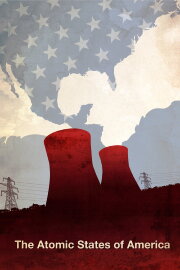
In 2010, the United States announced the first new nuclear power plant construction in over 32 years. The 'Nuclear Renaissance' was born, and America's long-stalled expansion of nuclear energy was infused with new life. On March 11, 2011, a 9.0 magnitude earthquake hit Japan and caused chaos at the Fukushima Power Plant. That accident sent ripples all the way to the US and suddenly the fierce debate over the safety and viability of nuclear power was back in the public conscio... (Full plot summary below)
Enjoy FREE movies and series with your Prime (USA) subscription or when you start a 30-day free trial!
| Movie Source | Available | Offers | Added | Views | Quality | Format | Rating | Link | Share |
|---|---|---|---|---|---|---|---|---|---|
 | UK only | 1 Month Free Trial | 13 Oct 2023 | 4849 | HD | Watch OnlineStream Instantly | 62% |  Report: Broken Link Report: Broken Link |   |
| USA only | 1 Month Free Trial | 28 Jan 2014 | 3842 | HD | Watch OnlineStream Instantly | 86% | Report: Broken Link | |
| IRELAND only | 1 Month Free Trial | 25 Jan 2014 | 3474 | HD | Watch OnlineStream Instantly | 89% | Report: Broken Link | |
 | UK only | 30 Day Free Trial | 30 Jun 2018 | 483 | HD | Watch OnlineStream Instantly | 87% | Report: Broken Link | |
![Its HD [The Atomic States of America]](/images/logos/icons/itshd.png) | WORLDWIDE | ? | 18 Aug 2017 | 3247 | HD | Watch OnlineStream Instantly | 85% | Report: Broken Link | |
 | UK only | 30 Day Free Trial | 25 Jun 2019 | 584 | HD | Watch OnlineStream Instantly | 58% | Report: Broken Link | |
 | UK only | Free Credit | 13 Jan 2026 | 144 | HD | Watch OnlineStream Instantly | 38% | Report: Broken Link | |
 | WORLDWIDE | ? | 29 Jul 2020 | 151 | HD | Watch OnlineStream Instantly | 28% | Report: Broken Link | |
 | WORLDWIDE | ? | 15 Oct 2023 | 14 | SD / TV | Watch OnlineStream Instantly | 22% | Report: Broken Link | |
 | WORLDWIDE | ? | 02 Sep 2024 | 137 | HD | Watch OnlineStream Instantly | 30% | Report: Broken Link | |
 | WORLDWIDE | ? | 25 Oct 2013 | 21 | SD / TV | Watch OnlineStream Instantly | 10% | Report: Broken Link | |
Links compiled using automated software. Availability of offers subject to change / might be region specific / out of date.
| Movie Source | Available | Offers | Added | Views | Quality | Format | Rating | Link | Share |
|---|---|---|---|---|---|---|---|---|---|
| UK only | 30 Day Free Trial | 12 May 2013 | 3152 | SD / DVD | DVD RentalRent by Post | 85% |  Report: Broken Link Report: Broken Link | |
 | UK only | N/A | 12 May 2013 | 17 | SD / DVD | DVD RentalRent by Post | 17% | Report: Broken Link | |
 | USA only | 1 Month Free Trial | 12 May 2013 | 202 | SD / DVD | DVD RentalRent by Mail | 10% | Report: Broken Link | |
| USA only | 1 Month Free Trial | 12 May 2013 | 20619 | SD / DVD | DVD RentalRent by Mail | 99% | Report: Broken Link | |
| Movie Source | Available | Offers | Added | Views | Quality | Format | Rating | Link | Share |
|---|---|---|---|---|---|---|---|---|---|
| UK only | 30 Day Free Trial | 14 Feb 2021 | 161 | HD / BR | Blu Ray RentalRent by Post | 78% | Report: Broken Link | |
| UK only | N/A | 14 Feb 2021 | 79 | HD / BR | Blu Ray RentalRent by Post | 16% | Report: Broken Link | |
| USA only | 1 Month Free Trial | 12 May 2013 | 441 | HD / BR | Blu Ray RentalRent by Mail | 15% | Report: Broken Link | |
| USA only | 1 Month Free Trial | 14 Feb 2021 | 5322 | HD / BR | Blu Ray RentalRent by Mail | 84% | Report: Broken Link | |
In 2010, the United States announced the first new nuclear power plant construction in over 32 years. The 'Nuclear Renaissance' was born, and America's long-stalled expansion of nuclear energy was infused with new life. On March 11, 2011, a 9.0 magnitude earthquake hit Japan and caused chaos at the Fukushima Power Plant. That accident sent ripples all the way to the US and suddenly the fierce debate over the safety and viability of nuclear power was back in the public consciousness. Our documentary takes the viewer on a journey to reactor communities around the country. This film exposes the truths and myths of nuclear power, and poses the question of whether or not man can responsibly split the atom.
Leave your thoughts about The Atomic States of America.
| User ReviewJanet MThis documentary is illuminating regarding to some areas regarding nuclear production that need better levels of safety. It also shows very well how government agencies sometimes don't do their jobs well, regarding nuclear safety. So, in this aspect, the documentary is a valuable contribution. I also am concerned about the sites where nuclear plants have been built and are found near fault lines. This is the reason why I don't favor the nuclear option in Puerto Rico, since we are in a seismic area. Yet, the documentary loses me when it states very deceptive pseudo-scientific statements such as: no degree of radiation is acceptable. Really?! Then we are toast, given that cosmic rays, the sun, the Earth itself and the oceans, all of them have levels of radiation that bombard us each day. If every form of radiation were bad for us, we wouldn't be here! As a matter of fact, not only many forms of radiation destroyed lives, but they have *saved* lives as well. The documentary criticizes the belief that Fukushima will be livable again. Actually yes! The chromium that came out of the fallout has a very short half-life (27.7 days), and it will diminish significantly as time goes by. Finally, the documentary also relies too heavily on anecdotal evidence, ignoring the scientific reports regarding the areas where there are allegations of high incident rates of cancer close to nuclear reactors. In fact, in many of the cases, there is no link at all to low-level radiation exposure. All of the tritium and radioactive material being leaked from reactors is so amazingly small, that (paraphrasing Gwyneth Cravens) you can get more radiation from eating a banana with one radioactive isotope, than if you drank all of the water that came out of a reactor in one day. Again, I think that those who don't like the nuclear option (including many respectable scientists) can make a much better contribution this very important debate. I watched this in my hope of learning something new that might change my mind about nuclear. This documentary (as most documentaries I've seen) is not a reliable source to do that. Not only relies on anecdotes, but it is essentially argument from emotion. It is more a piece of propaganda with very little science to support it. |
| User ReviewMartin GSomewhat one-sided. Little real information. |
| User ReviewJose OAs a physicist and engineer trained in radiological safety at LANL, I'm in an interesting position to judge the content of this movie. The movie is visually pleasing and thrilling. Unfortunately the information presented is not mainstream in the nuclear science community, and does not hold ground to health-physics-based analysis. If you are someone who wants the right answers, rather than the popular answers, check out Pandoras Promise afterwards. |