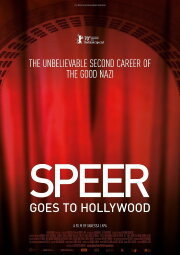
Albert Speer is an enigma. The highest-ranking Nazi in Nuremberg to be spared the death sentence, Speer was one of Hitler's closest confidants and his chief architect, tasked with rebuilding Berlin as the capital of a global empire. Appointed Minister of Armaments and War production in 1942, Speer was responsible for 12 million slave laborers. And yet, even now, he has the reputation of being "the good Nazi" - a myth he carefully constructed himself. The film meets its protag... (Full plot summary below)
Enjoy FREE movies and series with your Prime (USA) subscription or when you start a 30-day free trial!
Sorry, we can't find any suggestions at the moment.
Albert Speer is an enigma. The highest-ranking Nazi in Nuremberg to be spared the death sentence, Speer was one of Hitler's closest confidants and his chief architect, tasked with rebuilding Berlin as the capital of a global empire. Appointed Minister of Armaments and War production in 1942, Speer was responsible for 12 million slave laborers. And yet, even now, he has the reputation of being "the good Nazi" - a myth he carefully constructed himself. The film meets its protagonist in 1971, while Speer was working on a screenplay for Paramount Pictures, based on his memoir "Inside the Third Reich". Based on forty hours of unpublished audio cassettes, recorded by screenwriter Andrew Birkin, it features Speer's callous attempt to whitewash his past with a feature film. The audio narrative is supplemented by rare archival footage, from before and during World War II, during the Nuremberg Trials and later, during Speer's retirement as a semi-reclusive country gentleman. At times juxtaposed and at times interwoven, those three timelines form the narrative of the film that provides ironic and chilling tension. Speer Goes to Hollywood is the film that Speer never made. Thanks to the cassettes, he is the narrator of his own life story, but in a way that he never imagined. The rare archival materials selected to illustrate his account offer us a chance to look beyond his words to ponder whether this eloquent but ultimately self-serving narcissist was recording history or recording his story?
Leave your thoughts about Speer Goes to Hollywood.
| Los Angeles TimesGary GoldsteinThe movie is nothing if not unnervingly timely. |
| Film ThreatRay LoboSpeer Goes to Hollywood is essential viewing for those who want a deeper understanding of the horrors Nazis committed and the still lingering aftermath. |
| Screen DailySarah Ward[Speer’s] damning answers to Birkin’s questions might have threatened to become repetitive if they didn’t paint a horrifying yet bleakly fascinating picture of a man doing something that remains thoroughly relevant today: spinning fake news. |
| The Film StageJordan RaupWhile Speer Goes to Hollywood effectively shows the delusions of Speer’s mythologization, one wishes it didn’t skirt around more complicated questions of cordiality in the filmmaking process when dealing with such monstrous history. |
| RogerEbert.comGlenn KennyThis is a fascinating and pertinent tale, but one major aspect of its telling gives me serious pause. |
| The New York TimesBeatrice Loayza“Speer” is an intriguing document, highlighting the ease with which the most reprehensible figures are able to whitewash their legacies. But once you settle into its wavelength, the documentary begins to feel simplistic, like a one-track excuse to roll out rare film clips and testimony. |
| VarietyJessica KiangA rather pedestrian presentation of a potentially fascinating story, Vanessa Lapa’s Speer Goes to Hollywood expands on a little-known footnote to the Hydra-headed history of the post-war fates of top Nazi lieutenants. |