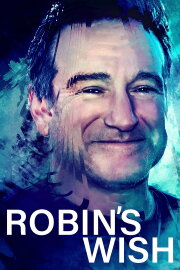
In August 2014, the world was shocked to find out that Robin Williams had died by suicide. For someone who brought so much humor to the world, it was a tragic, traumatic end. But no one knew how much more there was to the story. Left to speculate on Robin's motives, the media circus spun out further and further, leaving the public in the dark about a complicated and obscured truth: Robin - bright, funny, quick witted - had lost a battle against an unknown enemy: the nearly im... (Full plot summary below)
Enjoy FREE movies and series with your Prime (USA) subscription or when you start a 30-day free trial!
In August 2014, the world was shocked to find out that Robin Williams had died by suicide. For someone who brought so much humor to the world, it was a tragic, traumatic end. But no one knew how much more there was to the story. Left to speculate on Robin's motives, the media circus spun out further and further, leaving the public in the dark about a complicated and obscured truth: Robin - bright, funny, quick witted - had lost a battle against an unknown enemy: the nearly impossible to diagnose brain disease Lewy body dementia. Knowing the truth can make all the difference. LBD is a disease that, while all too common, is unknown to most, and without a diagnosis causes heightened fear, paranoia and confusion. In the end, Robin may have lost his final battle with dementia, but he succeeded at his lifelong goal - To make people less afraid. This is Robin's wish.
Leave your thoughts about Robin's Wish.
| Wall Street JournalJoe MorgensternThe film also offers a portrait in unfathomable courage. It’s a horror story shackled to a hero’s journey in which a man with a surpassingly fertile mind feels himself — his deepest, essential self — coming inexorably, inexplicably undone. |
| Film ThreatJosiah TealLike any great Robin Williams film, Robin’s Wish has moments of joy, nostalgia, heartbreak, and, most of all, hope. |
| VarietyOwen GleibermanA documentary that’s honest and scary, wrenching and moving. |
| Movie NationRoger MooreZeroing in on Robin’s disease, his decline and what she and a few others close to him observed, with plenty of medical explanations, make this brief film feel complete, in its own way. What they’ve made is a solid, medically sound and emotional final chapter in a life that touched many, one that deserves to be remembered for how he really lived and what truly caused his death. |
| The Film StageJake Kring-SchreifelsThe primary goal and achievement of Robin’s Wish is spotlighting the confounding nature of Williams’ disorder and the deeper need for mental health awareness. |
| San Francisco ChronicleDavid LewisRobin’s Wish, of course, can’t lessen the tragedy of Williams’ death, but it helps us better reconcile the suicide of such a joyous, irrepressible soul. |
| The Hollywood ReporterFrank ScheckRobin's Wish proves both emotionally harrowing and cathartic. |
| The New York TimesBen KenigsbergAs potentially valuable as Robin’s Wish is for illuminating Williams’s death — initial reports noted his past struggles with addiction and depression — it is more affecting and appealing as a tribute. Stories of Williams as a matchless improviser, an unpretentious neighbor and a man who had a gift for consoling others suggest the world lost not just an uproarious presence but a kind one. |
| The Observer (UK)Wendy IdeIt’s certainly informative and affecting, but the limited use of early archive footage and the emphasis on Williams’s decline and suffering make for bleak viewing. |
| The GuardianCath ClarkeRobin’s Wish is not a wide-ranging documentary about Williams’s life. It only briefly sketches in his career, from early ambitions of serious acting at the Juilliard drama school in New York to standup stardom (“he drained every scintilla of laughter out of the crowd”) and Hollywood. |