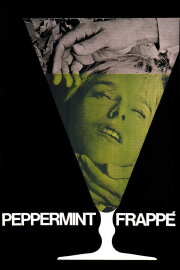
Julian, a middle-aged single doctor, meets his childhood friend Pablo again. The latter is back from Africa and has just married a beautiful young blonde, Elena. Julian falls in love with her and tries to seduce her, but she mockingly pushes him away from her. He then finds that Ana, his nurse, bears a troubling resemblance to Elena. He decides to gradually transform Ana into Elena...... (Full plot summary below)
Enjoy FREE movies and series with your Prime (USA) subscription or when you start a 30-day free trial!
| Movie Source | Available | Offers | Added | Views | Quality | Format | Rating | Link | Share |
|---|---|---|---|---|---|---|---|---|---|
 | UK only | 1 Month Free Trial | 17 Sep 2013 | 5752 | HD | Watch OnlineStream Instantly | 80% |  Report: Broken Link Report: Broken Link |   |
| USA only | 1 Month Free Trial | 07 Aug 2015 | 4003 | HD | Watch OnlineStream Instantly | 80% | Report: Broken Link | |
| IRELAND only | 1 Month Free Trial | 07 Nov 2014 | 2454 | HD | Watch OnlineStream Instantly | 92% | Report: Broken Link | |
 | UK only | 30 Day Free Trial | 13 Oct 2020 | 336 | HD | Watch OnlineStream Instantly | 97% | Report: Broken Link | |
![Its HD [Peppermint Frappé]](/images/logos/icons/itshd.png) | WORLDWIDE | ? | 20 Jan 2013 | 3035 | HD | Watch OnlineStream Instantly | 92% | Report: Broken Link | |
 | UK only | 30 Day Free Trial | 14 Apr 2023 | 120 | HD | Watch OnlineStream Instantly | 42% | Report: Broken Link | |
 | UK only | Free Credit | 04 Jan 2014 | 163 | HD | Watch OnlineStream Instantly | 32% | Report: Broken Link | |
 | WORLDWIDE | ? | 22 Mar 2022 | 35 | HD | Watch OnlineStream Instantly | 36% | Report: Broken Link | |
 | WORLDWIDE | ? | 19 Sep 2016 | 26 | SD / TV | Watch OnlineStream Instantly | 11% | Report: Broken Link | |
 | WORLDWIDE | ? | 02 Aug 2020 | 280 | HD | Watch OnlineStream Instantly | 20% | Report: Broken Link | |
 | WORLDWIDE | ? | 11 Sep 2018 | 38 | SD / TV | Watch OnlineStream Instantly | 7% | Report: Broken Link | |
Links compiled using automated software. Availability of offers subject to change / might be region specific / out of date.
| Movie Source | Available | Offers | Added | Views | Quality | Format | Rating | Link | Share |
|---|---|---|---|---|---|---|---|---|---|
| UK only | 30 Day Free Trial | 24 Oct 2017 | 450 | SD / DVD | DVD RentalRent by Post | 78% |  Report: Broken Link Report: Broken Link | |
 | UK only | N/A | 24 Oct 2017 | 112 | SD / DVD | DVD RentalRent by Post | 54% | Report: Broken Link | |
 | USA only | 1 Month Free Trial | 24 Oct 2017 | 220 | SD / DVD | DVD RentalRent by Mail | 18% | Report: Broken Link | |
| USA only | 1 Month Free Trial | 24 Oct 2017 | 12876 | SD / DVD | DVD RentalRent by Mail | 83% | Report: Broken Link | |
| Movie Source | Available | Offers | Added | Views | Quality | Format | Rating | Link | Share |
|---|---|---|---|---|---|---|---|---|---|
| UK only | 30 Day Free Trial | 31 Jan 2023 | 197 | HD / BR | Blu Ray RentalRent by Post | 71% | Report: Broken Link | |
| UK only | N/A | 31 Jan 2023 | 108 | HD / BR | Blu Ray RentalRent by Post | 16% | Report: Broken Link | |
| USA only | 1 Month Free Trial | 24 Oct 2017 | 452 | HD / BR | Blu Ray RentalRent by Mail | 8% | Report: Broken Link | |
| USA only | 1 Month Free Trial | 31 Jan 2023 | 4521 | HD / BR | Blu Ray RentalRent by Mail | 85% | Report: Broken Link | |
Sorry, we can't find any suggestions at the moment.
Julian, a middle-aged single doctor, meets his childhood friend Pablo again. The latter is back from Africa and has just married a beautiful young blonde, Elena. Julian falls in love with her and tries to seduce her, but she mockingly pushes him away from her. He then finds that Ana, his nurse, bears a troubling resemblance to Elena. He decides to gradually transform Ana into Elena...
Leave your thoughts about Peppermint Frappé.
| Ozus' World Movie ReviewsDennis SchwartzA lesser Vertigo-like tale about a repressed middle-aged doctor, who is erotically obsessed over a girl he once saw at a demonstration during his youth. |
| User ReviewChemi GInteresante revision de Vertigo por parte de Saura, con Jose Luis Lopez Vasquez extraordinario en un raro papel dramatico y una doble Geraldine Chaplin a comienzos de sus grandes colaboraciones con Saura, con una pegajosa melodia de Los Canarios como banda sonora |
| User ReviewTio BThis is one of the fascinating early films of Carlos Saura. Geraldine Chaplin outdoes herself. THE GARDEN OF DELIGHTS is even better, but it ain't on Flixster yet. |
| User ReviewXG L[b]2 ou 3 choses que je sais d'elle:[/b] although this is definitely the weakest effort by the director (that I've seen), and while I can spot some flaws, this film kept me insanely enagged, and that's enough for me. It keeps the usual disorganized, lyrircal structure of Godard's most poetic works - this one's divided in different "sections". The "je" in the title is the director himself, who narrates the movie, the "elle" can be identified as both Marina Vlady, the lead actress, or Paris, the cité which has a strong presence in the movie. We follow both in a sometimes insightful, sometimes not so interesting look at the society: philosophical monologues, spontaneous conversations, Godard wondering about things, and so. Not a film but the impatient, but it offers a good view of Godard's perspective on the world. [b]Peppermint Frappé: [/b]this movie did win the Berlin Festival back when it was released, and all I can say is that it truly deserved the prize. This movie is dedicated to Luis Buñuel, and that is not surprising, considering the content: Julián, a religious and aging radiologist becomes obsessed with the young wife of a rich friend of his. His desire will soon reach worrying heights, to the point of transforming his naive nurse, who eventually becomes his lover, as an image of that woman; he'll also plan the perfect crime. The great José Luís López Vázquez shines in the role of the tormented lead, Geraldine Chaplin does an excellent job as well, portraying both the wife and the nurse. The film keeps a constant feeling of uncomfortableness, overall it's rather haunting, as Saura's debut movie, [i]La Caza[/i]. Here his style is even more defined, and his use of the cinematography is remarkable, as well as the direction of some of the scenes (such as the very final one, perfectly constructed). The film's perhaps a bit too ambitious and even dull at times, but it's really worth seeing. [b]Kairo:[/b] I'm no horror movie fan, but I decided to give this a try since Kurosawa's [i]Doppelganger [/i]was one fun film and the premise seemed interesting: spirits which decide to show themselves through internet. The whole movie was very moody, the ambiance was very well constructed (some scenes are specially effective, specially when the red tape rooms are entered). The concept is too farfetched, though, and the movie seems to get out of hands during the third act, concluding in a rather unsatisfying finale. Still, I appreciate the tense atmosphere which the director manages to create: the film is finely constructed, but I didn't find it to be anything specially memorable. There wasn't enough Koji Yakusho, though. [b]The Incredibles[/b]: the movie can be all syntethized as "a lot of fun". The animation here left me in complete awe, it is just flawless. The character designs, I think, were a bit extreme, but certainly adecuate for the type of movie; I didn't find any of the characters to be specially memorable, but they're certainly likeable. This movie, compared to other Pixar efforts, lacks humour (there are many hilarious moments, anyhow), but it is compensated by the awesome deals of fantasy action. I really enjoyed Bird's direction, his use of the camera is pretty interesting (sometimes it is used as if it were a real movie, cool stuff). The story, however, wasn't all that great. It was very basic, predictable, and at times clichéd, despite the variety of characters. I'm sure this would benefit from a rewatch, though. [b]A Night at the Opera: [/b]Marx brothers at their best? Well, kind of. This film contains excellent marxist scenes, and the humour is very, very good, but I just felt like it got too exageratted on the third act - not that there's anything wrong with that. The first half of the film is argueabily the best, despite these dull musical numbers between the romantic couple (Chico and Harpo playing the piano is classic, though). But yeah, it's a must for comedy fans. |
| User ReviewMatthew S"Peppermint Frappe" ends with a dedication to Luis Bunuel, but the master's influence becomes obvious much earlier. The lecherous plot -- callous siren teases older fetishist -- comes straight from Bunuel's pet themes. The nod to "Vertigo" is also hard to miss. Julian (Jose Luis Lopez Vazquez) is a balding, middle-aged radiologist. Far from likable, he smokes too much and steadily glistens with an anxious sweat. He has a shy but beautiful assistant named Ana (Geraldine Chaplin, in her first of nine films with director Carlos Saura). Julian is reunited with his old friend Pablo (Alfredo Mayo), and is immediately consumed with Pablo's alluring wife Elena (Chaplin again, this time in a blonde wig). He has an image stuck in his mind of an exuberant, unidentified girl he saw beating a drum at a past regional celebration -- Elena is either that very girl, or just someone who resembles her (flashbacks supply Chaplin with a possible third role). But Julian doesn't care much about the truth. He's hooked either way. From there, his fixation only deepens. He courts Ana as a poor substitute, and obsessively goads her to adopt Elena's glamorous makeup, dress and hair. He even puts a drum in her hands. But it's only a matter of time before he turns back to Elena -- despite her marriage to Pablo. Elena senses his attraction and cruelly toys with him. Tension builds, and a happy resolution seems unlikely. "Peppermint Frappe" deviates little from Bunuel's playbook. The only strong difference is its prominent use of contemporary rock music. Bunuel typically rejected the comforts of musical scoring, but Saura has no such reservations. What's more, the film's central song, "The Incredible Miss Perryman," is marvelously catchy. |
| User ReviewJordan WThis is a hilariously misogynistic film and pays tribute to Bunuel's fetishism (and Hitchcock's Vertigo as well). Absolutely excellent. |
| User ReviewEric F"Peppermint Frappé" is Spanish director Carlos Saura's homage to Luis Bunuel. The film, currently unavailable on DVD in the United States, was recently shown on IFC preceded by the Janus films logo. A Criterion Collection copy of the movie will hopefully be soon to follow, as this is a criminally unseen film worthy of attention. The film revolves around Julian (Jose Luis Lopez Vazquez), a middle-aged conservative physician living in the country in Spain. At his home, where he runs a radiology clinic, he is assisted by a shy nurse, Ana (Geraldine Chaplin). One day, he visits Pablo (Alfredo Mayo), a childhood friend, who has recently married the beautiful Elena (also Geraldine Chaplin). Julian is instantly taken by Elena, not only for her beauty, but because he is convinced that he saw her playing a drum at a Good Friday ceremony years ago and has loved her ever since. Julian desperately pursues Elena to no avail. Finally, he is driven mad enough to poison the drinks of both Elena and Pablo. Ana, whom he had overlooked as a spitting image of Elena, transforms herself into Julian's ideal lover after their murders, making the final act feel like a Bunuel take on "Vertigo". One of the final images, of Ana beating the drum from Julian's fantasy with her Elena make-over, is incredibly haunting if a bit cheesy. Although on the surface the film is simply about sexual obsession and jealousy, the setting of Franco-era Spain is crucial to it's analysis. Julian's character is representative of the time. He is fascinated by Elena, her free-spirit so foreign to his unexposed self. It frustrates him. Julian's repression, or, as we can perceive it, the nationalist regime's, is what finally leads him to such extraordinary violence. While Julian initially seems like a romantic, we begin to learn that he only fetishizes what is contemporarily perceived as glamorous. While Julian skims through magazines, Saura makes an effort to only focus on details - eyes, lips, legs. When Elena isn't around, Julian snoops through the beauty accessories in her purse, and even requests that Ana tries on some eyelashes. This illuminates why Saura casted Geraldine Chaplin in a dual role, and explains the fact that Julian never notices their striking similarities until Ana's makeover. "Peppermint Frappe" is a bit of a minor masterpiece - it doesn't all quite work, but it's nevertheless extraordinarily involving. Hopefully it won't be long before a much bigger audience becomes exposed to a film so rich with detail and complexity. |
| User ReviewX. TMade as a tribute to Luis Bunuel, this owes as much to Vertigo in its portrayal of romantic obsession and fetish as to Bunuel's surrealism. Saura's editing and framing is kind of bland but there's some pretty cool devices like using Chaplin (who displays great range) to play three roles and the attention to details that highlight the fetishist quality of the film. The ending was creepy as hell. |
| User ReviewGreg WLots of downtime in this "mod" salute to Bunuel. |