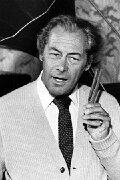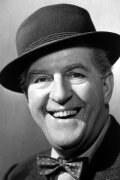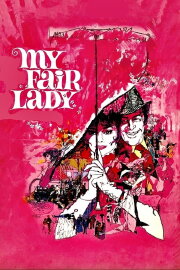
Pompous phonetics Professor Henry Higgins (Sir Rex Harrison) is so sure of his abilities that he takes it upon himself to transform a Cockney working-class girl into someone who can pass for a cultured member of high society. His subject turns out to be the lovely Eliza Doolittle (Audrey Hepburn), who agrees to speech lessons to improve her job prospects. Higgins and Eliza clash, then form an unlikely bond, one that is threatened by aristocratic suitor Freddy Eynsford-Hill (J... (Full plot summary below)
Enjoy FREE movies and series with your Prime (USA) subscription or when you start a 30-day free trial!
| Movie Source | Available | Offers | Added | Views | Quality | Format | Rating | Link | Share |
|---|---|---|---|---|---|---|---|---|---|
 | UK only | 1 Month Free Trial | 11 Apr 2018 | 5623 | HD | Watch OnlineStream Instantly | 61% |  Report: Broken Link Report: Broken Link |   |
| USA only | 1 Month Free Trial | 22 Aug 2021 | 3618 | HD | Watch OnlineStream Instantly | 97% | Report: Broken Link | |
| IRELAND only | 1 Month Free Trial | 15 Jun 2017 | 942 | HD | Watch OnlineStream Instantly | 95% | Report: Broken Link | |
 | UK only | 30 Day Free Trial | 01 Apr 2023 | 461 | HD | Watch OnlineStream Instantly | 94% | Report: Broken Link | |
![Its HD [My Fair Lady]](/images/logos/icons/itshd.png) | WORLDWIDE | ? | 28 Nov 2025 | 3278 | HD | Watch OnlineStream Instantly | 95% | Report: Broken Link | |
 | UK only | 30 Day Free Trial | 04 Nov 2016 | 212 | HD | Watch OnlineStream Instantly | 44% | Report: Broken Link | |
 | UK only | Free Credit | 04 Apr 2015 | 120 | HD | Watch OnlineStream Instantly | 51% | Report: Broken Link | |
 | WORLDWIDE | ? | 01 Sep 2021 | 50 | HD | Watch OnlineStream Instantly | 12% | Report: Broken Link | |
 | WORLDWIDE | ? | 30 Jul 2018 | 23 | SD / TV | Watch OnlineStream Instantly | 26% | Report: Broken Link | |
 | WORLDWIDE | ? | 29 Nov 2021 | 155 | HD | Watch OnlineStream Instantly | 7% | Report: Broken Link | |
 | WORLDWIDE | ? | 11 Mar 2018 | 22 | SD / TV | Watch OnlineStream Instantly | 7% | Report: Broken Link | |
Links compiled using automated software. Availability of offers subject to change / might be region specific / out of date.
| Movie Source | Available | Offers | Added | Views | Quality | Format | Rating | Link | Share |
|---|---|---|---|---|---|---|---|---|---|
| UK only | 30 Day Free Trial | 24 Jun 2024 | 2775 | SD / DVD | DVD RentalRent by Post | 88% |  Report: Broken Link Report: Broken Link | |
 | UK only | N/A | 24 Jun 2024 | 88 | SD / DVD | DVD RentalRent by Post | 62% | Report: Broken Link | |
 | USA only | 1 Month Free Trial | 24 Jun 2024 | 256 | SD / DVD | DVD RentalRent by Mail | 5% | Report: Broken Link | |
| USA only | 1 Month Free Trial | 24 Jun 2024 | 21029 | SD / DVD | DVD RentalRent by Mail | 80% | Report: Broken Link | |
| Movie Source | Available | Offers | Added | Views | Quality | Format | Rating | Link | Share |
|---|---|---|---|---|---|---|---|---|---|
| UK only | 30 Day Free Trial | 10 Jun 2026 | 165 | HD / BR | Blu Ray RentalRent by Post | 77% | Report: Broken Link | |
| UK only | N/A | 10 Jun 2026 | 20 | HD / BR | Blu Ray RentalRent by Post | 30% | Report: Broken Link | |
| USA only | 1 Month Free Trial | 24 Jun 2024 | 307 | HD / BR | Blu Ray RentalRent by Mail | 3% | Report: Broken Link | |
| USA only | 1 Month Free Trial | 10 Jun 2026 | 4604 | HD / BR | Blu Ray RentalRent by Mail | 93% | Report: Broken Link | |
Pompous phonetics Professor Henry Higgins (Sir Rex Harrison) is so sure of his abilities that he takes it upon himself to transform a Cockney working-class girl into someone who can pass for a cultured member of high society. His subject turns out to be the lovely Eliza Doolittle (Audrey Hepburn), who agrees to speech lessons to improve her job prospects. Higgins and Eliza clash, then form an unlikely bond, one that is threatened by aristocratic suitor Freddy Eynsford-Hill (Jeremy Brett).
Leave your thoughts about My Fair Lady.
| Classic Film and TelevisionMichael E. GrostWell made musical, with more personal Cukor style and themes than is sometimes realized. |
| Film.comJohn HartlLiterate, funny, brilliantly cast, with a score of Lerner and Loewe songs that does not include one dud. |
| Chicago Sun-TimesRoger EbertWhat distinguishes My Fair Lady above all is that it actually says something. It says it in a film of pointed words, unforgettable music and glorious images, but it says it. |
| Mountain Xpress (Asheville, NC)Ken HankeAgreeable, but stagey version of the play. |
| Filmcritic.comDavid BezansonPerhaps the best recommendation about this movie is that it transcends its conventions and almost anyone, not just fans of musicals or romances or classics, may find it entertaining. |
| Tim Dirks' The Greatest FilmsTim DirksMy Fair Lady (1964) was experienced director George Cukor's film musical adaptation of George Bernard Shaw's 1912 play Pygmalion that had played successfully |
| Chicago ReaderDave KehrCukor doesn't try to hide the stage origins of his material; rather, he celebrates the falseness of his sets, placing his characters in a perfectly designed artificial world. Every frame of this 1964 film bespeaks Cukor's grace and commitment—it's an adaptation that becomes completely personal through the force of its mise-en-scene. |
| The New RepublicStanley KauffmannDespite all reservations expressed, I must make clear that his fantastically successful show has been converted into a generally entertaining film. |
| Radio TimesTony SlomanWith elegance and taste, George Cukor rightly preserves the theatricality of the enterprise and provides a joyful experience to savour again and again. |
| New York Daily NewsKate CameronThe picture sparkles with witty dialogue, titilates with droll situations, stirs the heart with its story of the metamorphosis of a London guttersnipe in a fine lady, and its romantic intervals glow with warmth and charm that fascinates the audience. |