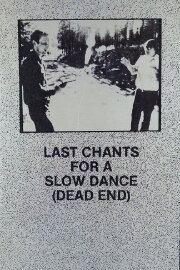
This film follows an antisocial working-class husband and father struggling to find work in the Midwest. As the film progresses, it seems that he has little actual interest in supporting his family and spends his time hanging out in bars and having one-night stands.... (Full plot summary below)
Enjoy FREE movies and series with your Prime (USA) subscription or when you start a 30-day free trial!
| Movie Source | Available | Offers | Added | Views | Quality | Format | Rating | Link | Share |
|---|---|---|---|---|---|---|---|---|---|
 | UK only | 1 Month Free Trial | 01 Nov 2022 | 3735 | HD | Watch OnlineStream Instantly | 74% |  Report: Broken Link Report: Broken Link |   |
| USA only | 1 Month Free Trial | 01 Apr 2020 | 4620 | HD | Watch OnlineStream Instantly | 73% | Report: Broken Link | |
| IRELAND only | 1 Month Free Trial | 27 Mar 2015 | 4280 | HD | Watch OnlineStream Instantly | 63% | Report: Broken Link | |
 | UK only | 30 Day Free Trial | 25 Jun 2024 | 904 | HD | Watch OnlineStream Instantly | 96% | Report: Broken Link | |
![Its HD [Last Chants for a Slow Dance]](/images/logos/icons/itshd.png) | WORLDWIDE | ? | 21 Jul 2021 | 2996 | HD | Watch OnlineStream Instantly | 92% | Report: Broken Link | |
 | UK only | 30 Day Free Trial | 03 Jun 2024 | 147 | HD | Watch OnlineStream Instantly | 52% | Report: Broken Link | |
 | UK only | Free Credit | 23 Jan 2023 | 162 | HD | Watch OnlineStream Instantly | 32% | Report: Broken Link | |
 | WORLDWIDE | ? | 19 Apr 2017 | 45 | HD | Watch OnlineStream Instantly | 33% | Report: Broken Link | |
 | WORLDWIDE | ? | 29 Apr 2026 | 12 | SD / TV | Watch OnlineStream Instantly | 21% | Report: Broken Link | |
 | WORLDWIDE | ? | 26 Feb 2018 | 109 | HD | Watch OnlineStream Instantly | 15% | Report: Broken Link | |
 | WORLDWIDE | ? | 28 May 2019 | 41 | SD / TV | Watch OnlineStream Instantly | 14% | Report: Broken Link | |
Links compiled using automated software. Availability of offers subject to change / might be region specific / out of date.
| Movie Source | Available | Offers | Added | Views | Quality | Format | Rating | Link | Share |
|---|---|---|---|---|---|---|---|---|---|
| UK only | 30 Day Free Trial | 20 Mar 2024 | 2860 | SD / DVD | DVD RentalRent by Post | 67% |  Report: Broken Link Report: Broken Link | |
 | UK only | N/A | 20 Mar 2024 | 25 | SD / DVD | DVD RentalRent by Post | 38% | Report: Broken Link | |
 | USA only | 1 Month Free Trial | 20 Mar 2024 | 74 | SD / DVD | DVD RentalRent by Mail | 9% | Report: Broken Link | |
| USA only | 1 Month Free Trial | 20 Mar 2024 | 9217 | SD / DVD | DVD RentalRent by Mail | 77% | Report: Broken Link | |
| Movie Source | Available | Offers | Added | Views | Quality | Format | Rating | Link | Share |
|---|---|---|---|---|---|---|---|---|---|
| UK only | 30 Day Free Trial | 21 May 2024 | 180 | HD / BR | Blu Ray RentalRent by Post | 82% | Report: Broken Link | |
| UK only | N/A | 21 May 2024 | 46 | HD / BR | Blu Ray RentalRent by Post | 49% | Report: Broken Link | |
| USA only | 1 Month Free Trial | 20 Mar 2024 | 724 | HD / BR | Blu Ray RentalRent by Mail | 7% | Report: Broken Link | |
| USA only | 1 Month Free Trial | 21 May 2024 | 10250 | HD / BR | Blu Ray RentalRent by Mail | 92% | Report: Broken Link | |
This film follows an antisocial working-class husband and father struggling to find work in the Midwest. As the film progresses, it seems that he has little actual interest in supporting his family and spends his time hanging out in bars and having one-night stands.
Leave your thoughts about Last Chants for a Slow Dance.
| Ozus' World Movie ReviewsDennis SchwartzHas a gut-pinching rawness to its modern-day portrait of a wannabe cowboy drifter, turned killer, who is spiritless, opinionated, ignorant and dangerously macho. |
| User ReviewScott RLast Chants for a Slow Dance (Jon Jost, 1977) The cinematic language found in Jon Jost's obscure, yet legendary, first film, Last Chants for a Slow Dance, is obvious in retrospect; it's a combination of the avant-garde cinema verite approach of John Cassavettes' early films (especially Faces) and the love affair with the long, slow shot that we have come to associate with the Eastern Europeans (Tarkovsky and Bela Tarr in particular). It should be no surprise, then, that Last Chants for a Slow Dance landed on the thousand-best lists of both Jonathan Rosenbaum and Steven Jay Schneider, both of whom have Tarkovsky's Andrei Rublev, Stalker, and Solaris (Schneider also includes Mirror) andâ"well, let's just say Rosenbaum's list contains seven Cassavettes flicks and Schneider's four (including, of course, both Faces and Shadows) on their thousand-best lists as well. Jost being a relatively perfect distillation of the two, it was a given, really. Last Chants for a Slow Dance is a character study of Tom (Tom Blair, who would team up with Jost again for two films in the nineties), an unlikable drifter who wanders through Montana half-heartedly searching for a job and angering just about everyone he comes into contact with, including his long-suffering wife. Tom is not a guy you want to spend ninety minutes with, and there are a lot of things about this movie (both intentional and not, since thirty years out it's tough to find a print of this that isn't horribly degraded) that reinforce that impression, and yet it remains an absorbing character study. Jost accomplishes this through the way he reveals Tom's character to us; every time you think you've got him figured out, we get just a little more. Not to say this is a film rife with plot twists or anything along those lines; in fact, the entire movie takes place over five extended scenes, each of which gives us a slightly different aspect of Tom. In general, each scene is structured around a single shot (think of the infamous ten minute single-angle shot in Haneke's Funny Games or any of those fifteen-minute monstrosities that make up Bela Tarr's Satantango), and around Tom's interaction with one character. Each alone gives us a picture; together, they give us something else entirely. Perhaps the most impressive thing about this movie is that, according to the final title card, Jost made it for about $2,000. Even adjusting for inflation, that's a mighty small sum of money to make a movie. And it goes to show that if you know what you're doingâ"and that's obviously relative, given that this was Jost's first featureâ"you don't need money to tell a compelling story on film. Highly recommended. **** |
| User ReviewEric ROf all of Jost's films I have seen, Last Chants for a Slow Dance seems to be most character-centric film about Tom, a loner type character who seems to lack any real desire for emotional connection. This is definitely the most despicable character in a Jost film I can think of, and Tom Blair does a great job at capturing this men's desperation and overall terrible demeanor. The scene where Tom cheats on his wife is without question the best scene in the film. The use of the TV in the background as a sort of commentary on love and lust- coupled with the aftermath where Tom argues with his wife about her lack of support while the other woman sits in the adjacent room waiting. While I do think Jost's style fit some of his other films much more, the lingering camera does work well at soaking in this isolation and loneliness which exists in many of the character, even Tom, though his aggressive nature really left me feeling little to no sympathy for him. Being that this is like Jost's road movie, there are also a few great scenes where Tom is on the road, the camera just films the passing country-side or roadway, capturing how Tom's life is essentially nothing outside of the open road, where he seems to find some form of solace. Probably my least favorite of Jost's films I have seen, but still definitely interesting and worth a watch. |
| User ReviewAndy COK for amateurs, but still blindingly amateurish. |