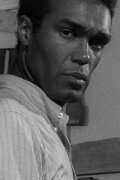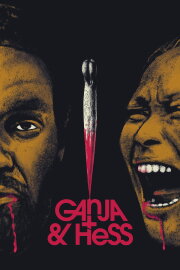
When two prominent black anthropologists, Dr. Green and Dr. Matara, uncover the remains of an ancient African tribe of bloodsuckers called the Myrthians they unleash an evil force buried for centuries beneath the earth. Matara, possessed by the spirit of the Myrthian queen, attacks his partner and then kills himself- leaving Hess to return to the U.S. with an unquenchable thirst for blood. After seducing Matara's widow, Green soon has her hooked on the red stuff as well. Toge... (Full plot summary below)
Enjoy FREE movies and series with your Prime (USA) subscription or when you start a 30-day free trial!
| Movie Source | Available | Offers | Added | Views | Quality | Format | Rating | Link | Share |
|---|---|---|---|---|---|---|---|---|---|
 | UK only | 1 Month Free Trial | 16 Oct 2018 | 5101 | HD | Watch OnlineStream Instantly | 74% |  Report: Broken Link Report: Broken Link |   |
| USA only | 1 Month Free Trial | 19 Mar 2021 | 3109 | HD | Watch OnlineStream Instantly | 90% | Report: Broken Link | |
| IRELAND only | 1 Month Free Trial | 24 Jul 2016 | 4041 | HD | Watch OnlineStream Instantly | 87% | Report: Broken Link | |
 | UK only | 30 Day Free Trial | 31 Jan 2021 | 972 | HD | Watch OnlineStream Instantly | 79% | Report: Broken Link | |
![Its HD [Ganja & Hess]](/images/logos/icons/itshd.png) | WORLDWIDE | ? | 23 Feb 2022 | 3093 | HD | Watch OnlineStream Instantly | 90% | Report: Broken Link | |
 | UK only | 30 Day Free Trial | 29 Jul 2022 | 701 | HD | Watch OnlineStream Instantly | 58% | Report: Broken Link | |
 | UK only | Free Credit | 02 Oct 2016 | 133 | HD | Watch OnlineStream Instantly | 41% | Report: Broken Link | |
 | WORLDWIDE | ? | 21 Sep 2013 | 149 | HD | Watch OnlineStream Instantly | 31% | Report: Broken Link | |
 | WORLDWIDE | ? | 29 Jan 2015 | 10 | SD / TV | Watch OnlineStream Instantly | 21% | Report: Broken Link | |
 | WORLDWIDE | ? | 01 Sep 2013 | 292 | HD | Watch OnlineStream Instantly | 21% | Report: Broken Link | |
 | WORLDWIDE | ? | 25 Nov 2019 | 41 | SD / TV | Watch OnlineStream Instantly | 18% | Report: Broken Link | |
Links compiled using automated software. Availability of offers subject to change / might be region specific / out of date.
| Movie Source | Available | Offers | Added | Views | Quality | Format | Rating | Link | Share |
|---|---|---|---|---|---|---|---|---|---|
| UK only | 30 Day Free Trial | 10 Jan 2021 | 2543 | SD / DVD | DVD RentalRent by Post | 89% |  Report: Broken Link Report: Broken Link | |
 | UK only | N/A | 10 Jan 2021 | 99 | SD / DVD | DVD RentalRent by Post | 12% | Report: Broken Link | |
 | USA only | 1 Month Free Trial | 10 Jan 2021 | 241 | SD / DVD | DVD RentalRent by Mail | 9% | Report: Broken Link | |
| USA only | 1 Month Free Trial | 10 Jan 2021 | 4625 | SD / DVD | DVD RentalRent by Mail | 99% | Report: Broken Link | |
| Movie Source | Available | Offers | Added | Views | Quality | Format | Rating | Link | Share |
|---|---|---|---|---|---|---|---|---|---|
| UK only | 30 Day Free Trial | 12 Feb 2018 | 279 | HD / BR | Blu Ray RentalRent by Post | 76% | Report: Broken Link | |
| UK only | N/A | 12 Feb 2018 | 106 | HD / BR | Blu Ray RentalRent by Post | 27% | Report: Broken Link | |
| USA only | 1 Month Free Trial | 10 Jan 2021 | 393 | HD / BR | Blu Ray RentalRent by Mail | 7% | Report: Broken Link | |
| USA only | 1 Month Free Trial | 12 Feb 2018 | 9522 | HD / BR | Blu Ray RentalRent by Mail | 89% | Report: Broken Link | |
When two prominent black anthropologists, Dr. Green and Dr. Matara, uncover the remains of an ancient African tribe of bloodsuckers called the Myrthians they unleash an evil force buried for centuries beneath the earth. Matara, possessed by the spirit of the Myrthian queen, attacks his partner and then kills himself- leaving Hess to return to the U.S. with an unquenchable thirst for blood. After seducing Matara's widow, Green soon has her hooked on the red stuff as well. Together they lure innocent victims into their deadly trap, leaving a trail of drained bodies in their wake. The grisly murders go unsolved-that is, until the fateful day when Green stumbles into a Gospel meeting and all hell breaks loose.
Leave your thoughts about Ganja & Hess.
| LarsenOnFilmJosh Larsen...an experimental overlapping of dialogue, image, voiceover and music that makes you feel as if you're suffering from an awful fever dream. |
| PopMattersBill Gibron(In Ganja and Hess) we get a devastating art film that raises more intriguing philosophical questions than hairs on the back of one's neck. |
| User ReviewW. W"Dr. Hess Green...Doctor of Anthropology...Doctor Of Geology...while studying the ancient black civilization of Myrthia...was stabbed three times by a stranger...One for God the father...one for the son...and one for The Holy Ghost..."-opening titles from Ganja and Hess Bill Gunn was paid to make Blacksploitation movie, basically a knock off Blacula and instead made an insanely ambitious, lyrical, high art film called "Ganja And Hess", which happened to have an all black cast and involve vampires, though the v-word is never mentioned. The style of the film is less based in the lean cinema verite style of "Killer of Sheep", and drawing more from the waters of hypnotic avant-garde counter culture excess. One of the defining criterion of Blacksploitation cinema; a black cast working with white writers, directors and producers is absent in G&H. Bill Gunn wrote, directed, and stared in the film, where there are no white characters present anywhere at all (accept briefly in Hess dreams/visions), eliminating the usual reference to the man as villain and planting the discussion singularly in the black community. There is nothing exploitative about any of this, it just happens to be a movie with a low-budget. In fact I think its the best and most complex film about African American Christianity I've ever seen. Ganja and Hess is not that simple, to say its spiritual on one hand or a critique on the other, is a matter of whether you prefer Ganja or Hess. Hess (Duane Johnson of Romero's original Night of the Living Dead) is a wealthy anthropologist studying the ancient Mythria tribe in Africa who takes on a new assistant named George (played by Gunn), who begins to appear more and more manic. Hess stops George's first suicide attempt, but George later inexplicably attacks him stabbing him with an ancient knife Hess keeps as a kind of tribal art on his bed stand. George then bathes ritualistically and commits suicide on his knees, naked with a gun shot to the chest. Though never mentioned directly, the knife causes a transformation in Hess. As soon as he wakes up and finds George's body he begins licking the blood off the floor. Traumatized at first by his behavior, Hess quickly adjusts to his new thirst which is cued by an echoing African chanting and images of tribal ceremonies in a field. The field is where Hess disposes of George's body. Hess drinks blood from a glass, an image later echoed in Abel Ferrara's "The Addiction", a similarly complex religious vampire film (and to think, Anne Rice said she couldn't write both at the same time). In montage we see Hess rob a blood bank, and continue on with his life (albeit now visiting prostitutes and becoming increasingly aloof), until he meets Ganja. Ganja is George's wife fresh from Amsterdam, who knows his crazy tendencies, and asks to stay at Hess home to wait for his return. Ganja is confident and direct where Hess is cool and coy. Ganja berates and insults Hess butler Archie, only after implying Hess treats him coldly and impersonally. She gauges his reaction and when she sees he isn't concerned proceeds to dominate Archie, and subsequently positioning herself as mistress of the house. Though the film doesn't politicize directly, this class jostling speaks directly to Hess middle class apathy and Ganja's already predatory mindset. Hess is attracted to her coldness, and wants to learn it for himself. Soon enough Ganja and Hess begin a relationship, and not long after when she discovers George's body in the cellar, she seems unburdened, and gives us light onto her survivalist attitude in one of the films intimately lit monologues. The couple marry, and Hess seems genuinely in love, while Ganja is genuinely in love with her new position, and not in the least bothered by her belief that Hess killed George for some reason which to her doesn't need explaining. He loves her so much he says he wants her to live forever, and they have their second wedding as he sire's her with the Myrthrian dagger used on him. This scene is as ritualistic as the Church wedding that came before, only now Hess pronounces they will be free of guilt, fear, and sin before knifing her. Ganja soon after makes her first kill while having sex with a man they invite over as a couple, now wearing matching red suits. This sex scene also recalls Alain Resnais' Hiroshima Mon Amour, consisting of ambiguous body close ups and glistening sweat, only at the end of Gunn's scene, when the lights come on, the sweat is revealed to be blood. Hess attends Wayman's church, perhaps put off by Ganja's sleeping with another man, or insisting that he was not dead when they took his body to the field, and in any event, experiences a religious awakening of his own in silent movements across his face like Dryer's "Passion of Joan of Arc". In the church I used to go to this was called getting "the Holy Spirit". I had attended mostly Catholic Church annually on Christmas and Easter, until adolescence and a parental religious awakening, when I began being taken to attend regular weekly service and bible study sessions, at a predominantly black, but non-denominational Christian Church. It wasn't my first experience in a black Church and often they weren't that interesting or lively, but I had never been immersed so heavily before. The vibrant music, old ladies walking up and down the aisles, toddlers rattling tambourines, and the penitent speaking in tongues or collapsing in exhaustion in front of the altar was a far cry from somber the sit, kneel, stand, kneel aerobics of Catholicism. I never got the spirit, as so many around me did, but I often watched the procession of men and women go forth to altar call hands outstretched, face either down or in tears, or both, experiencing moments of fulfillment or redemption. There is, to me anyway, something beautiful, absurd, and horrifying about these events, where divine intervention looks like a seizure (though according to Philip K. Dick and Grant Morrison among others, there is no difference between the two; God speaks in seizures and altered mental states, etc). My personal feelings best expressed in a line from Tarkovsky's Solaris, These resurrectionsI never get used to them. This push and pull of repulsion and attraction, divine language and physical transformation captures the essence of so many of my experiences, which I wouldn't want to re-live, but wouldn't want to forget either. Hess' moment of clarity comes inspired by lines he recites from a Myrthian queen, about how anyone who has any God that encourages them to love, and lets something come between that, should cast that thing out themselves. This complicates what had been a simple binary of African ritual/savagery/hedonism to Christian/restraint/morality/love. This binary is further complicated when Hess allows himself to starve to death sitting in the shadow of a cross, and the scene is juxtaposed with a flash black of George killing himself. The cross is only an instrument of torture; it's the shadow of the cross that creates its meaning. Shadows conquer everything, says Hess to Ganja during one of their chats. In one scene Gunn seems celebrates Hess love for Ganja, in another he reveals it as ruthless greed. In one moment religious awakening and faith seem reasonable and necessary to a good life, in the next it's presented as an escape, and return to guilt and comfortable repression. In this same fashion African culture is the site of savagery and vampirism, in another we hear the about the drinking blood of Christ. When I say in one scene and the next, I establish too much conduit, these scenes come of their own accord throughout the film, and were left to put them together puzzle like, only after all is said and done. I don't think Gunn wants us to pick a side, the film is called Ganja and Hess after all, and neither one's self sacrificing nor the others self absorption seems definitive. "I feel like both a murderer and a victim" George says early on. The rest of the movie plays on this contradictory impasse; the horror of the film comes from the philosophical ambiguity resembling a visually driven "No Exit". Gunn is speaking directly to a black audience, his intended and studio mandated demographic, and though his themes are philosophically universal, they speak specifically to a newly radicalized post-Civil Rights black audience budding between calls for socially conscious realist Nationalism and Black Christian moralism; Hess and Ganja respectively. Neither is above reproach for Gunn though, one may be liberating to fault when over-indulgence becomes neurosis and eternal youth resembles eternal adolescence (George's character) while the other may only be repression of cultural traditions, class relations which amounts to ennui and stagnation. Then again the conversion does feel genuine for Hess, just as Ganja seems genuinely passionate with her first victim (her only instance of regret is in the field when they leave him behind). I could go on like this, and I only write this much because so little has been said about this movie. Flixter where I often post these reviews has this film additionally titled in parenthesis as "Black Vampire", which seems to echo the generally accepted understanding of the film, as merely a genre mash-up and nothing more. Once upon a time in African-American history, speaking in generalities, before and leading up to the birth of pop culture, genre mash-up was also called syncretism; Catholic saints serve as stand-ins for Loa spirits in Haitian Vodou, and blues, gospel, and country blend together into rock and roll. Drug addiction is a theme allot of people pick up on, but in this film it seems more a symptom of hedonist vampirism, not an issue in itself. The film's main thrust is its very complex rendering of its characters, music, and images. Duane Jones gives an excellent performance, though every actor especially Marlene Clark as Ganja and Gunn himself as Hess' suicidal assistant threaten to up-stage him, each competing for who can out cool and out monologue the other, while never becoming anything by natural in their gestures and speech. The images of the field become a place of burial (corpses) and of things past returning (the procession of the ancient tribe). The music by Wayman predicts Animal Collective's droned out psychedelic African tribal chants by thirty years. The rest of the score is upbeat 70's pop, soul, and gospel, all styles that cascade together in the church scene, when the non-digetic music, is reveled as the church band, and a principle structuring element for much of the editing. Ganja and Hess is at minimum a marginalized if not completely forgotten masterpiece of American cinema. It got a standing ovation at Cannes (where it was the only American film entered that year), and ensured no American producer would work with Bill Gunn on a theatrical film ever again. Bill Gunn's corpse is still locked in the cultural cellar, discovered from time to time, but easily (and tragically) ignored in favor of more profitable ventures. |
| User ReviewPaul CI honestly cannot say whether or not I actually understood everything Bill Gunn was trying to say with this film, but it is a stylish piece of art. Yes, it is a bit pretentious and "deliberately paced", but if you are in the mood for art-house horror that leans very heavily to the "art-house" side of that label, then it is well worth checking out. (This review is in reference to the restored director's original cut of the film) |
| User ReviewLee MDruggy, hypnotic, strange blend of art and genre -- as if Resnais made a vampire blaxploitation film. Duane Jones is superbly dignified, as he was in Night of the Living Dead. |
| User ReviewBill BFreaky, but fascinating. Bought the DVD like 15 years ago. Watched about 15 minutes, stopped it and filed it for later. I understand the new Spike Lee film is some sort of interpretation of this concept, so I thought it was time to dig it out (there's an upcoming blu-ray release, but I'll stick with the DVD). |
| User ReviewDouglas PA very interesting take on two genres : blaxploitation and vampires. Both are tempered with the director's hunger to make a black 'art' film that owed more to Bergman than to the grindhouse theater. Performances are solid, music rich and well placed. However, despite the brave nature the film exhibits, it is occassionally mired in 70's trip imagery and I think it subdues the film. The main character who becomes the victim is a complex character - rich black recluse who somewhat is ambivalent towards the contemporary African-American - he could care no less, and he only needs them for blood. Through this lense, the film is awe-inspiring. Wish Bill Gunn was given another chance to explore the genre. |
| User ReviewKevin DFlawed but fascinating blaxplotation vampire epic. |
| User Reviewdelysid dthis is a cool old film. Remember how the black guy in night of the living dead was the only survivor at the end and he was more or less the star of the film. well, that guy made one other film, ganja and hess. its a bizarre piece of film about a sort of black dracula. it has trippy music throughout and the picture looks beautiful. this is a cool movie from 73 |
| User ReviewJesse RThis movie just didn't make much sense to me, probably because I'm not into these type of films. As for the blood, it looked more like Kool-aid then real blood, which should of been dark, not light red. Though, it was 1973 when this movie came out. |