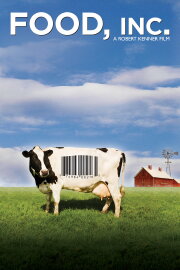
The current method of raw food production is largely a response to the growth of the fast food industry since the 1950s. The production of food overall has more drastically changed since that time than the several thousand years prior. Controlled primarily by a handful of multinational corporations, the global food production business - with an emphasis on the business - has as its unwritten goals production of large quantities of food at low direct inputs (most often subsidi... (Full plot summary below)
FREE with your Prime (USA) subscription or when you start a 30-day free trial!
| Movie Source | Available | Offers | Added | Views | Quality | Format | Rating | Link | Share |
|---|---|---|---|---|---|---|---|---|---|
 | UK only | 1 Month Free Trial | 16 Feb 2026 | 2804 | HD | Watch OnlineStream Instantly | 82% |  Report: Broken Link Report: Broken Link |   |
| USA only | 1 Month Free Trial | 11 Apr 2013 | 4839 | HD | Watch OnlineStream Instantly | 96% | Report: Broken Link | |
| IRELAND only | 1 Month Free Trial | 15 Apr 2024 | 5156 | HD | Watch OnlineStream Instantly | 89% | Report: Broken Link | |
 | UK only | 30 Day Free Trial | 11 Feb 2015 | 725 | HD | Watch OnlineStream Instantly | 96% | Report: Broken Link | |
![Its HD [Food, Inc.]](/images/logos/icons/itshd.png) | WORLDWIDE | ? | 08 Aug 2022 | 3304 | HD | Watch OnlineStream Instantly | 94% | Report: Broken Link | |
 | UK only | 30 Day Free Trial | 14 Jan 2020 | 793 | HD | Watch OnlineStream Instantly | 61% | Report: Broken Link | |
 | UK only | Free Credit | 01 Mar 2023 | 169 | HD | Watch OnlineStream Instantly | 34% | Report: Broken Link | |
 | WORLDWIDE | ? | 19 Nov 2020 | 57 | HD | Watch OnlineStream Instantly | 29% | Report: Broken Link | |
 | WORLDWIDE | ? | 28 Sep 2015 | 20 | SD / TV | Watch OnlineStream Instantly | 11% | Report: Broken Link | |
 | WORLDWIDE | ? | 05 May 2020 | 206 | HD | Watch OnlineStream Instantly | 32% | Report: Broken Link | |
 | WORLDWIDE | ? | 18 Jan 2023 | 20 | SD / TV | Watch OnlineStream Instantly | 4% | Report: Broken Link | |
Links compiled using automated software. Availability of offers subject to change / might be region specific / out of date.
| Movie Source | Available | Offers | Added | Views | Quality | Format | Rating | Link | Share |
|---|---|---|---|---|---|---|---|---|---|
| UK only | 30 Day Free Trial | 18 Apr 2025 | 2263 | SD / DVD | DVD RentalRent by Post | 72% |  Report: Broken Link Report: Broken Link | |
 | UK only | N/A | 18 Apr 2025 | 63 | SD / DVD | DVD RentalRent by Post | 15% | Report: Broken Link | |
 | USA only | 1 Month Free Trial | 18 Apr 2025 | 32 | SD / DVD | DVD RentalRent by Mail | 4% | Report: Broken Link | |
| USA only | 1 Month Free Trial | 18 Apr 2025 | 13870 | SD / DVD | DVD RentalRent by Mail | 82% | Report: Broken Link | |
| Movie Source | Available | Offers | Added | Views | Quality | Format | Rating | Link | Share |
|---|---|---|---|---|---|---|---|---|---|
| UK only | 30 Day Free Trial | 10 Feb 2020 | 346 | HD / BR | Blu Ray RentalRent by Post | 72% | Report: Broken Link | |
| UK only | N/A | 10 Feb 2020 | 89 | HD / BR | Blu Ray RentalRent by Post | 51% | Report: Broken Link | |
| USA only | 1 Month Free Trial | 18 Apr 2025 | 369 | HD / BR | Blu Ray RentalRent by Mail | 10% | Report: Broken Link | |
| USA only | 1 Month Free Trial | 10 Feb 2020 | 4911 | HD / BR | Blu Ray RentalRent by Mail | 83% | Report: Broken Link | |
The current method of raw food production is largely a response to the growth of the fast food industry since the 1950s. The production of food overall has more drastically changed since that time than the several thousand years prior. Controlled primarily by a handful of multinational corporations, the global food production business - with an emphasis on the business - has as its unwritten goals production of large quantities of food at low direct inputs (most often subsidized) resulting in enormous profits, which in turn results in greater control of the global supply of food sources within these few companies. Health and safety (of the food itself, of the animals produced themselves, of the workers on the assembly lines, and of the consumers actually eating the food) are often overlooked by the companies, and are often overlooked by government in an effort to provide cheap food regardless of these negative consequences. Many of the changes are based on advancements in science and technology, but often have negative side effects.The products made have been shown in several studies to enlarge male sexual organs and increase male breast size. The answer that the companies have come up with is to throw more science at the problems to bandage the issues but not the root causes. The global food supply may be in crisis with lack of biodiversity, but can be changed on the demand side of the equation.
Leave your thoughts about Food, Inc..
| San Francisco ExaminerRossiter DrakeA veteran of public television's 'American Experience,' Kenner delivers a vital, visually stylish piece of filmmaking that is as informative as it is fascinating, infuriating and, at times, heartbreaking. |
| Entertainment WeeklyOwen GleibermanFood, Inc. is hard to shake, because days after you've seen it, you may find yourself eating something -- a cookie, a piece of poultry, cereal out of the box, a perfectly round waxen tomato -- and you'll realize that you have virtually no idea what it actually is. |
| Palo Alto WeeklyPeter CanaveseUsefully, it provides counter-balance to its own doom-saying with numerous suggestions of how to deal with the corporatization of food. |
| San Francisco ChronicleAmy BinacolliA mind-boggling, heart-rending, stomach-churning expose on the food industry. |
| Philadelphia InquirerSteven ReaIt's not a pretty picture. But Food, Inc. is an essential one. |
| Baltimore SunMichael SragowA scary movie that's also funny, touching and good for you. |
| Rincón de cineLaura HirosThe result is a very unappetizing dish, served in the form of a valuable documentary. [Full review in Spanish] |
| NewsBlazeKam WilliamsSounds a clear clarion call for the consumer to rise up and start demanding natural and healthy alternatives to the processed junk which we're being fed by agri-business in the name of profits. |
| rec.arts.movies.reviewsLouis ProyectThe definitive study of factory farming in the U.S. today and an heir to the traditions of Upton Sinclair's "The Jungle". Highly recommended. |
| NYC Movie GuruAvi OfferAn illuminating, vital and provocative documentary that will open your eyes to the harsh truths about the food industry and will inspire you to change your diet to organic, unprocessed food. |