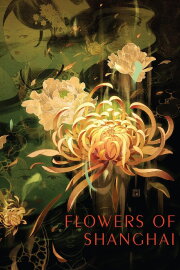
In Shanghai in the 1880s there are four elegant brothels (flower houses): each has an auntie (called madam), a courtesan in her prime, older servants, and maturing girls in training. The men gather around tables of food, playing drinking games. An opium pipe is at hand. The women live within dark-paneled walls. The atmosphere is stifling, as if Chekhov was in China. The melancholy Wang is Crimson's patron; will he leave her for the younger Jasmin? Emerald schemes to buy her f... (Full plot summary below)
Enjoy FREE movies and series with your Prime (USA) subscription or when you start a 30-day free trial!
| Movie Source | Available | Offers | Added | Views | Quality | Format | Rating | Link | Share |
|---|---|---|---|---|---|---|---|---|---|
 | UK only | 1 Month Free Trial | 07 May 2022 | 4050 | HD | Watch OnlineStream Instantly | 81% |  Report: Broken Link Report: Broken Link |   |
| USA only | 1 Month Free Trial | 04 Sep 2014 | 1484 | HD | Watch OnlineStream Instantly | 84% | Report: Broken Link | |
| IRELAND only | 1 Month Free Trial | 10 Aug 2022 | 1431 | HD | Watch OnlineStream Instantly | 60% | Report: Broken Link | |
 | UK only | 30 Day Free Trial | 15 Nov 2018 | 914 | HD | Watch OnlineStream Instantly | 99% | Report: Broken Link | |
![Its HD [Flowers of Shanghai]](/images/logos/icons/itshd.png) | WORLDWIDE | ? | 04 Nov 2021 | 3619 | HD | Watch OnlineStream Instantly | 84% | Report: Broken Link | |
 | UK only | 30 Day Free Trial | 13 Dec 2021 | 249 | HD | Watch OnlineStream Instantly | 57% | Report: Broken Link | |
 | UK only | Free Credit | 11 Aug 2025 | 167 | HD | Watch OnlineStream Instantly | 44% | Report: Broken Link | |
 | WORLDWIDE | ? | 14 Apr 2019 | 165 | HD | Watch OnlineStream Instantly | 24% | Report: Broken Link | |
 | WORLDWIDE | ? | 20 Mar 2023 | 10 | SD / TV | Watch OnlineStream Instantly | 13% | Report: Broken Link | |
 | WORLDWIDE | ? | 22 May 2020 | 114 | HD | Watch OnlineStream Instantly | 19% | Report: Broken Link | |
 | WORLDWIDE | ? | 26 Jan 2013 | 18 | SD / TV | Watch OnlineStream Instantly | 6% | Report: Broken Link | |
Links compiled using automated software. Availability of offers subject to change / might be region specific / out of date.
| Movie Source | Available | Offers | Added | Views | Quality | Format | Rating | Link | Share |
|---|---|---|---|---|---|---|---|---|---|
| UK only | 30 Day Free Trial | 25 Apr 2023 | 2402 | SD / DVD | DVD RentalRent by Post | 88% |  Report: Broken Link Report: Broken Link | |
 | UK only | N/A | 25 Apr 2023 | 83 | SD / DVD | DVD RentalRent by Post | 37% | Report: Broken Link | |
 | USA only | 1 Month Free Trial | 25 Apr 2023 | 137 | SD / DVD | DVD RentalRent by Mail | 2% | Report: Broken Link | |
| USA only | 1 Month Free Trial | 25 Apr 2023 | 18984 | SD / DVD | DVD RentalRent by Mail | 87% | Report: Broken Link | |
| Movie Source | Available | Offers | Added | Views | Quality | Format | Rating | Link | Share |
|---|---|---|---|---|---|---|---|---|---|
| UK only | 30 Day Free Trial | 28 Oct 2013 | 247 | HD / BR | Blu Ray RentalRent by Post | 65% | Report: Broken Link | |
| UK only | N/A | 28 Oct 2013 | 69 | HD / BR | Blu Ray RentalRent by Post | 48% | Report: Broken Link | |
| USA only | 1 Month Free Trial | 25 Apr 2023 | 436 | HD / BR | Blu Ray RentalRent by Mail | 4% | Report: Broken Link | |
| USA only | 1 Month Free Trial | 28 Oct 2013 | 9247 | HD / BR | Blu Ray RentalRent by Mail | 96% | Report: Broken Link | |
In Shanghai in the 1880s there are four elegant brothels (flower houses): each has an auntie (called madam), a courtesan in her prime, older servants, and maturing girls in training. The men gather around tables of food, playing drinking games. An opium pipe is at hand. The women live within dark-paneled walls. The atmosphere is stifling, as if Chekhov was in China. The melancholy Wang is Crimson's patron; will he leave her for the younger Jasmin? Emerald schemes to buy her freedom, aided by patron Luo. Pearl, an aging flower, schools the willful Jade, who thinks she has a marriage agreement with young master Zhu. Is she dreaming? Women fade, or connive, or despair.
Leave your thoughts about Flowers of Shanghai.
| Chicago TribuneMichael WilmingtonFlowers Of Shanghai is concerned with the commodification of sex and its hurtful consequences, but Hou leaves the perversion and beatings off-screen. What remains is a succession of tableaux so vividly realized in purely cinematic terms that the emotions seem to waft from the screen like smoke. |
| Boston GlobeJay CarrThe languid yet precise cinematography throughout gives it the seductive power of a drug-induced dream. |
| The GuardianRichard WilliamsFlowers of Shanghai operates on the whole much like Yoshihiro’s music, filling your senses like a thick haze, holding you rapt without petitioning for your attention. |
| The New York TimesLawrence Van GelderLavish in its depiction of surfaces -- clothing, furniture, lighting fixtures -- Flowers of Shanghai proves deficient in its revelation of inner lives. |
| New York PostLarry WorthThe camera never ventures outside, but remains fixed on the action at the table, gliding languidly past the same sepia-toned tableau: In the film's universe, people are indistinguishable and the setting never changes. Hou does succeed in one key respect: His films evokes opium addiction, a narcotic delirium fading into a dreamless sleep. |