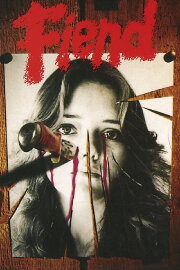
This low budget feature from Baltimore filmmaker Don Dohler opens with a spirit entering into a gravesite and reanimating a corpse back to life as Mr. Longfellow. In order for him to stay alive, he needs to absorb the life energies out of the living by wrapping his hands around his victoms' throats. He moves to the suburbs of Maryland where his nosey neighbor begins to suspect something aint right with Mr. Longfellow.... (Full plot summary below)
Enjoy FREE movies and series with your Prime (USA) subscription or when you start a 30-day free trial!
| Movie Source | Available | Offers | Added | Views | Quality | Format | Rating | Link | Share |
|---|---|---|---|---|---|---|---|---|---|
 | UK only | 1 Month Free Trial | 25 Jan 2023 | 2957 | HD | Watch OnlineStream Instantly | 84% |  Report: Broken Link Report: Broken Link |   |
| USA only | 1 Month Free Trial | 12 Apr 2021 | 3396 | HD | Watch OnlineStream Instantly | 98% | Report: Broken Link | |
| IRELAND only | 1 Month Free Trial | 10 Mar 2026 | 886 | HD | Watch OnlineStream Instantly | 60% | Report: Broken Link | |
 | UK only | 30 Day Free Trial | 13 Dec 2023 | 585 | HD | Watch OnlineStream Instantly | 88% | Report: Broken Link | |
![Its HD [Fiend]](/images/logos/icons/itshd.png) | WORLDWIDE | ? | 28 Jun 2025 | 3473 | HD | Watch OnlineStream Instantly | 89% | Report: Broken Link | |
 | UK only | 30 Day Free Trial | 27 May 2015 | 418 | HD | Watch OnlineStream Instantly | 55% | Report: Broken Link | |
 | UK only | Free Credit | 30 Jul 2021 | 137 | HD | Watch OnlineStream Instantly | 52% | Report: Broken Link | |
 | WORLDWIDE | ? | 27 Apr 2025 | 177 | HD | Watch OnlineStream Instantly | 29% | Report: Broken Link | |
 | WORLDWIDE | ? | 09 Jan 2025 | 17 | SD / TV | Watch OnlineStream Instantly | 25% | Report: Broken Link | |
 | WORLDWIDE | ? | 09 Jun 2018 | 257 | HD | Watch OnlineStream Instantly | 6% | Report: Broken Link | |
 | WORLDWIDE | ? | 28 Feb 2023 | 39 | SD / TV | Watch OnlineStream Instantly | 10% | Report: Broken Link | |
Links compiled using automated software. Availability of offers subject to change / might be region specific / out of date.
| Movie Source | Available | Offers | Added | Views | Quality | Format | Rating | Link | Share |
|---|---|---|---|---|---|---|---|---|---|
| UK only | 30 Day Free Trial | 13 Sep 2021 | 2196 | SD / DVD | DVD RentalRent by Post | 82% |  Report: Broken Link Report: Broken Link | |
 | UK only | N/A | 13 Sep 2021 | 43 | SD / DVD | DVD RentalRent by Post | 17% | Report: Broken Link | |
 | USA only | 1 Month Free Trial | 13 Sep 2021 | 127 | SD / DVD | DVD RentalRent by Mail | 16% | Report: Broken Link | |
| USA only | 1 Month Free Trial | 13 Sep 2021 | 15242 | SD / DVD | DVD RentalRent by Mail | 88% | Report: Broken Link | |
| Movie Source | Available | Offers | Added | Views | Quality | Format | Rating | Link | Share |
|---|---|---|---|---|---|---|---|---|---|
| UK only | 30 Day Free Trial | 18 Oct 2017 | 240 | HD / BR | Blu Ray RentalRent by Post | 84% | Report: Broken Link | |
| UK only | N/A | 18 Oct 2017 | 41 | HD / BR | Blu Ray RentalRent by Post | 48% | Report: Broken Link | |
| USA only | 1 Month Free Trial | 13 Sep 2021 | 518 | HD / BR | Blu Ray RentalRent by Mail | 6% | Report: Broken Link | |
| USA only | 1 Month Free Trial | 18 Oct 2017 | 3125 | HD / BR | Blu Ray RentalRent by Mail | 88% | Report: Broken Link | |
This low budget feature from Baltimore filmmaker Don Dohler opens with a spirit entering into a gravesite and reanimating a corpse back to life as Mr. Longfellow. In order for him to stay alive, he needs to absorb the life energies out of the living by wrapping his hands around his victoms' throats. He moves to the suburbs of Maryland where his nosey neighbor begins to suspect something aint right with Mr. Longfellow.
Leave your thoughts about Fiend.
| User ReviewLogan FThere's a pervasive belief across diverse religions and cultures that when someone dies, his spirit travels and finds another. That Grandpa's spirit animates little gestating Grandson Billy. At its most extreme, Grandpa's spirit fixes at the moment of conception, so that abortion is killing Grandpa yet again, pure and simple. We are culturally snarled, entangled and overwrought by such beliefs. This basic premise is turned on its head in "Fiend." The fiend spirit doesn't animate the freshly conceived -- it reanimates the dead. The spirit of the fiend reanimates the bodies of the dead lying rotten in the graveyard. Moreover, to remain viable, the fiend needs to continuously extract more spirit of the living. That too, by the way, is a pervasive view, that one can draw strength and life force from the touch or presence of another. We'll see later that when the time between the extractions grows too long, the body of this fiend begins on a swift arc of ageing, decomp and degeneration. The movie begins in a graveyard, where one such fiend reanimates the rotting body of William Dorian, taking not only his body, but even some of his personality characteristics, such as a love of music. This spirit is just slightly reminiscent of the spook in "Ghostbusters," a blobby, transparent geist, except that's it's bright red. It's not a very good effect, but was the best Dohler could manage at the time with a very limited budget. And let the murders begin. No sooner does Dorian leave the ground than he murders a young lover in the cemetery (her lover having just walked away to take care of some other business). He strangles her and his hands glow red. Later, the fiend's whole body will glow red as he murders one victim after another. Abandoning the name Dorian, the fiend adopts the name Eric Longfellow and, yes, he's the local music teacher. The newly reanimated Mr. Longfellow (Dohler's regular bad-boy actor Don Leifert) finds a house and somehow (do the fiend spirits have secret bank accounts just waiting to be opened?) manages to buy the house and take up residence. Production notes: the house isn't a particularly spooky or interesting place: just a 60s-style tract home in a nice suburban neighborhood. Probably either Don Dohler's place, or that of a member of his cast and crew, or maybe just a neighbor's. Longfellow later apologizes for the unpainted, concrete walls of the basement, where he teaches his students. Note, too, the presence of at least nine members of the cast who are found in both "The Alien Factor" and "Fiend." Dohler likes to work with an ensemble cast; it's easier that way. So filmmaker tip: use what you have, whether its cast, crew, props or locations. If it's not mostly free and readily available, you're not really a low budget / no budget filmmaker. (IMDB shows an estimated budget of $6,00.00. The actual production budget was surely very much less.) So how do you turn this simple premise into a 90-minute feature? The same way you do it in Dohler's first film, "The Alien Factor," and probably the way you do it in every Dohler film to follow: 1) Long establishing and atmosphere shots of the neighborhood. Neighbors cutting the grass, boys playing ball in the cul-de-sac while the girls skip down a sidewalk, a woman walking a toddler; 2) Pile up the murders, not just one or two featured murders, but fully eight, including a 12-year old girl. That's not something you see in film that often, and thankfully we aren't shown the actual strangulation. We just get to imagine it; and finally, 3) Long walks through the woods, runs through the woods and road trips from one place to another. All of these were present in "The Alien Factor" and will be seen in the films to follow. Reviewer note: I'm watching these films in order, so I can't say now that every Dohler film has these characteristics, but you'll clearly see them in these earliest projects. So where are we? We have a sequence of murders in the neighborhood, yet no one but next-door neighbor, Gary Kender played by Richard Nelson, suspects that Longfellow has anything to do with them. The police are never seen and even wife, Marsha, rejects the notion. Longfellow's obsequious employee, Dennis Frye (played by Dohler regular George Stover), covers for one of the murders that takes place literally in Longfellow's back yard, and Frye himself becomes one of the later victims after he reluctantly admits his lie to Kender (this is the murder Scotty witnesses). It is here that the film becomes interesting. Kender goes to Longfellow's home to confront him, is taken to the basement, and is left there for a moment on his own. He sneaks into a hidden room (hidden only in the sense that brown sheets are draped over the entrance), and finds photos of victims slashed with a knife, the knife and a book on witchcraft and demons. Kender buys the book, "Encyclopedia of Witchcraft and Demonology," and reads to the film audience a long section on fiends and their characteristics and proclivities. Kender remembers the story of a grave robbery months earlier in a neighboring town and drives (one of those long, movie-extending drives) to that town's cemetery. There he talks with caretaker, Jimmy Barnes, who tells the story of the deceased, William Dorian, and shows the obituary and photo of Dorian. A familiar face, alas. Kender rushes home (another long automobile ride through the country). Soon he hears young neighbor Scotty's story (Scotty played by Don Dohler's son, Greg), in Scotty's bedroom (trusting movie parents there) since wife Marsha has sent Scotty home when he tries to talk directly with a very trip-exhausted Kender. Kender has not yet told Marsha his discoveries about Longfellow, perhaps because of her disdain for his oft-repeated suspicions, so that when she receives a phone call from Longfellow while her husband is grilling Scotty, she reluctantly agrees to bring over some pain medication (Longfellow's plea for help is a ruse -- but how could Marsha know, and how could Longfellow truly believe he could get away with so many murders of his immediate neighbors? Mrs. Kender hopefully the next. When she arrives, she finds a sad Mr. Longfellow sorely in need not of pain meds, but a new spiritual infusion. But I must end the spoilers here. You'll need to rent, buy or borrow the film to see if Kender and young Scotty arrive at Longfellow's lair in time to rescue the adorable Mrs. Kender. A cute side note. At two points in the film, Kender's wife, Martha, goes to the bookstore to get copies of "Film Magic," an homage to "Cinemagic," Don Dohler's own set of magazines on the art of filmmaking, props, effects and make-up. Final reviewer's note: Dohler's last film (he died of cancer at age 60 in 2006) is "Blood, Boobs and Beast" (2007), an autobiographical documentary. It's the defining work for the understanding of the true Triple-B film. Yet the middle element of Dohler's oeuvre is not yet manifest. No boobs in "The Alien Factor" and no boobs in "Fiend." The manner in which they're introduced in his next film, "Nightbeast" (full review to follow) demonstrates the way they could easily have been introduced here. Perhaps the fiend stares into the bedroom window of his next victim. Or, of course, perhaps the lead character, neighborhood investigator Gary Kender, has a loving scene with his loving wife, Marsha. We'll see that scene in "Nightbeast" between Sheriff Jack Cinder and is deputy, Lisa Kent. At least in his earliest works, however, Dohler wasn't ready one of the defining horror staples: Boobs. "Fiend" is a good movie for the devoted, 70s - 80s horror film geek who enjoys watching over-the-top, cheap horror flicks with beer and chips on a Friday night, but it's also a film with valuable lessons for the new and aspiring maker of B-movie, horror genre films. |
| User ReviewFreddie FThis is a wonderful improvement over his last film, Alien Factor. Not saying it's a great movie, but it's what a low budget film should be. Once I was able to tell the two main guys apart, I enjoyed watching it. Especially the Longfellow character. |