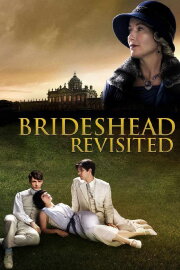
World War II. Charles Ryder (Matthew Goode), in his civilian life, rose out of his middle class London background, which includes being an atheist and having a distant relationship with his eccentric father, to become an up and coming artist. He is currently an Army officer, who is stationed at a makeshift camp set up at Brideshead estate before imminently getting shipped into battle. The locale, which is not unfamiliar to him, makes him reminisce about what ended up being hi... (Full plot summary below)
Enjoy FREE movies and series with your Prime (USA) subscription or when you start a 30-day free trial!
| Movie Source | Available | Offers | Added | Views | Quality | Format | Rating | Link | Share |
|---|---|---|---|---|---|---|---|---|---|
 | UK only | 1 Month Free Trial | 12 Dec 2025 | 4714 | HD | Watch OnlineStream Instantly | 71% |  Report: Broken Link Report: Broken Link |   |
| USA only | 1 Month Free Trial | 29 Sep 2017 | 2633 | HD | Watch OnlineStream Instantly | 94% | Report: Broken Link | |
| IRELAND only | 1 Month Free Trial | 17 Mar 2014 | 992 | HD | Watch OnlineStream Instantly | 86% | Report: Broken Link | |
 | UK only | 30 Day Free Trial | 16 May 2024 | 572 | HD | Watch OnlineStream Instantly | 88% | Report: Broken Link | |
![Its HD [Brideshead Revisited]](/images/logos/icons/itshd.png) | WORLDWIDE | ? | 20 Oct 2013 | 3505 | HD | Watch OnlineStream Instantly | 88% | Report: Broken Link | |
 | UK only | 30 Day Free Trial | 18 Nov 2017 | 340 | HD | Watch OnlineStream Instantly | 57% | Report: Broken Link | |
 | UK only | Free Credit | 30 Oct 2023 | 159 | HD | Watch OnlineStream Instantly | 47% | Report: Broken Link | |
 | WORLDWIDE | ? | 03 May 2013 | 88 | HD | Watch OnlineStream Instantly | 20% | Report: Broken Link | |
 | WORLDWIDE | ? | 13 Aug 2015 | 22 | SD / TV | Watch OnlineStream Instantly | 14% | Report: Broken Link | |
 | WORLDWIDE | ? | 14 Jan 2021 | 112 | HD | Watch OnlineStream Instantly | 15% | Report: Broken Link | |
 | WORLDWIDE | ? | 08 May 2017 | 19 | SD / TV | Watch OnlineStream Instantly | 13% | Report: Broken Link | |
Links compiled using automated software. Availability of offers subject to change / might be region specific / out of date.
| Movie Source | Available | Offers | Added | Views | Quality | Format | Rating | Link | Share |
|---|---|---|---|---|---|---|---|---|---|
| UK only | 30 Day Free Trial | 01 Apr 2023 | 2597 | SD / DVD | DVD RentalRent by Post | 81% |  Report: Broken Link Report: Broken Link | |
 | UK only | N/A | 01 Apr 2023 | 16 | SD / DVD | DVD RentalRent by Post | 33% | Report: Broken Link | |
 | USA only | 1 Month Free Trial | 01 Apr 2023 | 236 | SD / DVD | DVD RentalRent by Mail | 15% | Report: Broken Link | |
| USA only | 1 Month Free Trial | 01 Apr 2023 | 12799 | SD / DVD | DVD RentalRent by Mail | 84% | Report: Broken Link | |
| Movie Source | Available | Offers | Added | Views | Quality | Format | Rating | Link | Share |
|---|---|---|---|---|---|---|---|---|---|
| UK only | 30 Day Free Trial | 30 Aug 2014 | 184 | HD / BR | Blu Ray RentalRent by Post | 91% | Report: Broken Link | |
| UK only | N/A | 30 Aug 2014 | 51 | HD / BR | Blu Ray RentalRent by Post | 37% | Report: Broken Link | |
| USA only | 1 Month Free Trial | 01 Apr 2023 | 683 | HD / BR | Blu Ray RentalRent by Mail | 5% | Report: Broken Link | |
| USA only | 1 Month Free Trial | 30 Aug 2014 | 2802 | HD / BR | Blu Ray RentalRent by Mail | 82% | Report: Broken Link | |
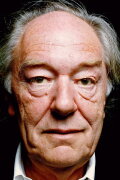
World War II. Charles Ryder (Matthew Goode), in his civilian life, rose out of his middle class London background, which includes being an atheist and having a distant relationship with his eccentric father, to become an up and coming artist. He is currently an Army officer, who is stationed at a makeshift camp set up at Brideshead estate before imminently getting shipped into battle. The locale, which is not unfamiliar to him, makes him reminisce about what ended up being his doomed relationship with Brideshead's owners, the Flytes, an ostentatiously wealthy family. Charles first met Sebastian Flyte (Ben Whishaw) when they both were students at Oxford, where Sebastian surprisingly welcomed Charles into his circle of equally wealthy, somewhat stuck-up, and flamboyant friends. Charles ended up getting caught up in Sebastian's family struggles, where Sebastian used excessive alcohol to deal with the pain resulting from his family relationships. Although Charles and Sebastian were more than just friends, Charles ultimately fell in love with Sebastian's sister, Julia Flyte (Hayley Atwell). But the biggest obstacle to Charles being intimately involved with anyone in the Flyte family was the family matriarch, Lady Marchmain (Dame Emma Thompson), a strict and devout Catholic who ruled the family with that adherence to a strict Catholic lifestyle. That was despite her and Lord Marchmain's (Sir Michael Gambon's) own marriage being in name only, as he lived in Venice with his mistress, Cara (Greta Scacchi).
Leave your thoughts about Brideshead Revisited.
| Mountain Xpress (Asheville, NC)Ken HankeThis is that rare film version of a book that captures the essence of the work, while at the same time bringing its own point of view to the table. |
| NewsdayJohn Anderson[A] lush, bold, intellectual treatment of the Evelyn Waugh novel about Catholicism and nonconformity, which ventures where the fabled '80s miniseries couldn't. |
| TV GuideKen FoxIt shifts the focus from Charles and Sebastian's youthful idyll to the stronger, more provocative relationship between Charles and Julia, wherein lies Waugh's concerns with materialism and velvet-gloved dual grip of family and religion. |
| Sin MagazineAustin KennedyThis is a beautiful production that doesn't succeed due to a major casting blunder and how the story switches focus in the final act. |
| Christianity TodayAlissa WilkinsonThough a story of the disappearing tradition of aristocracy, Brideshead Revisited is, at its core, a tale of the outworking of God's grace in people's lives. |
| At the Movies (Australia)David StrattonAt just over two hours, the film naturally feels a bit cramped and the most interesting elements are given fairly short shrift. |
| Sydney Morning HeraldPaul ByrnesEven if the material is familiar, even if it has been done well before, there is room in a great book for a new interpretation. |
| Screen InternationalMike GoodridgeEvelyn Waugh's greatest novel gets a respectable new film treatment from a team of Britain 's biggest names, although it will inevitably remain in the shadow of the 1981 TV series. |
| St. Paul Pioneer PressChris Hewitt (St. Paul)There's a reason Emma Thompson looms over the posters for Brideshead Revisited: She has a smallish part, but she makes a huge impact. |
| The Globe and Mail (Toronto)Liam LaceyOvernuanced, a world of delicate cruelty, where most of the wounds take place without breaking the skin or even a sweat. |