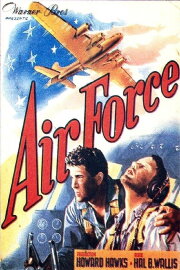
On December 6, 1941 nine B-17 bomber set off on a flight from San Francisco to Hawaii. One of the bombers, the Mary Ann, is commanded by 'Irish' Quincannon. The bombardier, Tommy McMartin, has a sister living in Hawaii and the co-pilot, Bill Williams, is sweet on her. The men are all highly professional with the exception of aerial gunner Joe Winocki, a bitter man who has every intention of leaving the army air corps. They arrive at Hickam Field on the morning of December 7, ... (Full plot summary below)
Enjoy FREE movies and series with your Prime (USA) subscription or when you start a 30-day free trial!
| Movie Source | Available | Offers | Added | Views | Quality | Format | Rating | Link | Share |
|---|---|---|---|---|---|---|---|---|---|
 | UK only | 1 Month Free Trial | 11 Jul 2019 | 3050 | HD | Watch OnlineStream Instantly | 63% |  Report: Broken Link Report: Broken Link |   |
| USA only | 1 Month Free Trial | 11 Jul 2015 | 3281 | HD | Watch OnlineStream Instantly | 98% | Report: Broken Link | |
| IRELAND only | 1 Month Free Trial | 27 Jun 2017 | 5729 | HD | Watch OnlineStream Instantly | 87% | Report: Broken Link | |
 | UK only | 30 Day Free Trial | 18 Feb 2023 | 585 | HD | Watch OnlineStream Instantly | 94% | Report: Broken Link | |
![Its HD [Air Force]](/images/logos/icons/itshd.png) | WORLDWIDE | ? | 07 Feb 2020 | 3154 | HD | Watch OnlineStream Instantly | 91% | Report: Broken Link | |
 | UK only | 30 Day Free Trial | 29 Dec 2020 | 563 | HD | Watch OnlineStream Instantly | 51% | Report: Broken Link | |
 | UK only | Free Credit | 17 Apr 2019 | 143 | HD | Watch OnlineStream Instantly | 48% | Report: Broken Link | |
 | WORLDWIDE | ? | 17 Feb 2026 | 169 | HD | Watch OnlineStream Instantly | 28% | Report: Broken Link | |
 | WORLDWIDE | ? | 25 Sep 2024 | 12 | SD / TV | Watch OnlineStream Instantly | 13% | Report: Broken Link | |
 | WORLDWIDE | ? | 29 Aug 2019 | 209 | HD | Watch OnlineStream Instantly | 16% | Report: Broken Link | |
 | WORLDWIDE | ? | 17 Mar 2016 | 15 | SD / TV | Watch OnlineStream Instantly | 19% | Report: Broken Link | |
Links compiled using automated software. Availability of offers subject to change / might be region specific / out of date.
| Movie Source | Available | Offers | Added | Views | Quality | Format | Rating | Link | Share |
|---|---|---|---|---|---|---|---|---|---|
| UK only | 30 Day Free Trial | 21 May 2015 | 1882 | SD / DVD | DVD RentalRent by Post | 62% |  Report: Broken Link Report: Broken Link | |
 | UK only | N/A | 21 May 2015 | 76 | SD / DVD | DVD RentalRent by Post | 16% | Report: Broken Link | |
 | USA only | 1 Month Free Trial | 21 May 2015 | 227 | SD / DVD | DVD RentalRent by Mail | 15% | Report: Broken Link | |
| USA only | 1 Month Free Trial | 21 May 2015 | 13865 | SD / DVD | DVD RentalRent by Mail | 95% | Report: Broken Link | |
| Movie Source | Available | Offers | Added | Views | Quality | Format | Rating | Link | Share |
|---|---|---|---|---|---|---|---|---|---|
| UK only | 30 Day Free Trial | 30 Sep 2022 | 344 | HD / BR | Blu Ray RentalRent by Post | 60% | Report: Broken Link | |
| UK only | N/A | 30 Sep 2022 | 83 | HD / BR | Blu Ray RentalRent by Post | 49% | Report: Broken Link | |
| USA only | 1 Month Free Trial | 21 May 2015 | 421 | HD / BR | Blu Ray RentalRent by Mail | 5% | Report: Broken Link | |
| USA only | 1 Month Free Trial | 30 Sep 2022 | 8638 | HD / BR | Blu Ray RentalRent by Mail | 97% | Report: Broken Link | |
On December 6, 1941 nine B-17 bomber set off on a flight from San Francisco to Hawaii. One of the bombers, the Mary Ann, is commanded by 'Irish' Quincannon. The bombardier, Tommy McMartin, has a sister living in Hawaii and the co-pilot, Bill Williams, is sweet on her. The men are all highly professional with the exception of aerial gunner Joe Winocki, a bitter man who has every intention of leaving the army air corps. They arrive at Hickam Field on the morning of December 7, just as the Japanese are attacking Pearl Harbor and other military facilities. All of the men prepare to face the enemy, including Winocki whose attitude changes quickly. The bomber and its crew will participate in many missions but not all will survive.
Leave your thoughts about Air Force.
| New York TimesBosley CrowtherAlthough it draws about the longest and most pliant bow that has ever been drawn in the line of fanciful war films and goes completely overboard in the last reel, it is still a continuously fascinating, frequently thrilling and occasionally exalting show. |
| Cinematic ReflectionsDerek SmithIt isn't one of the director's most impressive outputs, but when a solid genre entry such as this is one of your "lesser" films, it says a lot about the quality of your work. |
| Video-Reviewmaster.comSteve CrumGritty, emotional actioner made at height of WWII. Strong cast. |
| EmanuelLevy.ComEmanuel LevyThe versatile Howard Hawks combines personal experience and knowing skills in directing this enjoyable WWII propaganda movie, which was nominated for four Oscars, winning one for editing. |
| Sarasota Herald-TribuneChristopher LloydA cheery bit of war propaganda that feels cringeworthy today, in which American soldiers seem extraordinarily giddy about the prospect of near-certain death, coupled with some terrible special-effects miniatures. |
| The Retro SetNathanael HoodAir Force can't escape the shadow of its own jingoism. Its point wasn't just to inspire an American public but to make monsters of its enemies. It did so with chilling efficiency. |
| User ReviewVan RNot only did Warner Brothers use the Boeing B-17 bomber as the centerpiece of one of its earliest battle front movies, "Flying Fortress," but the studio also used the bomber as an allegory for American tenacity in "Scarface" director Howard Hawks "Air Force." According to World War II film historian Lawrence Suid, Jack Warner approached U.S. Army Air Force (USAAF) commanding officer General Henry 'Hap' Arnold not long after Pearl Harbor about making a film about the USAAF. Suid says that Arnold approved Warner Brothers' request, and the War Department provided the studio with a plethora of information about their planes and pilots, which scenarist Dudley Nichols included in his original screenplay. Warner Brothers' studio chief Jack Warner hired aviation enthusiast Howard Hawks to direct "Air Force," and Hawks started shooting on June 18, 1942, at Drew Air Force Base in Florida and completed the picture four months later on October 26. "Air Force" chronicles the routine flight of a B-17 Flying Fortress, nicknamed the 'Mary Ann,' from San Francisco to Hawaii. The crew consisted of an ethnically and geographically diverse group of men, a casting theme that recurred throughout World War II movies and reflected the melting pot identity of America. Unlike MGM's "Bataan" and Twentieth Century Fox's "Crash Drive" (1943), however, Warner Brothers never integrated African-Americans into the ranks of its battle front films. As the 'Mary Ann' approaches Honolulu, the crew hears Japanese gibberish on the radio and is even more shocked by the sight of Japanese planes dropping bombs and strafing the base. The Pearl Harbor flight tower diverts the 'Mary Ann' to Maui where it lands to repair a wheel. When Japanese-American snipers open fire on the fliers, the crew flies to Wake Island where the Marines are preparing their a gallant last stand. At Clark Field, the crew reloads their guns and ascends to battle the Japanese. The 'Mary Ann' is so badly riddled with bullet holes and the skipper so severely wounded that he orders everybody else to bail out. A recalcitrant gunner (John Garfield) who washed out of flying school ignores the skipper's orders and lands the bomber. Frantically, despite their orders to destroy it, the reunited crew patches up the plane. Not only do they load up with bombs, but they also remove the tail section and install a machine gun. The crew manages to get their B-17 off the ground before the Japanese overrun the island. During their flight to Australia, they sight a Japanese fleet, radio their position, and sink some of the ships. As the film draws to a close, the 'Mary Ann' survivors prepare to spearhead an aerial attack on Japan. At a time when the government restricted all Hollywood studios in terms of the money that they could spend on a film, the U.S. Army-Air Force's assistance proved invaluable in giving the film an aura of authenticity. For example, the nine B-17s seen in flight during the early scenes of Air Force were actually filmed on location in Florida by Warner Brothers. When the studio staged Japanese plane crashes and tricky B-17 landings in the jungle, the studio relied on miniatures. According to a War Department letter dated June 6, 1942, "It is the policy of the War Department not to allow soldiers or military equipment to be disguised and photographed as representing the personnel or equipment of foreign countries." The War Department sidestepped its own rule when it helped Warner Brothers produce Air Force. According to Suid, the War Department appointed Captain Samuel Triffy as technical adviser, and Triffy "flew both an Army two-place trainer and a fighter painted with the Rising Sun emblem in the combat sequences portraying Japanese attacks on American aircraft and military positions." Triffy sought as much as possible to ensure that Air Force appeared "as authentic as we could make it under the circumstances." All Howard Hawks' movies are about men bonding as a group. Women are few and far between in "Air Force,' but they populate the storyline. Dudley Nichols' screenplay with help from William Faulkner contains many good scenes. Some are tragic, such as the flight crew chief's story about his son, and some are funny, such as the dog that barks at Japanese. The death scene where the pilot takes off from his hospital bed with his companions helping him simulate this take-off to the big hangar in the sky is memorable. Today, "Air Force" seems quaint and corny, especially the aerial gunner's change of attitude. Initially, the John Garfield character doesn't plan to re-enlist, and he behaves like a complete prima donna, particularly because the 'Mary Ann's' pilot washed him out of pilot school, but the aerial gunner changes his mind when he see Pearl Harbor in flames. The U.S. Government propaganda agency, the OWI-BMP praised "Air Force" for five reasons. First, the crew constituted an ethnic melting pot. Second, the crew's perfect teamwork made the mission of the "Mary Ann" successful. Third, the officials applauded the fact that the filmmakers showered glory on an older mechanic sergeant who maintained the plane rather than on the younger more glamorous pilots. Fourth, as a combat picture, "Air Force" proved exciting without "the pitfall of showing too much blood and suffering." Fifth, the plot emphasized a good-natured rivalry between fighter pilots and bomber pilots. Ultimately, the OWI-BMP found the flaws in "Air Force" "serious but remediable; its good points are very good indeedâ??well worth the effort to revise the script so that it will perform a truly valuable service of war information." Altogether, "Air Force" is one of the best Allied propaganda movies of World War II. |
| User ReviewShoshanah KI truly wish movie reviewers would STOP forcing pre-1960 "eggs" into post-1960 square egg crates!! If you can't put your touchie-feelie indoctrinations aside when critiquing classic films - don't review them...PLEASE! Enough with the condemnation of the "racially offensive slurs and inaccuracies" vis a vis the Japanese. If you had been seen or heard ringing your hands over this stuff on December 8, 1941, you'd have been locked in a loony bin - or shot as a traitor. This film - a superlative film in EVERY way was made a year and a half after 3000+ American naval personal had been ambushed and murdered by the Empire of Japan in a heinous attack unequaled until September 11, 2001. My father served in the Pacific in WW II, and said the Japanese were feared and hated because they were merciless, vicious and certainly NOT PC - they did not pity or spare any - men, women OR children. The POINT of this film was to laud our brave service men out there slogging around in the Pacific theater and to inspire other young men to sign up and join them. The plot, dialog, photography and acting is wonderful and I believe it ranks as one of the four greatest WW II films of all time: They Were Expendable; Air Force; 30 Seconds Over Tokyo and Saving Pvt. Ryan. Along with Resnais' Night and Fog documentary you have it pretty well summed up. This film beautifully shows Hawks' gift for building camaraderie and unity of purpose in an often disparate and hostile group. The cast is superlative...then again, you could have Harry Carey (Sr) sit in front of a camera and read ten pages from the phone book and be witness to an Academy Award-worthy performance. By-the-way, His Sgt.Robbie White in this flick SHOULD have gotten him that very award - along with two or three other roles in his career. James Wong Howe's cinematography is just magnificent. We of the sophisticated CGI-generation of cineastes KNOW many of the flying scenes are done with models - but they are done so well it never detracts. Howe's ability to film much of the action "in the fuselage" of the Mary-Ann - giving the claustrophobic sense of an air crew confined, yet never so cramped as to not allow each crewman his space to act and react to events as they take place - is wonderful to watch. Some have commented that the ending was "over-the-top". Maybe the highly technical, laser-beam-'em from 10 miles away style of modern warfare has clouded the ability of some to see that war in the 1940's was a much grittier, in-your-face proposition; one lucky break or just being in the right place at the right time was all that was needed to turn defeat into victory. I love this movie and cheered through the whole thing. So c'mon folks...pack away your granola bars, haul down the Kumbayah flag and watch those dastardly Japs get the smack-down from some good old Yankee flyboys. Thanks, Howard - ya done good. |
| User ReviewJim HCapsule review of Air Force (1943) directed by Howard Hawks. One of the great movies of it's time. A B-17 bomber and it's crew are en route to Pearl Harbor on Dec 7, 1941 and arrive just after the attack. The men become some of the first to fight in WW II when they refuel and then take off to pursue and fight the Japanese along with the few planes that have not been destroyed or were nearby by like they were. The characters are less stereotypes than the archetypes for dozens of movies that would come later: the incredibly resourceful mechanic (think Star Trek's Scotty), well-played by Harry Carey; the committed and decisive Captain; and John Garfield as (of course) the prototypical "Guy From Brooklyn." The comraderie and strong bonds between friends (usually men, as seen here) that was a signature of Howard Hawks' films is very evident here and creates some poignant moments. The war is not very romanticized -- it's shown as brutal and unforgiving. Some men are wounded and not everyone lives. Hawks also used a visual style that is filled with dramatic camera angles, shadowy grimness, and evocative and exciting montages, which showed that he could compete with stylists like Hitchcock and Fritz Lang if he needed to, even though it was usually not his habit to do so. Finally, Air Force has an odd and complex blend of patriotism and anti-war elements that separate it and elevate it above most of the films of this era. The film is suffused with determination and grief as the crew presses on further and further west, with more and more men getting killed and wounded, their bomber taking more and more damage, and no end in sight for these weary but intrepid soldiers. |
| User ReviewJohn CCompelling and exciting war film revolving around the bombing of Pearl Harbor. To say it's far superior than the Michael Bay opus is an understatement! |