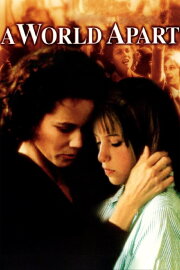
1963. Thirteen year old Molly Roth, the eldest of three offspring of Gus and Diana Roth, lives a carefree life as part of the affluent white minority in South Africa. Race is a non-issue for her as although, under apartheid, the Roths largely exist among other white people like them, she feels equally comfortable around the black people in her life, such as their servants and her parents' black friends. Beyond knowing that they are busy in their work, Molly is unaware of the ... (Full plot summary below)
Enjoy FREE movies and series with your Prime (USA) subscription or when you start a 30-day free trial!
| Movie Source | Available | Offers | Added | Views | Quality | Format | Rating | Link | Share |
|---|---|---|---|---|---|---|---|---|---|
 | UK only | 1 Month Free Trial | 06 Nov 2020 | 3285 | HD | Watch OnlineStream Instantly | 79% |  Report: Broken Link Report: Broken Link |   |
| USA only | 1 Month Free Trial | 02 May 2025 | 6850 | HD | Watch OnlineStream Instantly | 82% | Report: Broken Link | |
| IRELAND only | 1 Month Free Trial | 29 Aug 2020 | 2357 | HD | Watch OnlineStream Instantly | 77% | Report: Broken Link | |
 | UK only | 30 Day Free Trial | 02 Oct 2022 | 683 | HD | Watch OnlineStream Instantly | 86% | Report: Broken Link | |
![Its HD [A World Apart]](/images/logos/icons/itshd.png) | WORLDWIDE | ? | 17 May 2019 | 3255 | HD | Watch OnlineStream Instantly | 92% | Report: Broken Link | |
 | UK only | 30 Day Free Trial | 14 Aug 2013 | 379 | HD | Watch OnlineStream Instantly | 64% | Report: Broken Link | |
 | UK only | Free Credit | 23 Jul 2016 | 161 | HD | Watch OnlineStream Instantly | 30% | Report: Broken Link | |
 | WORLDWIDE | ? | 19 Jul 2014 | 170 | HD | Watch OnlineStream Instantly | 38% | Report: Broken Link | |
 | WORLDWIDE | ? | 15 Feb 2014 | 17 | SD / TV | Watch OnlineStream Instantly | 16% | Report: Broken Link | |
 | WORLDWIDE | ? | 05 Oct 2024 | 268 | HD | Watch OnlineStream Instantly | 22% | Report: Broken Link | |
 | WORLDWIDE | ? | 09 Jan 2022 | 10 | SD / TV | Watch OnlineStream Instantly | 11% | Report: Broken Link | |
Links compiled using automated software. Availability of offers subject to change / might be region specific / out of date.
| Movie Source | Available | Offers | Added | Views | Quality | Format | Rating | Link | Share |
|---|---|---|---|---|---|---|---|---|---|
| UK only | 30 Day Free Trial | 09 Jul 2016 | 2806 | SD / DVD | DVD RentalRent by Post | 62% |  Report: Broken Link Report: Broken Link | |
 | UK only | N/A | 09 Jul 2016 | 76 | SD / DVD | DVD RentalRent by Post | 51% | Report: Broken Link | |
 | USA only | 1 Month Free Trial | 09 Jul 2016 | 223 | SD / DVD | DVD RentalRent by Mail | 18% | Report: Broken Link | |
| USA only | 1 Month Free Trial | 09 Jul 2016 | 3715 | SD / DVD | DVD RentalRent by Mail | 100% | Report: Broken Link | |
| Movie Source | Available | Offers | Added | Views | Quality | Format | Rating | Link | Share |
|---|---|---|---|---|---|---|---|---|---|
| UK only | 30 Day Free Trial | 17 Feb 2022 | 342 | HD / BR | Blu Ray RentalRent by Post | 85% | Report: Broken Link | |
| UK only | N/A | 17 Feb 2022 | 90 | HD / BR | Blu Ray RentalRent by Post | 26% | Report: Broken Link | |
| USA only | 1 Month Free Trial | 09 Jul 2016 | 62 | HD / BR | Blu Ray RentalRent by Mail | 7% | Report: Broken Link | |
| USA only | 1 Month Free Trial | 17 Feb 2022 | 8048 | HD / BR | Blu Ray RentalRent by Mail | 94% | Report: Broken Link | |
1963. Thirteen year old Molly Roth, the eldest of three offspring of Gus and Diana Roth, lives a carefree life as part of the affluent white minority in South Africa. Race is a non-issue for her as although, under apartheid, the Roths largely exist among other white people like them, she feels equally comfortable around the black people in her life, such as their servants and her parents' black friends. Beyond knowing that they are busy in their work, Molly is unaware of the full extent of what her parents do, Gus a leading member of the South African Communist Party and Ruth an anti-apartheid journalist who also secretly works for the underground in support of the outlawed African National Congress. Shortly after Gus quietly escapes the country to evade probable arrest by the government - Molly believing it just a short work related trip - Molly's carefree life starts to unravel when Diana is detained for ninety days under a new law that allows such detention without ever even being charged with a criminal offense. The goal of Diana's interrogators, led by Inspector Muller, is to get her to divulge details especially of the underground, most specifically proverbial "names". Beyond missing her mother, Molly begins to resent the anti-apartheid work which has directly and indirectly impacted her life in a negative way, she wanting a mother, not an activist-mother. As the situation with Diana evolves, which includes someone needing to act as caregivers to Molly and her younger sisters while Diana is in detention, Molly gets a broader perspective of her situation under apartheid as she is able to see more of life just outside her protected white enclave, and as she is made aware of what Diana is trying to achieve for society in her work.
Leave your thoughts about A World Apart.
| Turner Classic Movies OnlineSean Axmaker... there is a strong social consciousness and political content, but [Chris] Menges also brings a subdued dramatic atmosphere and rich visual sensibility to the film... |
| The SpectatorHilary MantelIt is an honest and intelligent piece of work, and its thrust is humane, not doctrinaire. |
| User ReviewHaydn WThe story of Gillian Slovo has always been very dear and close to my own troubled heart and life as an activist, for as she had this unfufilled relationship with her almost absentee father, so has my daughter had a similar one with me - for the same reasons. Now, some twelve years after South Africa's first "free" and democratic elections in 1994, still does my daughter's mother accuse of of not making the right choices; nothwithstanding the fact, that her own brother - albeit married at the time, was constantly uprooting his wife and young children to flee the impending wrath of South Africa's feared SB's and BOSS. Still to this day, do I feel the struggle to be an ongoing one, for many of us activists whose lives were torn assunder by the ignonomy of that barbaric regime, are still disenfranchised - sadly living in the diaspora. Yes indeed, I have lost the most valuable years of my daughter's life; her birth, education, upbringing and emergence into womanhood. How I have wished - over an over again that things could have been different. However, these lost years can never be regained, for life has a very cruel way of dealing out the cards ... So my question to you is; were we/are we still so wrong for having been dedicated enough to make those sacrifices of refusing to remain non-plussed - refusing to shut our eyes to the ugly reality and horror that the majority of South Africans faced - remaining non-beings; or are we (like so few today) to be recognised and respected for the precarious choices we made - regardless of the privilege and comfort we could have enjoyed? I have resigned myself to that maxim of old; "Damned if you do; damned if you don't"? |
| User ReviewZahur SPossibley, the most haunting and moving movie about South Africa. Based on the life of Shawn Slovo, the film recounts the story of her absentee father and politically involved mother, and stars Jodhi May, who played Madeline Stowe's younger sister in Last Of The Mohicans. Watch with someone. |
| User ReviewSarah GJodhi May should have won an Oscar. This was a beautiful movie, beautifully written and acted. |
| User ReviewPrivate UAn amazingly moving film that taught us a lot about apartheid south africa, through the eyes of a child trying to understand that her mother is embarked on something so much bigger than the needs of her daughter. |
| User ReviewDavid C(****): Thumbs Up A powerful and compelling film. Well-acted and directed. |
| User ReviewBrandon UA haunting, deeply moving portrait of South African apartheid in the 1960s as seen through the eyes of a young girl. Its beauty lies in the small, delicately personal details of her life, as written by Shawn Slovo, in a screenplay based on her own childhood. |
| User ReviewAlex PI Learned the South Africa National Anthem from this movie, I also learned that the screenwriter is the daughter of real activists that inspied the movie, Joe Slovo and Ruth First. This was one of my favorities when I was young. Two other good ones are Red Dust and Catch A Fire written by the same screenwriter. |
| User ReviewAnn DA solid movie about apartheid and growing up different. A 12-year old Jodhi May is superb. |