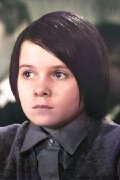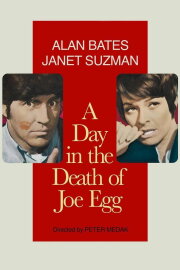
A couple uses extremely black comedy to survive taking care of a daughter who is nearly completely brain-dead. They take turns doing the daughter's voice and stare into the eyes of death and emotional trauma with a humor that hides their pain.... (Full plot summary below)
Enjoy FREE movies and series with your Prime (USA) subscription or when you start a 30-day free trial!
| Movie Source | Available | Offers | Added | Views | Quality | Format | Rating | Link | Share |
|---|---|---|---|---|---|---|---|---|---|
 | UK only | 1 Month Free Trial | 26 Aug 2014 | 4570 | HD | Watch OnlineStream Instantly | 74% |  Report: Broken Link Report: Broken Link |   |
| USA only | 1 Month Free Trial | 31 Dec 2022 | 2081 | HD | Watch OnlineStream Instantly | 96% | Report: Broken Link | |
| IRELAND only | 1 Month Free Trial | 12 Nov 2018 | 5712 | HD | Watch OnlineStream Instantly | 79% | Report: Broken Link | |
 | UK only | 30 Day Free Trial | 26 Nov 2022 | 683 | HD | Watch OnlineStream Instantly | 82% | Report: Broken Link | |
![Its HD [A Day in the Death of Joe Egg]](/images/logos/icons/itshd.png) | WORLDWIDE | ? | 29 Nov 2020 | 3758 | HD | Watch OnlineStream Instantly | 85% | Report: Broken Link | |
 | UK only | 30 Day Free Trial | 07 Nov 2024 | 290 | HD | Watch OnlineStream Instantly | 45% | Report: Broken Link | |
 | UK only | Free Credit | 25 Mar 2026 | 145 | HD | Watch OnlineStream Instantly | 39% | Report: Broken Link | |
 | WORLDWIDE | ? | 28 May 2026 | 42 | HD | Watch OnlineStream Instantly | 18% | Report: Broken Link | |
 | WORLDWIDE | ? | 20 Mar 2019 | 17 | SD / TV | Watch OnlineStream Instantly | 18% | Report: Broken Link | |
 | WORLDWIDE | ? | 10 Aug 2024 | 144 | HD | Watch OnlineStream Instantly | 13% | Report: Broken Link | |
 | WORLDWIDE | ? | 08 Feb 2018 | 42 | SD / TV | Watch OnlineStream Instantly | 18% | Report: Broken Link | |
Links compiled using automated software. Availability of offers subject to change / might be region specific / out of date.
| Movie Source | Available | Offers | Added | Views | Quality | Format | Rating | Link | Share |
|---|---|---|---|---|---|---|---|---|---|
| UK only | 30 Day Free Trial | 17 Mar 2024 | 487 | SD / DVD | DVD RentalRent by Post | 83% |  Report: Broken Link Report: Broken Link | |
 | UK only | N/A | 17 Mar 2024 | 55 | SD / DVD | DVD RentalRent by Post | 37% | Report: Broken Link | |
 | USA only | 1 Month Free Trial | 17 Mar 2024 | 184 | SD / DVD | DVD RentalRent by Mail | 12% | Report: Broken Link | |
| USA only | 1 Month Free Trial | 17 Mar 2024 | 14381 | SD / DVD | DVD RentalRent by Mail | 85% | Report: Broken Link | |
| Movie Source | Available | Offers | Added | Views | Quality | Format | Rating | Link | Share |
|---|---|---|---|---|---|---|---|---|---|
| UK only | 30 Day Free Trial | 15 Mar 2019 | 316 | HD / BR | Blu Ray RentalRent by Post | 83% | Report: Broken Link | |
| UK only | N/A | 15 Mar 2019 | 69 | HD / BR | Blu Ray RentalRent by Post | 52% | Report: Broken Link | |
| USA only | 1 Month Free Trial | 17 Mar 2024 | 303 | HD / BR | Blu Ray RentalRent by Mail | 12% | Report: Broken Link | |
| USA only | 1 Month Free Trial | 15 Mar 2019 | 5593 | HD / BR | Blu Ray RentalRent by Mail | 84% | Report: Broken Link | |
Sorry, we can't find any suggestions at the moment.
A couple uses extremely black comedy to survive taking care of a daughter who is nearly completely brain-dead. They take turns doing the daughter's voice and stare into the eyes of death and emotional trauma with a humor that hides their pain.
Leave your thoughts about A Day in the Death of Joe Egg.
| User ReviewJenna IPart black comedy and part straight drama, "A Day in the Death of Joe Egg" is hard to classify. Perhaps "movies adapted from plays" is the most appropriate genre, because its staging has some of that typical drawing-room stiffness. Teacher/artist Bri (Alan Bates) and actress Sheila (Janet Suzman) are a sophisticated couple whose lives are saddled with a tragic burden: their disabled daughter Jo (Elizabeth Robillard, in her only film role). Alternately called a "spastic," a "vegetable" and other terms that may not be acceptable today, Jo looks about nine years old. She moans rather than speaks, has unfocused eyes and is not capable of voluntary movement. She only twitches with seizures. Bri and Sheila choose to deal with this awful situation through cynical wit ("God is a manic-depressive rugby footballer") and tart humor. The bulk of the script rests on their edgy interplay, and the full cast has only nine speaking parts. A babbling mother-in-law (Joan Hickson) is traditional comic relief, while family friends Freddie (Peter Bowles) and Pam (Sheila Gish) mirror our own discomfort. The other characters are fairly trivial. A scene on a tacky children's ride does add an amusing tour-guide part and a strangely uneventful Jean Marsh cameo. Bates is dazzling as usual, though his broad theatrics can be abrasive at times. Shakespearean actress Suzman is a fine foil, and also is game for some rather unnecessary nudity. The story's most powerful feature is its bold discussion of the euthanasia temptations that such parents shouldn't feel but inevitably do. The talk-based action drags a little, but a strong ending defies a scenario that seems wholly unresolvable. Director Peter Medak had quite a year between this film and the equally dangerous satire of "The Ruling Class." |