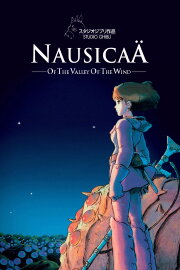
An animated fantasy-adventure. Set one thousand years from now, the Earth is ravaged by pollution and war. In the Valley of the Wind lives Nausicaä, Princess of her people. Their land borders on a toxic jungle, filled with dangerous over-sized insects. Meanwhile, two nearby nations are bitterly engaged in a war and the Valley of the Wind is stuck in the middle.... (Full plot summary below)
Enjoy FREE movies and series with your Prime (USA) subscription or when you start a 30-day free trial!
| Movie Source | Available | Offers | Added | Views | Quality | Format | Rating | Link | Share |
|---|---|---|---|---|---|---|---|---|---|
 | UK only | 1 Month Free Trial | 15 Oct 2024 | 5175 | HD | Watch OnlineStream Instantly | 79% |  Report: Broken Link Report: Broken Link |   |
| USA only | 1 Month Free Trial | 13 Sep 2019 | 5725 | HD | Watch OnlineStream Instantly | 86% | Report: Broken Link | |
| IRELAND only | 1 Month Free Trial | 10 Jun 2015 | 5679 | HD | Watch OnlineStream Instantly | 92% | Report: Broken Link | |
 | UK only | 30 Day Free Trial | 17 Sep 2022 | 693 | HD | Watch OnlineStream Instantly | 79% | Report: Broken Link | |
![Its HD [Warriors of the Wind]](/images/logos/icons/itshd.png) | WORLDWIDE | ? | 29 Jul 2013 | 3495 | HD | Watch OnlineStream Instantly | 87% | Report: Broken Link | |
 | UK only | 30 Day Free Trial | 23 Jun 2016 | 675 | HD | Watch OnlineStream Instantly | 38% | Report: Broken Link | |
 | UK only | Free Credit | 30 Jan 2018 | 130 | HD | Watch OnlineStream Instantly | 42% | Report: Broken Link | |
 | WORLDWIDE | ? | 06 Nov 2019 | 162 | HD | Watch OnlineStream Instantly | 18% | Report: Broken Link | |
 | WORLDWIDE | ? | 30 Mar 2021 | 15 | SD / TV | Watch OnlineStream Instantly | 18% | Report: Broken Link | |
 | WORLDWIDE | ? | 01 May 2018 | 249 | HD | Watch OnlineStream Instantly | 21% | Report: Broken Link | |
 | WORLDWIDE | ? | 11 Feb 2021 | 41 | SD / TV | Watch OnlineStream Instantly | 16% | Report: Broken Link | |
Links compiled using automated software. Availability of offers subject to change / might be region specific / out of date.
| Movie Source | Available | Offers | Added | Views | Quality | Format | Rating | Link | Share |
|---|---|---|---|---|---|---|---|---|---|
| UK only | 30 Day Free Trial | 17 Dec 2024 | 993 | SD / DVD | DVD RentalRent by Post | 75% |  Report: Broken Link Report: Broken Link | |
 | UK only | N/A | 17 Dec 2024 | 95 | SD / DVD | DVD RentalRent by Post | 56% | Report: Broken Link | |
 | USA only | 1 Month Free Trial | 17 Dec 2024 | 244 | SD / DVD | DVD RentalRent by Mail | 9% | Report: Broken Link | |
| USA only | 1 Month Free Trial | 17 Dec 2024 | 22136 | SD / DVD | DVD RentalRent by Mail | 83% | Report: Broken Link | |
| Movie Source | Available | Offers | Added | Views | Quality | Format | Rating | Link | Share |
|---|---|---|---|---|---|---|---|---|---|
| UK only | 30 Day Free Trial | 26 Mar 2013 | 295 | HD / BR | Blu Ray RentalRent by Post | 66% | Report: Broken Link | |
| UK only | N/A | 26 Mar 2013 | 50 | HD / BR | Blu Ray RentalRent by Post | 20% | Report: Broken Link | |
| USA only | 1 Month Free Trial | 17 Dec 2024 | 301 | HD / BR | Blu Ray RentalRent by Mail | 9% | Report: Broken Link | |
| USA only | 1 Month Free Trial | 26 Mar 2013 | 8156 | HD / BR | Blu Ray RentalRent by Mail | 82% | Report: Broken Link | |
An animated fantasy-adventure. Set one thousand years from now, the Earth is ravaged by pollution and war. In the Valley of the Wind lives Nausicaä, Princess of her people. Their land borders on a toxic jungle, filled with dangerous over-sized insects. Meanwhile, two nearby nations are bitterly engaged in a war and the Valley of the Wind is stuck in the middle.
Leave your thoughts about Warriors of the Wind.
| IGNSergio NonBig ambitions inspire great designs; little things bring them to life. Nausicaa has both in abundance. |
| Chicago ReaderBen SachsThe action sequences are as suspenseful as any in the director's career; the most impressive scenes, though, may be the slower ones, which consider how humanity might evolve after driving itself to near extinction. |
| The New YorkerMichael SragowHayao Miyazaki’s animated adventure, from 1984, is a magnificent anomaly—a rousing vision of scorched earth. |
| EmpireWilliam ThomasDreamlike Ghibli animation that's well worth seeking out. |
| The A.V. ClubTasha RobinsonThe film is good-hearted, energetic, and full of Ghibli's characteristically beautiful hand-rendered animation, but it's also lightweight and hyper, with none of Miyazaki's more resonant themes. |
| VarietyRobert KoehlerMiyazaki’s first hit fascinates as a glimpse into the master’s then-developing style, even when the final-act storytelling gets woozy. |
| User ReviewAlex1106Miyazaki's 1985 masterwork is in my opinion the best Studio Ghibli movie (if we can count it as one). The story takes many turns and we get a good representation of what a heartwarming character Nausicaä is and that our planet can only survive and live in peace if we take an example from her. What strikes me aswell is the remarkable soundtrack provided by Joe Hisaishi which makes scenes like the world below the Toxic Jungle even more amazing and unique. Without a doubt an outstanding movie. |
| User ReviewKazeNoTaniThe turning point and a high peak in world film history. This film is the start of the Ghibli era and the reason why we are so fortuned to see films like Spirit away (2001), Grave of the Fireflies (1988), Princess Mononoke (1997) or The Red Turtle (2016). It also blew people away with its unique theme, even just by using 20% percent of the original story (The original Manga is far more thoughtful and interesting). |
| User ReviewHendaNociThis movie, together with Princess Mononoke and Grave of the Fireflies, are Hayao Miyazaki's best work. Amazing story and artwork. I re-watch this movie almost every year just like many other anime's from Ghibli. |
| User ReviewSierra-117After his much acclaimed directorial debut The Castle of Cagliostro in 1979, Hayao Miyazaki, who would go on to co-found the widely loved Studio Ghibli, began working on the manga for a project that in 1984 would be adapted into an animated feature entitled Nausicaä of the Valley of the Wind. The story would be set in a dystopian future, in which a toxic jungle slowly envelopes all that remains of our world, and yet still mankind’s innate lust for power nullifies any hope of survival. Here it’s pretty difficult to miss the message Miyazaki is trying to convey. Throughout the film we are constantly reminded that nature ought to be preserved rather than destroyed. As we later discover, the entire existence of the toxic jungle is but a result of pollution, further emphasising the need for us to end the rapid decline of our planet’s environment. Maybe now it’s easier to dismiss Miyazaki’s ideas as platitudinous, but it’s important to remember that this film came out in 1984. Miyazaki was over thirty years ahead of his time, as the themes he displays are only more relevant in our day and age with the ominous threat of global warming becoming increasingly prominent. Miyazaki’s main vessel for bringing these ideas to light is none other than the protagonist herself, Nausicaä. Miyazaki, ever the feminist, has always been brilliant at writing strong female characters in his films, regardless of the significance of their role. San in Princess Mononoke is a great example, Chihiro in Spirited Away is another, but ultimately Nausicaä is perhaps my favourite protagonist of any Ghibli film. She perfectly captures the idealistic naivety and childlike innocence that is so common amongst Miyazaki’s main characters, however she’s also extremely competent, and never at any point feels like a burden or relies too much on support from her peers. This blend works wonders for Nausicaä’s effect on the audience. Her naivety and innocent nature makes it difficult not to sympathise with her as a character, and as a result when she feels any kind of strong emotion, said emotion is shared effortlessly with the viewer. Furthermore, at several points she even acts as the voice of Miyazaki himself. When she sees death, destruction and the disregard for nature, she is deeply troubled, and thus the audience feels the same way. On top of that, her determination and resilience are a nice change of pace from the annoying stereotypes that have been associated with female leads in the past, and ultimately make her less of a two dimensional character. Of course Nausicaä isn’t the only great character in the movie. Lord Yupa is one likeable and badass individual, Asbel is a lovable rogue, Kurotawa is a wretched and contemptible weasel and so on. There is a great variety of of characters, all of whom are welcomed additions to the cast, and none of which feel at all bland or particularly unmemorable. One of my favourite aspects of the genre is undoubtedly the endless opportunity for world building. I’m in love with the different aesthetics artists are able to create through colour, designs, music and much more. It should go without saying at this point that Nausicaä of the Valley of the Wind, like all fictional worlds conceived by Miyazaki, is an absolute wonder and a joy to behold. The awe-inspiring landscapes, the intriguing wildlife, and the beautiful score by Joe Hisaishi all attribute to the alluring atmosphere that I just can’t get enough of. Hell, the world building was so great that it seems to have inspired half of the fantasy/sci-fi movies that have come afterwards. The wild terrain of Pandora and connecting of consciousnesses in Avatar borrows heavily from the Toxic Jungle and the Ohms. The sequence of Gandalf’s arrival in the Shire bears striking resemblance to Lord Yupa’s return to the valley. The force awakens even took several scenes shot for shot, and copy&pasted the characters of Nausicaä, Asbel and Kushana into Rey, Finn and Phasma (Nice one JJ). Miyazaki even reused many of his gimmicks and ideas for his future films - compare the blast from the giant monster’s mouth to the weapon used by the robots of Castle in the sky, or the surreal lightning effects from both movies. It is undeniable how strong an influence some of Miyazaki’s work has had on modern cinema, but then why oh why does he receive so little credit? I suppose that is a question for another time. To conclude, Nausicaä of the Valley of the wind is a phenomenal film, and due to its strong cast of characters, relevant themes, incredible world building and unquestionable influence, it is both my second favourite Miyazaki movie, and one of my favourite films in general. It might not necessarily be for everyone, but I strongly recommend you check it out regardless. |