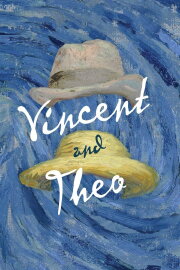
It's the late nineteenth century. Adult Dutch brothers Vincent Van Gogh and Theo Van Gogh, living in Paris, lead differing lives despite having art as a connection. Vincent, who sticks to his principles which includes believing in God but not religion, wants to be a full time painter, living in squalor for his art. Theo, who works in an art gallery, lives for the moment, he selling art which he doesn't much like to lead a comfortable life. One other area of commonality betwee... (Full plot summary below)
Enjoy FREE movies and series with your Prime (USA) subscription or when you start a 30-day free trial!
| Movie Source | Available | Offers | Added | Views | Quality | Format | Rating | Link | Share |
|---|---|---|---|---|---|---|---|---|---|
 | UK only | 1 Month Free Trial | 19 Sep 2025 | 5790 | HD | Watch OnlineStream Instantly | 81% |  Report: Broken Link Report: Broken Link |   |
| USA only | 1 Month Free Trial | 20 Oct 2022 | 4522 | HD | Watch OnlineStream Instantly | 84% | Report: Broken Link | |
| IRELAND only | 1 Month Free Trial | 31 Aug 2017 | 2971 | HD | Watch OnlineStream Instantly | 66% | Report: Broken Link | |
 | UK only | 30 Day Free Trial | 13 Sep 2015 | 560 | HD | Watch OnlineStream Instantly | 93% | Report: Broken Link | |
![Its HD [Vincent & Theo]](/images/logos/icons/itshd.png) | WORLDWIDE | ? | 08 Jan 2015 | 3108 | HD | Watch OnlineStream Instantly | 85% | Report: Broken Link | |
 | UK only | 30 Day Free Trial | 24 Feb 2019 | 239 | HD | Watch OnlineStream Instantly | 39% | Report: Broken Link | |
 | UK only | Free Credit | 28 Mar 2019 | 133 | HD | Watch OnlineStream Instantly | 35% | Report: Broken Link | |
 | WORLDWIDE | ? | 15 Mar 2016 | 143 | HD | Watch OnlineStream Instantly | 11% | Report: Broken Link | |
 | WORLDWIDE | ? | 02 Feb 2016 | 23 | SD / TV | Watch OnlineStream Instantly | 15% | Report: Broken Link | |
 | WORLDWIDE | ? | 25 May 2026 | 188 | HD | Watch OnlineStream Instantly | 6% | Report: Broken Link | |
 | WORLDWIDE | ? | 07 Mar 2021 | 3 | SD / TV | Watch OnlineStream Instantly | 16% | Report: Broken Link | |
Links compiled using automated software. Availability of offers subject to change / might be region specific / out of date.
| Movie Source | Available | Offers | Added | Views | Quality | Format | Rating | Link | Share |
|---|---|---|---|---|---|---|---|---|---|
| UK only | 30 Day Free Trial | 16 Jun 2023 | 1729 | SD / DVD | DVD RentalRent by Post | 81% |  Report: Broken Link Report: Broken Link | |
 | UK only | N/A | 16 Jun 2023 | 35 | SD / DVD | DVD RentalRent by Post | 55% | Report: Broken Link | |
 | USA only | 1 Month Free Trial | 16 Jun 2023 | 42 | SD / DVD | DVD RentalRent by Mail | 6% | Report: Broken Link | |
| USA only | 1 Month Free Trial | 16 Jun 2023 | 15603 | SD / DVD | DVD RentalRent by Mail | 91% | Report: Broken Link | |
| Movie Source | Available | Offers | Added | Views | Quality | Format | Rating | Link | Share |
|---|---|---|---|---|---|---|---|---|---|
| UK only | 30 Day Free Trial | 06 Feb 2017 | 234 | HD / BR | Blu Ray RentalRent by Post | 64% | Report: Broken Link | |
| UK only | N/A | 06 Feb 2017 | 104 | HD / BR | Blu Ray RentalRent by Post | 35% | Report: Broken Link | |
| USA only | 1 Month Free Trial | 16 Jun 2023 | 414 | HD / BR | Blu Ray RentalRent by Mail | 19% | Report: Broken Link | |
| USA only | 1 Month Free Trial | 06 Feb 2017 | 10206 | HD / BR | Blu Ray RentalRent by Mail | 89% | Report: Broken Link | |
It's the late nineteenth century. Adult Dutch brothers Vincent Van Gogh and Theo Van Gogh, living in Paris, lead differing lives despite having art as a connection. Vincent, who sticks to his principles which includes believing in God but not religion, wants to be a full time painter, living in squalor for his art. Theo, who works in an art gallery, lives for the moment, he selling art which he doesn't much like to lead a comfortable life. One other area of commonality between the brothers is easily succumbing to pleasures of the flesh. Theo does not sell Vincent's art, as he knows it is not in demand. Vincent's view of his brother does not change when he learns it is Theo, and not their father which he had previously thought, who is supporting him. Each brother is a tortured soul - in Vincent's case, it considered in some circles as madness - which affects how each deals with his respective life. Beyond the several sexual relationships each has, some key moments and more extended periods in each their lives over the few years prior to their respective deaths is presented, including: Theo's battle with a bout a syphilis, which affects how and if he can carry on with his sexual relationships; Theo's superiors allowing him to run his own gallery largely on commission, which further pushes him into the realm of selling art he doesn't like to survive; Vincent's period in Provence, where he largely spends with fellow painter Paul Gaugin, one of the few other of his contemporaries he truly admires; and Vincent's infamous self-mutilation of his left ear, leading to Theo's measures to help him over his emotional pain by having him under the care of Dr. Paul Gachet, while dealing with his own turbulent marriage to the former Jo Bonger. That turbulence is largely due to Vincent often being a third in their relationship. This presentation is preceding by showing the acclaim that Vincent is regarded with in current times.
Leave your thoughts about Vincent & Theo.
| VarietyVariety StaffThis masterwork operates in the intimate, thoughtful vein of the great BBC bios of artistic figures. |
| Washington PostRita KempleyVincent & Theo is more than art appreciation, it is a treasure in its own right, unframed and arcing in the projector's light. |
| Boston GlobeJay CarrOne of Robert Altman’s most cinematically conventional films as well as one of his most deeply personal. |
| Portland OregonianTed MaharVincent & Theo is more than art appreciation, it is a treasure in its own right, unframed and arcing in the projector's light. |
| San Francisco ExaminerJeffrey M. AndersonBrilliant performances, great use of color. |
| Chicago Sun-TimesRoger EbertAltman's approach in Vincent & Theo is a very immediate, intimate one. He would rather show us things happening than provide themes and explanations. He is most concerned with the relationship that made the art possible. |
| NewsweekRay SawhillAltman has a sorcerer's ability to crack open scenes and invite us in to wander through them, and he keeps Vincent & Theo bristling with emotions and ideas. |
| Time OutGeoff AndrewNowhere does Altman sermonise about the artist's greatness; his achievement is allowed to speak for itself. If only more film-makers had such confidence and integrity. |
| New York TimesJanet MaslinThe enjoyment in Vincent and Theo comes more from the director's attention to art history than from his ability to interpret it anew. |
| rec.arts.movies.reviewsMark R. LeeperThere is an odd disjointed quality to the script. |