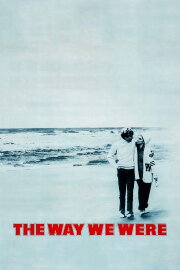
The often unlikely joint lives of Katie Morosky and Hubbell Gardiner from the late 1930s to the late 1950s is presented, over which time, they are, in no particular order, strangers, acquaintances, friends, best friends, lovers and adversaries. The unlikely nature of their relationship is due to their fundamental differences, where she is Jewish and passionate about her political activism both in political freedoms and Marxism to an extreme where she takes life a little too s... (Full plot summary below)
Enjoy FREE movies and series with your Prime (USA) subscription or when you start a 30-day free trial!
| Movie Source | Available | Offers | Added | Views | Quality | Format | Rating | Link | Share |
|---|---|---|---|---|---|---|---|---|---|
 | UK only | 1 Month Free Trial | 01 Nov 2019 | 3903 | HD | Watch OnlineStream Instantly | 76% |  Report: Broken Link Report: Broken Link |   |
| USA only | 1 Month Free Trial | 08 May 2022 | 4536 | HD | Watch OnlineStream Instantly | 71% | Report: Broken Link | |
| IRELAND only | 1 Month Free Trial | 01 Jun 2017 | 4369 | HD | Watch OnlineStream Instantly | 79% | Report: Broken Link | |
 | UK only | 30 Day Free Trial | 12 Jan 2020 | 682 | HD | Watch OnlineStream Instantly | 82% | Report: Broken Link | |
![Its HD [The Way We Were]](/images/logos/icons/itshd.png) | WORLDWIDE | ? | 06 Apr 2024 | 3107 | HD | Watch OnlineStream Instantly | 88% | Report: Broken Link | |
 | UK only | 30 Day Free Trial | 12 Jun 2013 | 510 | HD | Watch OnlineStream Instantly | 58% | Report: Broken Link | |
 | UK only | Free Credit | 23 Mar 2015 | 145 | HD | Watch OnlineStream Instantly | 40% | Report: Broken Link | |
 | WORLDWIDE | ? | 02 Jan 2014 | 37 | HD | Watch OnlineStream Instantly | 11% | Report: Broken Link | |
 | WORLDWIDE | ? | 08 Jul 2015 | 25 | SD / TV | Watch OnlineStream Instantly | 20% | Report: Broken Link | |
 | WORLDWIDE | ? | 11 Jan 2016 | 274 | HD | Watch OnlineStream Instantly | 27% | Report: Broken Link | |
 | WORLDWIDE | ? | 21 Oct 2021 | 11 | SD / TV | Watch OnlineStream Instantly | 10% | Report: Broken Link | |
Links compiled using automated software. Availability of offers subject to change / might be region specific / out of date.
| Movie Source | Available | Offers | Added | Views | Quality | Format | Rating | Link | Share |
|---|---|---|---|---|---|---|---|---|---|
| UK only | 30 Day Free Trial | 12 May 2019 | 1594 | SD / DVD | DVD RentalRent by Post | 67% |  Report: Broken Link Report: Broken Link | |
 | UK only | N/A | 12 May 2019 | 62 | SD / DVD | DVD RentalRent by Post | 59% | Report: Broken Link | |
 | USA only | 1 Month Free Trial | 12 May 2019 | 168 | SD / DVD | DVD RentalRent by Mail | 14% | Report: Broken Link | |
| USA only | 1 Month Free Trial | 12 May 2019 | 12400 | SD / DVD | DVD RentalRent by Mail | 92% | Report: Broken Link | |
| Movie Source | Available | Offers | Added | Views | Quality | Format | Rating | Link | Share |
|---|---|---|---|---|---|---|---|---|---|
| UK only | 30 Day Free Trial | 22 Mar 2015 | 287 | HD / BR | Blu Ray RentalRent by Post | 92% | Report: Broken Link | |
| UK only | N/A | 22 Mar 2015 | 82 | HD / BR | Blu Ray RentalRent by Post | 17% | Report: Broken Link | |
| USA only | 1 Month Free Trial | 12 May 2019 | 470 | HD / BR | Blu Ray RentalRent by Mail | 7% | Report: Broken Link | |
| USA only | 1 Month Free Trial | 22 Mar 2015 | 7656 | HD / BR | Blu Ray RentalRent by Mail | 87% | Report: Broken Link | |
The often unlikely joint lives of Katie Morosky and Hubbell Gardiner from the late 1930s to the late 1950s is presented, over which time, they are, in no particular order, strangers, acquaintances, friends, best friends, lovers and adversaries. The unlikely nature of their relationship is due to their fundamental differences, where she is Jewish and passionate about her political activism both in political freedoms and Marxism to an extreme where she takes life a little too seriously, while he is the golden boy WASP, being afforded the privileges in life because of his background but who on the most part is able to capitalize on those privileges. Their lives are shown in four general time periods, in chronological order when they attend the same college, their time in New York City during WWII, his life as a Hollywood screenwriter post-war, and his life as a writer for a New York based live television show. It is during college that Hubbell finds his voice in life as a writer, and that Katie sees beyond his good looks to find a person with substance who realizes his position in a life as something that does not give him an inherent right to those opportunities. External world events, such as the Spanish Civil War, WWII and the House Un-American Activities investigation, do affect their lives directly, but it is how they deal with these effects personally, largely in relation to personal relationships - such as with Hubbell's long term friends J.J. and Carol Ann, the latter his college girlfriend - that may dictate if Katie and Hubbell are able to make it in the long term as a couple.
Leave your thoughts about The Way We Were.
| Hollywood ReporterAlan R. HowardLaurents' screenplay has a shocking sense of character truth, and The Way We Were says things that no one else has dared to say in a major Hollywood movie. |
| AV ClubJesse HassengerFor a screen romance with huge movie stars, that sentiment feels pretty real. |
| Cleveland PressTony MastroianniThe Way We Were isn't about the way we were. It's about the movies we used to see. |
| VarietyVariety StaffA distended, talky, redundant and moody melodrama. |
| Chicago Sun-TimesRoger EbertEssentially just a love story, and not sturdy enough to carry the burden of both radical politics and a bittersweet ending. |
| The New YorkerPauline KaelRedford and Streisand are the whole show, so scenes with various supporting characters drag. But Pollack’s film still manages to function as a glossy rebuke to the Hollywood standard of the unlikely romance. |
| Empire MagazineWilliam ThomasIt all adds up to just another glossy Love Story. |
| Chicago ReaderDon DrukerA film about marriage that works reasonably well as a star vehicle for Robert Redford and Barbra Streisand, but fails resoundingly as the caustic social comment director Sydney Pollack and writer Arthur Laurents obviously intended. |
| EmanuelLevy.ComEmanuel LevyIn Pollack's schmaltzy romantic melodrama, real politics is in the background (of course), but the movie is enjoyable as a star vehicle for its handsome stars, Redford and Streisand in their only film together, not to mention Hamlisch's melodic tone. |
| New York TimesVincent CanbyBy, some peculiar alchemy, The Way We Were turns into the kind of compromised claptrap that Hubbell is supposed to be making within the film and that we're meant to think is a sellout. It is. |