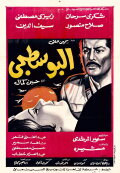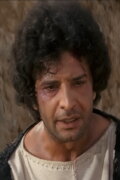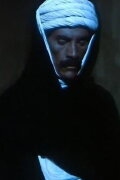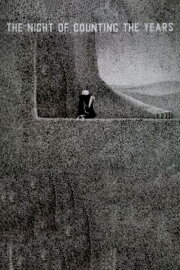
Universally recognized as one of the greatest Egyptian films ever made, The Night of Counting the Years is based on a true story: in 1881, when precious artifacts began showing up at market, it was discovered that members of the ancient Horbat tribe were secretly raiding Deir al-Bahari, the site of a legendary cache of royal mummies. The tribe had little livelihood other than selling antiquities, putting them in conflict with the Egyptian government's Antiquities Organization... (Full plot summary below)
Enjoy FREE movies and series with your Prime (USA) subscription or when you start a 30-day free trial!
| Movie Source | Available | Offers | Added | Views | Quality | Format | Rating | Link | Share |
|---|---|---|---|---|---|---|---|---|---|
 | UK only | 1 Month Free Trial | 17 Apr 2023 | 4116 | HD | Watch OnlineStream Instantly | 80% |  Report: Broken Link Report: Broken Link |   |
| USA only | 1 Month Free Trial | 10 Apr 2022 | 3111 | HD | Watch OnlineStream Instantly | 86% | Report: Broken Link | |
| IRELAND only | 1 Month Free Trial | 22 Apr 2022 | 4267 | HD | Watch OnlineStream Instantly | 84% | Report: Broken Link | |
 | UK only | 30 Day Free Trial | 22 Dec 2018 | 835 | HD | Watch OnlineStream Instantly | 86% | Report: Broken Link | |
![Its HD [The Night of Counting the Years]](/images/logos/icons/itshd.png) | WORLDWIDE | ? | 14 Apr 2020 | 3343 | HD | Watch OnlineStream Instantly | 89% | Report: Broken Link | |
 | UK only | 30 Day Free Trial | 02 Jun 2016 | 392 | HD | Watch OnlineStream Instantly | 54% | Report: Broken Link | |
 | UK only | Free Credit | 22 Mar 2022 | 123 | HD | Watch OnlineStream Instantly | 30% | Report: Broken Link | |
 | WORLDWIDE | ? | 29 May 2025 | 42 | HD | Watch OnlineStream Instantly | 32% | Report: Broken Link | |
 | WORLDWIDE | ? | 26 Nov 2025 | 22 | SD / TV | Watch OnlineStream Instantly | 24% | Report: Broken Link | |
 | WORLDWIDE | ? | 20 Aug 2024 | 293 | HD | Watch OnlineStream Instantly | 18% | Report: Broken Link | |
 | WORLDWIDE | ? | 29 Sep 2015 | 9 | SD / TV | Watch OnlineStream Instantly | 13% | Report: Broken Link | |
Links compiled using automated software. Availability of offers subject to change / might be region specific / out of date.
| Movie Source | Available | Offers | Added | Views | Quality | Format | Rating | Link | Share |
|---|---|---|---|---|---|---|---|---|---|
| UK only | 30 Day Free Trial | 07 Mar 2013 | 720 | SD / DVD | DVD RentalRent by Post | 72% |  Report: Broken Link Report: Broken Link | |
 | UK only | N/A | 07 Mar 2013 | 51 | SD / DVD | DVD RentalRent by Post | 22% | Report: Broken Link | |
 | USA only | 1 Month Free Trial | 07 Mar 2013 | 133 | SD / DVD | DVD RentalRent by Mail | 12% | Report: Broken Link | |
| USA only | 1 Month Free Trial | 07 Mar 2013 | 15375 | SD / DVD | DVD RentalRent by Mail | 82% | Report: Broken Link | |
| Movie Source | Available | Offers | Added | Views | Quality | Format | Rating | Link | Share |
|---|---|---|---|---|---|---|---|---|---|
| UK only | 30 Day Free Trial | 17 Mar 2019 | 248 | HD / BR | Blu Ray RentalRent by Post | 85% | Report: Broken Link | |
| UK only | N/A | 17 Mar 2019 | 46 | HD / BR | Blu Ray RentalRent by Post | 11% | Report: Broken Link | |
| USA only | 1 Month Free Trial | 07 Mar 2013 | 450 | HD / BR | Blu Ray RentalRent by Mail | 15% | Report: Broken Link | |
| USA only | 1 Month Free Trial | 17 Mar 2019 | 6760 | HD / BR | Blu Ray RentalRent by Mail | 93% | Report: Broken Link | |
Universally recognized as one of the greatest Egyptian films ever made, The Night of Counting the Years is based on a true story: in 1881, when precious artifacts began showing up at market, it was discovered that members of the ancient Horbat tribe were secretly raiding Deir al-Bahari, the site of a legendary cache of royal mummies. The tribe had little livelihood other than selling antiquities, putting them in conflict with the Egyptian government's Antiquities Organization. After reading the script, Roberto Rossellini agreed to lend his name to the project, and Shadi Abdel Salam's film was completed in 1969. This cinematic treat was extremely difficult to see from the 1970s onward until last year's beautiful restoration by Martin Scorsese's World Cinema Foundation. Using original 35mm camera and sound negatives preserved at the Egyptian Film Center in Giza, the restoration preserves the film's poetic beauty, its evocative sense of history, and its themes of desecration and veneration. Filmed in classical Arabic, with a musical score by the great Italian composer Mario Nascimbene. Restored in 2009 by the World Cinema Foundation at Cineteca di Bologna L'Immagine Ritrovata Laboratory. The film was restored with the support of the Egyptian Ministry of Culture.
Leave your thoughts about The Night of Counting the Years.
| User ReviewEdgar CThe British occupation of Egypt began in 1882 and was extended until 1956, two years later after the Anglo-Egyptian agreement of 1954. Al-Mummia takes place in 1881. That is important. Often credited by Egyptian critics and worldwide connoiseurs alike as one of the most important Egyptian films ever made - and if I am allowed to say, my third favorite film from Egypt - Al-Mummia is one incredible, spectacular and thought-provoking masterpiece about the search of a national identity, where the stellar cinematography and a haunting score are barely the technical highlights of a deeply symbolic testament made not with a camera, but with a collective heart. Based on a true story, Al-Mummia faithfully dramatizes the 1881 incidents, in which an Upper-Egyptian clan called the Abd el-Rasuls were secretly raiding Deir al-Bahari, a site containing a cache of royal mummies that covered the Nineteenth Dynasty (1292 BC - 1189 BC), the Twentieth Dynasty (1189 BC - 1077 BC) and the Twenty-first Dynasty (1077 BC - 943 BC), and possibly two more Dynasties, belonging to the New Kingdom and to the Third Intermediate Period of Egypt. This clan would then sell the antiquities on the open market in Cairo. Nevertheless, after an internal conflict in the clan, one member decides to help the authorities of the Supreme Council of Antiquities, established in 1859 for the conservation, protection and regulation of all antiquities and archaeological excavations in Egypt. This historical setting is used with many purposes. To begin with, there is an internal conflict that involves tradition and a respect for the dead. As it turns out, this clan had been carrying out this livelihood for approximately three milennia. Even in the times of the Dynasties, tomb raidings were rather common. This activity, now passed down as a long-lasting tradition, seems to trouble some members of the clan as a sign of disrespect against their ancestors, so there is a moral trade-off between preserving tradition and assigning an eternal resting place to the dead. Secondly, we have the conflict between two civilizations: countryside and city. Their perspectives on the correct "cultural" administration and handling of antiquities that represent the identity of a very ancient civilization, still under current evolution, differ significantly under subjective terms. Maybe a consensus between those two perspectives could be reached, but it turns out that civilization is proggressively walking towards a society ruled by the wealth maximization rules of the homo conomicus, thus obstructing the path to an easier resolution. This conflict that has antiquities as an excuse is actually a conflict of lifestyles and relative moral. Thirdly, we have 1881 as a breaking point in Egypt's history. It is speculated that the antiquities stand for an identity long held by two different civilizations in different ways, thus providing a prophetic subtext for the occupation that would follow next year, where this national identity, that is ultimately held as collective, at least in average, would suffer again a challenge by the occupation of foreign forces with yet another set of national and financial concepts. Technically, the film shifts from style to style, but all consistent in terms of pace, that range from a camera that pays close attention to the vastness of deserted landscapes and water, to minimalist architectonic impressionism previously observed in the works of Jean-Daniel Pollet, especially Bassae (1964). The dialogue delivery and subtle acting give a metaphysical importance to a long-held culture that surpasses the comprehension even of the natives, like poetry composed with lines of mysticism. An absolutely entrancing experience, Chadi Abdel Salam's first film is one of the most admirable debuts in worldwide cinema, which rises transcendent questionings to the surface, which hides infinite historical layers of sand beneath it. 98/100 |
| User ReviewDave FAbsolutely brilliant movie - beautifully shot, fantasticly subtle acting. Very reminiscent of Yellow Earth. |
| User ReviewArt SHypnotic and eerie but true tale from Egypt detailing how a remote tribe was caught plundering a hidden mountain tomb where dozens of mummies (including those of important pharaohs) had been secured 3000 years ago after their official tombs in the Valley of the Kings had been desecrated. Taking place in the late 1880's, the film also contains an apparent conflict between the city people and the mountain people, the modern versus the traditional culture. However, all is not what it seems, as the young people of the mountain tribe show that they have more respect for their ancestors than do their elders who have been beset by greed, aided by a malevolent antiquities dealer. The day is won by those who wish to preserve and safeguard the past. The actual landscapes and relics of Egypt and some spooky electronic music give this a quality of dreamlike otherworldliness. |
| User ReviewDrew SOppressively somber, but absolutely gorgeous, with some important things to say about collective identity and loyalty. Steeped in just the right amount of intrigue, crime and death, Al-Mummia can be difficult to follow, and its complete lack of warmth probably won't be landing it on any favorites lists any time soon. I thought it was a fascinating, original sociological piece, though; it has a relationship with the tomb-robber tribe that is both intimate and distant, critical and nonjudgmental, at the same time. Combined with cinematography and mise-en-scene that is almost too lush to believe, and you have a really significant piece of Egyptian cinema. Martin Scorsese picked a great film to restore. |