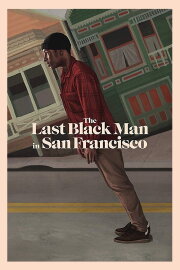
Jimmie Fails IV, a black man, is a third generation San Franciscan. Having been pushed out by circumstances like many others, Jimmie, who works a low paying job as a nurse in a seniors' care facility, returned to San Francisco three years ago and has been living in his best friend Montgomery Allen's house that he shares with his blind grandfather, Jimmie who sleeps on the floor in Mont's already cramped bedroom. Despite the house, Mont's situation is not much better than Jimm... (Full plot summary below)
FREE with your Prime (USA) subscription or when you start a 30-day free trial!
Jimmie Fails IV, a black man, is a third generation San Franciscan. Having been pushed out by circumstances like many others, Jimmie, who works a low paying job as a nurse in a seniors' care facility, returned to San Francisco three years ago and has been living in his best friend Montgomery Allen's house that he shares with his blind grandfather, Jimmie who sleeps on the floor in Mont's already cramped bedroom. Despite the house, Mont's situation is not much better than Jimmie's, Mont who works at a supermarket fish counter while he sketches and writes a play on the side. Other black people around him who are showing their anger in also being disenfranchised from San Francisco life are the soapbox preacher who Jimmie and Mont often watch as they wait for the bus, and a group of young black men who hang outside of Mont's house. All of Jimmie's family, who he rarely sees, are also disenfranchised from that San Francisco life in one way or another: his estranged father lives in an SRO; his mother and her new husband long moved to Los Angeles; and his paternal Auntie Wanda has been pushed out to the suburbs. Jimmie has long wanted to reclaim what he sees as his place in San Francisco, which to him means the house he grew up in and which his same named paternal grandfather built in the post-war era in a style indicative to the area a century earlier. The problems are that his father lost the house long ago, the neighborhood has since been gentrified from the immigrant neighborhood it once was, increasing the value of the house to the several millions, and a white couple currently lives there, there being no indication that they are either planning on leaving or selling even if Jimmie could afford it. Regardless, Jimmie, with Mont by his side, has and continues to take steps to reclaim the house as his to his standards.
Leave your thoughts about The Last Black Man in San Francisco.
| Time OutJoshua RothkopfLike Barry Jenkins similarly set Medicine for Melancholy, The Last Black Man in San Francisco supplies positivity to the struggle. |
| Entertainment WeeklyLeah GreenblattIt’s not a movie for admiring in freeze frame; it’s the kind you fall into with your whole heart and emerge from feeling, for two hours at least, what it is to fully be transported by the magic of film. |
| RogerEbert.comOdie HendersonJimmie’s story is a slow ballad, a tragic ode, a dirty limerick, a wistful lament and a heartbreaking elegy. It’s a tribute to the notion of home that we all carry. This is one of the year’s best films. |
| Washington PostAnn HornadayA lyrical, visually stunning tone poem to loss, lies, reclamation and making peace with the past, The Last Black Man in San Francisco virtually defies conventional description. To see it is to believe it, even when it doesn’t strictly make sense. |
| San Francisco ChroniclePeter HartlaubA strikingly immersive movie, a slow burn filled with subtleties and nuance, with its message nestled in the details as much as the greater story. While other filmmakers have effectively captured San Francisco’s landmarks and topography, story co-writers Fails and Talbot seem to be filming San Francisco’s streets with a microscope. |
| The PlaylistGregory EllwoodThe film team is so strong and the direction so fine that it’s simply hard to believe this is actually Talbot’s first full-length feature film. And to detail much more would spoil the genuine surprise of their many on-screen artistic contributions. |
| The New York TimesManohla DargisMostly, the movie has a cascade of images and ideas, reference points and glimpses of everyday beauty that flow and swirl and, over time, gather tremendous force. |
| The Seattle TimesSoren AndersenThough his character bears Fails’ name and the picture is autobiographical, it’s not a documentary. Fails and co-screenwriter Rob Richert have embroidered on his experiences to create a story that melds realism with make-believe. |
| The Associated PressJake CoyleIt’s all so handsomely shot and deliberately staged that you might at times worry that The Last Black Man in San Francisco is leaning more toward picturesque than profound. But when Talbot’s film rises to its rousing and sensitive climax, the fairy tale falls away and something authentically soulful emerges. |
| The Globe and Mail (Toronto)Barry HertzThe drama is an endlessly inventive and devastating work, a lyrical ode to a city that has turned its back on its most devoted citizens. |