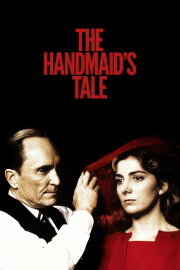
In a future dystopian land (formerly the United States of America), the story tells of Kate, a "handmaid". Kate is a criminal, guilty of the crime of trying to escape and sentenced to become a Handmaid. Handmaids' sole function is to bear the children of influential men whose wives (like most women) have been rendered infertile due to pollution. After rigorous group training by "Aunt" Lydia ("Aunts" train and discipline handmaids) in the proper way to behave, Kate is assigned... (Full plot summary below)
Enjoy FREE movies and series with your Prime (USA) subscription or when you start a 30-day free trial!
| Movie Source | Available | Offers | Added | Views | Quality | Format | Rating | Link | Share |
|---|---|---|---|---|---|---|---|---|---|
 | UK only | 1 Month Free Trial | 21 Mar 2024 | 5024 | HD | Watch OnlineStream Instantly | 75% |  Report: Broken Link Report: Broken Link |   |
| USA only | 1 Month Free Trial | 01 Dec 2018 | 3014 | HD | Watch OnlineStream Instantly | 80% | Report: Broken Link | |
| IRELAND only | 1 Month Free Trial | 11 Jan 2025 | 3689 | HD | Watch OnlineStream Instantly | 66% | Report: Broken Link | |
 | UK only | 30 Day Free Trial | 22 Jul 2016 | 837 | HD | Watch OnlineStream Instantly | 100% | Report: Broken Link | |
![Its HD [The Handmaids Tale]](/images/logos/icons/itshd.png) | WORLDWIDE | ? | 22 Feb 2017 | 3737 | HD | Watch OnlineStream Instantly | 87% | Report: Broken Link | |
 | UK only | 30 Day Free Trial | 21 Apr 2024 | 635 | HD | Watch OnlineStream Instantly | 61% | Report: Broken Link | |
 | UK only | Free Credit | 02 Sep 2018 | 146 | HD | Watch OnlineStream Instantly | 33% | Report: Broken Link | |
 | WORLDWIDE | ? | 13 Apr 2025 | 139 | HD | Watch OnlineStream Instantly | 35% | Report: Broken Link | |
 | WORLDWIDE | ? | 25 Nov 2025 | 17 | SD / TV | Watch OnlineStream Instantly | 21% | Report: Broken Link | |
 | WORLDWIDE | ? | 07 Mar 2013 | 214 | HD | Watch OnlineStream Instantly | 26% | Report: Broken Link | |
 | WORLDWIDE | ? | 13 Jul 2019 | 21 | SD / TV | Watch OnlineStream Instantly | 13% | Report: Broken Link | |
Links compiled using automated software. Availability of offers subject to change / might be region specific / out of date.
| Movie Source | Available | Offers | Added | Views | Quality | Format | Rating | Link | Share |
|---|---|---|---|---|---|---|---|---|---|
| UK only | 30 Day Free Trial | 28 Sep 2022 | 3031 | SD / DVD | DVD RentalRent by Post | 85% |  Report: Broken Link Report: Broken Link | |
 | UK only | N/A | 28 Sep 2022 | 112 | SD / DVD | DVD RentalRent by Post | 37% | Report: Broken Link | |
 | USA only | 1 Month Free Trial | 28 Sep 2022 | 187 | SD / DVD | DVD RentalRent by Mail | 5% | Report: Broken Link | |
| USA only | 1 Month Free Trial | 28 Sep 2022 | 9888 | SD / DVD | DVD RentalRent by Mail | 83% | Report: Broken Link | |
| Movie Source | Available | Offers | Added | Views | Quality | Format | Rating | Link | Share |
|---|---|---|---|---|---|---|---|---|---|
| UK only | 30 Day Free Trial | 11 Aug 2024 | 324 | HD / BR | Blu Ray RentalRent by Post | 62% | Report: Broken Link | |
| UK only | N/A | 11 Aug 2024 | 47 | HD / BR | Blu Ray RentalRent by Post | 30% | Report: Broken Link | |
| USA only | 1 Month Free Trial | 28 Sep 2022 | 164 | HD / BR | Blu Ray RentalRent by Mail | 19% | Report: Broken Link | |
| USA only | 1 Month Free Trial | 11 Aug 2024 | 2850 | HD / BR | Blu Ray RentalRent by Mail | 100% | Report: Broken Link | |
In a future dystopian land (formerly the United States of America), the story tells of Kate, a "handmaid". Kate is a criminal, guilty of the crime of trying to escape and sentenced to become a Handmaid. Handmaids' sole function is to bear the children of influential men whose wives (like most women) have been rendered infertile due to pollution. After rigorous group training by "Aunt" Lydia ("Aunts" train and discipline handmaids) in the proper way to behave, Kate is assigned as Handmaid to the Commander. Kate is attracted to Nick, the Commander's chauffeur. At the same time, a resistance movement begins to challenge the regime.
Leave your thoughts about The Handmaid's Tale.
| The Seattle TimesMichael UpchurchWith its devilish attention to polite little touches, its abundant bitchiness, its decrying of the Handmaids' oppression along with its tacit celebration of their fecundity, The Handmaid's Tale is a shrewd if preposterous cautionary tale that strikes a wide range of resonant chords. |
| USA TodayMike ClarkThough helmer Volker Schlondorff succeeds in painting the bleakness of this extrapolated future, he fails to create a strong and persistent connection with the heroine’s plight. |
| Spirituality and PracticeFrederic and Mary Ann BrussatThis film adaptation of Margaret Atwood's bestselling 1986 novel heralds freedom as a cherished ideal. |
| FlavorwireJason BaileyThe early '90s were also not exactly a robust period in political cinema, and the influence of the Moral Majority - so clearly felt in Atwood's text - wasn't as pronounced in the Bush I White House as it had been in Reagan's. But, sadly, it sure is now. |
| Los Angeles TimesPeter RainerAt the end of the movie we are conscious of large themes and deep thoughts, and of good intentions drifting out of focus. |
| Washington PostRita KempleyIf the movie stands between good old messy, toxic America and depraved Gilead, blessed be it. But alas, it's unlikely to appeal to the converted, much less bona fide brimstone eaters. And one can't help but wonder why a woman didn't direct this movie about women being dominated by men. |
| Washington PostDesson ThomsonThe finale isn't quite as chillingly nerve-wracking as one would hope. Schloendorff, who also made The Tin Drum, directs with a uniform dullness that creates little sense of suspense. In replaying the Atwood novel, he and Pinter ultimately fail to create a significant timbre of their own to make the transmogrification truly effective. |
| Movie BoeufDavid N. ButterworthSchlondorff's treatment is idly drab and antiseptic, indifferent almost, as though he felt Atwood's vision was cinematic enough. |
| NewsweekJack KrollPinter's adaptation is uninspired, and this half-heartedness, combined with Schlondorff's heavy-handedness, serves to crush Atwood's feminist concerns through overkill and to turn a provocative novel into a screen polemic that invites no discussion. This isn't filmmaking; it's haranguing by celluloid. |
| EmpireRob BeattieComes across as a TV movie and overall, a disappointment - a high calibre cast and concept completely squandered. |