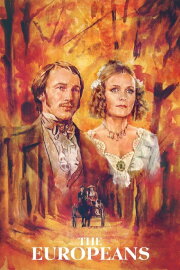
It's the mid-nineteenth century. Adult siblings Felix Young and Eugenia Munster were born and raised in Europe and have a somewhat bohemian lifestyle reflective of their travels throughout Europe. Felix, who has little money, is interested in painting and the arts. Eugenia is a baroness by marriage. They decide to travel to New England to meet their maternal uncle and their three cousins, the Wentworths, for the first time, the Wentworths who live just outside of Boston. The ... (Full plot summary below)
Enjoy FREE movies and series with your Prime (USA) subscription or when you start a 30-day free trial!
| Movie Source | Available | Offers | Added | Views | Quality | Format | Rating | Link | Share |
|---|---|---|---|---|---|---|---|---|---|
 | UK only | 1 Month Free Trial | 19 Apr 2023 | 3385 | HD | Watch OnlineStream Instantly | 68% |  Report: Broken Link Report: Broken Link |   |
| USA only | 1 Month Free Trial | 18 Apr 2015 | 3889 | HD | Watch OnlineStream Instantly | 71% | Report: Broken Link | |
| IRELAND only | 1 Month Free Trial | 26 Aug 2024 | 5008 | HD | Watch OnlineStream Instantly | 89% | Report: Broken Link | |
 | UK only | 30 Day Free Trial | 16 Jul 2021 | 1033 | HD | Watch OnlineStream Instantly | 78% | Report: Broken Link | |
![Its HD [The Europeans]](/images/logos/icons/itshd.png) | WORLDWIDE | ? | 19 Nov 2023 | 3250 | HD | Watch OnlineStream Instantly | 96% | Report: Broken Link | |
 | UK only | 30 Day Free Trial | 28 Sep 2025 | 294 | HD | Watch OnlineStream Instantly | 64% | Report: Broken Link | |
 | UK only | Free Credit | 22 Jun 2016 | 169 | HD | Watch OnlineStream Instantly | 43% | Report: Broken Link | |
 | WORLDWIDE | ? | 15 Sep 2023 | 123 | HD | Watch OnlineStream Instantly | 38% | Report: Broken Link | |
 | WORLDWIDE | ? | 27 Feb 2013 | 21 | SD / TV | Watch OnlineStream Instantly | 10% | Report: Broken Link | |
 | WORLDWIDE | ? | 13 Apr 2025 | 160 | HD | Watch OnlineStream Instantly | 24% | Report: Broken Link | |
 | WORLDWIDE | ? | 02 Jul 2024 | 20 | SD / TV | Watch OnlineStream Instantly | 6% | Report: Broken Link | |
Links compiled using automated software. Availability of offers subject to change / might be region specific / out of date.
| Movie Source | Available | Offers | Added | Views | Quality | Format | Rating | Link | Share |
|---|---|---|---|---|---|---|---|---|---|
| UK only | 30 Day Free Trial | 11 Nov 2015 | 1692 | SD / DVD | DVD RentalRent by Post | 85% |  Report: Broken Link Report: Broken Link | |
 | UK only | N/A | 11 Nov 2015 | 31 | SD / DVD | DVD RentalRent by Post | 29% | Report: Broken Link | |
 | USA only | 1 Month Free Trial | 11 Nov 2015 | 40 | SD / DVD | DVD RentalRent by Mail | 16% | Report: Broken Link | |
| USA only | 1 Month Free Trial | 11 Nov 2015 | 18845 | SD / DVD | DVD RentalRent by Mail | 81% | Report: Broken Link | |
| Movie Source | Available | Offers | Added | Views | Quality | Format | Rating | Link | Share |
|---|---|---|---|---|---|---|---|---|---|
| UK only | 30 Day Free Trial | 17 Mar 2023 | 322 | HD / BR | Blu Ray RentalRent by Post | 84% | Report: Broken Link | |
| UK only | N/A | 17 Mar 2023 | 48 | HD / BR | Blu Ray RentalRent by Post | 23% | Report: Broken Link | |
| USA only | 1 Month Free Trial | 11 Nov 2015 | 238 | HD / BR | Blu Ray RentalRent by Mail | 13% | Report: Broken Link | |
| USA only | 1 Month Free Trial | 17 Mar 2023 | 3944 | HD / BR | Blu Ray RentalRent by Mail | 80% | Report: Broken Link | |
It's the mid-nineteenth century. Adult siblings Felix Young and Eugenia Munster were born and raised in Europe and have a somewhat bohemian lifestyle reflective of their travels throughout Europe. Felix, who has little money, is interested in painting and the arts. Eugenia is a baroness by marriage. They decide to travel to New England to meet their maternal uncle and their three cousins, the Wentworths, for the first time, the Wentworths who live just outside of Boston. The Wentworths are highly puritanical, the uncle in particular who looks to a neighbor, Mr. Brand, to provide a moral compass to his three children, especially the shy Gertrude, who Mr. Brand wants to marry. The Wentworths are somewhat suspicious as to the reason for their relatives' visit, but nonetheless the uncle puts them up in a neighboring house on their property. While Felix enjoys the company of his cousins - especially Gertrude - Eugenia is a bit more standoffish and cognizant of the real reason for their trip to the United States. For Eugenia, another of their uncle's cousins, a Mr. Robert Acton, may just fit the bill related to her goal, which concerns her current marriage and financial security.
Leave your thoughts about The Europeans.
| Los Angeles TimesRobert AbeleWhat’s attractive about revisiting The Europeans now is how it’s more indie-flavored, its pleasurable finery and delicate ironies — even the filmic stiltedness — befitting a novel whose lightness of tone James himself recognized when he subtitled it “A Sketch.” |
| Film ThreatHunter LanierThe Europeans expects you to meet it halfway. When you do, you’re rewarded with a story that’s rich with complicated emotions, despite its self-confident exterior. It’s like its characters in that way, and also in the way, it thinks highly of itself and presents itself accordingly. Modesty never did a movie good. |
| Chicago Sun-TimesRoger EbertThe elegantly composed visuals, the stately progression of the scenes, the deliberate understatement of the dialogue, are all as "faithful" to James as a film can be. But that's exactly the film's problem: Ivory hasn't found a way to make his own film, and has ended up with a classroom version of James, a film with no juice or life of its own. |
| Denton Record-ChronicleBoo AllenThis adaptation helped put James Ivory in the public consciousness for these Henry James costume dramas. |
| Spirituality and PracticeFrederic and Mary Ann BrussatThe Europeans is an engaging study of manners and morals. |
| The New York TimesVincent CanbyThe Europeans isn't simply pretty, it's so relentlessly pretty it becomes almost boring to watch. |
| User ReviewBonnie SBeautiful settings, scenery, music, storyline, dialogue, acting - everything! |
| User ReviewLorraine BThis film is very subtle, and almost perfect. It shows the inhibited, puritanical society of the USA in the 1800's, and the effect of a visit by more sophisticated and worldly relatives who have lived in Europe. The characters are delicately portrayed, against the beautiful autumn New England background. |
| User ReviewJonathan TImpeccably filmed and acted drama with beautiful autumn scenery and period costumes... Unpredictable, as well! |
| User ReviewYün-ke CLike all Merchant-Ivorys, a lovely and flawless film; but, like all Merchant-Ivorys, it seems limited. |