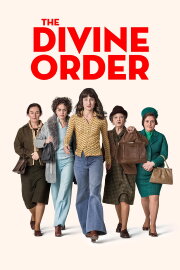
Switzerland, 1971: Nora is a young housewife and mother who lives with her husband, their two sons and her father-in-law in a little village. Here, in the Swiss countryside, little or nothing is felt of the huge social upheavals that the movement of May 1968 has caused. Nora's life, too, has been unaffected; she is a retiring, quiet person, well liked by everyone - until she begins to campaign publicly and pugnaciously for women's right to vote, an issue that will be put befo... (Full plot summary below)
Enjoy FREE movies and series with your Prime (USA) subscription or when you start a 30-day free trial!
| Movie Source | Available | Offers | Added | Views | Quality | Format | Rating | Link | Share |
|---|---|---|---|---|---|---|---|---|---|
 | UK only | 1 Month Free Trial | 14 Jan 2025 | 2434 | HD | Watch OnlineStream Instantly | 69% |  Report: Broken Link Report: Broken Link |   |
| USA only | 1 Month Free Trial | 31 Jan 2021 | 2331 | HD | Watch OnlineStream Instantly | 74% | Report: Broken Link | |
| IRELAND only | 1 Month Free Trial | 09 Dec 2017 | 2038 | HD | Watch OnlineStream Instantly | 83% | Report: Broken Link | |
 | UK only | 30 Day Free Trial | 31 May 2018 | 404 | HD | Watch OnlineStream Instantly | 91% | Report: Broken Link | |
![Its HD [The Divine Order]](/images/logos/icons/itshd.png) | WORLDWIDE | ? | 21 Jan 2025 | 3206 | HD | Watch OnlineStream Instantly | 89% | Report: Broken Link | |
 | UK only | 30 Day Free Trial | 10 Jan 2023 | 136 | HD | Watch OnlineStream Instantly | 35% | Report: Broken Link | |
 | UK only | Free Credit | 25 Apr 2018 | 155 | HD | Watch OnlineStream Instantly | 47% | Report: Broken Link | |
 | WORLDWIDE | ? | 04 Oct 2025 | 57 | HD | Watch OnlineStream Instantly | 27% | Report: Broken Link | |
 | WORLDWIDE | ? | 22 Jul 2024 | 11 | SD / TV | Watch OnlineStream Instantly | 18% | Report: Broken Link | |
 | WORLDWIDE | ? | 20 Apr 2018 | 140 | HD | Watch OnlineStream Instantly | 27% | Report: Broken Link | |
 | WORLDWIDE | ? | 24 Oct 2019 | 5 | SD / TV | Watch OnlineStream Instantly | 7% | Report: Broken Link | |
Links compiled using automated software. Availability of offers subject to change / might be region specific / out of date.
| Movie Source | Available | Offers | Added | Views | Quality | Format | Rating | Link | Share |
|---|---|---|---|---|---|---|---|---|---|
| UK only | 30 Day Free Trial | 26 Jan 2021 | 815 | SD / DVD | DVD RentalRent by Post | 87% |  Report: Broken Link Report: Broken Link | |
 | UK only | N/A | 26 Jan 2021 | 90 | SD / DVD | DVD RentalRent by Post | 48% | Report: Broken Link | |
 | USA only | 1 Month Free Trial | 26 Jan 2021 | 128 | SD / DVD | DVD RentalRent by Mail | 18% | Report: Broken Link | |
| USA only | 1 Month Free Trial | 26 Jan 2021 | 11017 | SD / DVD | DVD RentalRent by Mail | 96% | Report: Broken Link | |
| Movie Source | Available | Offers | Added | Views | Quality | Format | Rating | Link | Share |
|---|---|---|---|---|---|---|---|---|---|
| UK only | 30 Day Free Trial | 13 Feb 2014 | 183 | HD / BR | Blu Ray RentalRent by Post | 77% | Report: Broken Link | |
| UK only | N/A | 13 Feb 2014 | 75 | HD / BR | Blu Ray RentalRent by Post | 38% | Report: Broken Link | |
| USA only | 1 Month Free Trial | 26 Jan 2021 | 73 | HD / BR | Blu Ray RentalRent by Mail | 14% | Report: Broken Link | |
| USA only | 1 Month Free Trial | 13 Feb 2014 | 8861 | HD / BR | Blu Ray RentalRent by Mail | 100% | Report: Broken Link | |
Switzerland, 1971: Nora is a young housewife and mother who lives with her husband, their two sons and her father-in-law in a little village. Here, in the Swiss countryside, little or nothing is felt of the huge social upheavals that the movement of May 1968 has caused. Nora's life, too, has been unaffected; she is a retiring, quiet person, well liked by everyone - until she begins to campaign publicly and pugnaciously for women's right to vote, an issue that will be put before the male voters on February 7th, 1971.
Leave your thoughts about The Divine Order.
| TheWrapTodd GilchristVolpe’s specificity with each characterization, including many of the men, humanizes what would otherwise be an issue-driven movie, and lends it an immediacy and resonance that fuels audience sympathies, not to mention understanding. |
| Washington PostStephanie MerryThe movie still holds power, mostly thanks to Leuenberger’s arresting, self-contained performance as Nora. She plays the character as an enigma, the last person you’d expect to lead a cause. |
| The Film StageJared MobarakThe Divine Order packs a lot into its brisk 96-minute runtime. But it never feels forced in the process. |
| RogerEbert.comGlenn KennyThe most pleasurable part of watching this Nora’s story is seeing how the males in her life have to make room for her, and do some learning themselves. |
| The Globe and Mail (Toronto)Julia CooperThe Divine Order plays up the fun of feminist empowerment with its anthems (You Don't Own Me, Respect), and lightens the tension with a modern-woman makeover for Nora. |
| Village VoiceRen JenderThough the story has a predictable ebb and flow, the film includes some stunning moments |
| Arizona RepublicBill GoodykoontzThe course of the film's story is somewhat predictable and played broadly. But where Volpe's work really shines is when it makes the bigger issue personal. |
| Los Angeles TimesSheri LindenWithin the story's sometimes too-neat outline, Volpe lets most of her characters breathe. |
| IndiewireDavid EhrlichThe Divine Order is as milquetoast as these things get, but Volpe’s film finds real value by emphasizing process over politics, by glossing over the eventual vote in favor of knuckling down on how one act of courage can spark a blaze that’s big enough to burn the whole system to the ground. |
| VarietyNick SchagerThough the film’s feel-good construction undercuts its ability to surprise, Petra Volpe’s cine-history lesson remains a mainstream crowd-pleaser adept at inspiring and amusing in equal measure. |