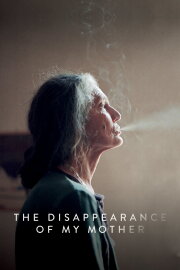
Benedetta wants to disappear. An iconic fashion model in the 1960s, she became a muse to Warhol, Dali, Penn and Avedon. As a radical feminist in the 1970s, she fought for the rights and emancipation of women. But at the age of 75, she becomes fed up with all the roles that life has imposed upon her and decides to leave everything and everybody behind, to disappear to a place as far as possible from the world she knows. Hiding behind the camera, her son Beniamino witnesses her... (Full plot summary below)
Enjoy FREE movies and series with your Prime (USA) subscription or when you start a 30-day free trial!
Sorry, we can't find any suggestions at the moment.
Benedetta wants to disappear. An iconic fashion model in the 1960s, she became a muse to Warhol, Dali, Penn and Avedon. As a radical feminist in the 1970s, she fought for the rights and emancipation of women. But at the age of 75, she becomes fed up with all the roles that life has imposed upon her and decides to leave everything and everybody behind, to disappear to a place as far as possible from the world she knows. Hiding behind the camera, her son Beniamino witnesses her journey. Having filmed her since he was a child in spite of all her resistance, he now wants to make a film about her, to keep her close for as long as possible - or, at least, as long as his camera keeps running. The making of the film turns into a battle between mother and son, a stubborn fight to capture the ultimate image of Benedetta - the image of her liberation.
Leave your thoughts about The Disappearance of My Mother.
| Film ThreatLorry KiktaThe Disappearance of My Mother is rife with grand philosophical questions about beauty, capitalism, love, life, and death, while still maintaining the intimacy of a family connection. |
| Slant MagazineDiego SemereneIt’s fascinating to see Benedetta Barzini in academic action, like an ethnographer of the patriarchy herself, bringing back news from its most glamourous yet rotten core. |
| The Hollywood ReporterKeith UhlichThis is a tumultuous muse story in which the artist and his inspiration just happen to be blood relations. |
| Screen DailyAllan HunterThe result of the collaboration between mother and son brings no great epiphanies but it remains a film that both beguiles and unsettles as it salutes a remarkable woman and the enduring demands of ties that bind. |
| The New York TimesA.O. ScottAt the very least, it’s impossible to watch The Disappearance of My Mother without a measure of ambivalence. Gratitude for the chance to make Barzini’s acquaintance, and for Barrese’s sensitivity in making the introduction, is accompanied by ethical queasiness. |
| RogerEbert.comSheila O'MalleyBarrese follows his mother everywhere. She bikes to teach her classes, and there's lots of thought-provoking footage of her lectures and small conferences with students. These are some of the best sequences in the film. |
| The Film StageJohn FinkThe Disappearance of My Mother is a bit too rough around the edges, but it’s as honest as it is persistent. |
| Los Angeles TimesJen YamatoThe film reveals its truest self as a cinematic act of negotiation, acceptance and farewell between mother and son. |
| VarietyDennis HarveyThe Disappearance of My Mother is a successful piece of documentary filmmaking inasmuch as it’s entertaining and dextrously crafted. But its precise intent is unclear. |
| Movie NationRoger MooreThe Disappearance of My Mother captures the 1960s supermodel turned ’70s (and beyond) Marxist/feminist, a striking figure who raised children by building an afterlife of journalism, activism and education. |