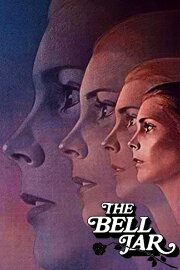
Details a young woman's summer in New York working for a Mademoiselle-like magazine, return home to New England, and subsequent breakdown all amidst the horrors of the fifties, from news of the Rosenbergs' execution to sleazy disc jockeys and predatory college boys.... (Full plot summary below)
Enjoy FREE movies and series with your Prime (USA) subscription or when you start a 30-day free trial!
| Movie Source | Available | Offers | Added | Views | Quality | Format | Rating | Link | Share |
|---|---|---|---|---|---|---|---|---|---|
 | UK only | 1 Month Free Trial | 26 Mar 2018 | 4544 | HD | Watch OnlineStream Instantly | 61% |  Report: Broken Link Report: Broken Link |   |
| USA only | 1 Month Free Trial | 11 Apr 2023 | 2827 | HD | Watch OnlineStream Instantly | 87% | Report: Broken Link | |
| IRELAND only | 1 Month Free Trial | 25 Apr 2018 | 5143 | HD | Watch OnlineStream Instantly | 81% | Report: Broken Link | |
 | UK only | 30 Day Free Trial | 08 Aug 2021 | 688 | HD | Watch OnlineStream Instantly | 95% | Report: Broken Link | |
![Its HD [The Bell Jar]](/images/logos/icons/itshd.png) | WORLDWIDE | ? | 12 Nov 2014 | 3793 | HD | Watch OnlineStream Instantly | 92% | Report: Broken Link | |
 | UK only | 30 Day Free Trial | 05 Jul 2023 | 373 | HD | Watch OnlineStream Instantly | 57% | Report: Broken Link | |
 | UK only | Free Credit | 16 Jul 2025 | 173 | HD | Watch OnlineStream Instantly | 43% | Report: Broken Link | |
 | WORLDWIDE | ? | 07 Feb 2020 | 129 | HD | Watch OnlineStream Instantly | 11% | Report: Broken Link | |
 | WORLDWIDE | ? | 11 Sep 2015 | 21 | SD / TV | Watch OnlineStream Instantly | 18% | Report: Broken Link | |
 | WORLDWIDE | ? | 22 Jul 2020 | 206 | HD | Watch OnlineStream Instantly | 20% | Report: Broken Link | |
 | WORLDWIDE | ? | 04 Dec 2022 | 28 | SD / TV | Watch OnlineStream Instantly | 4% | Report: Broken Link | |
Links compiled using automated software. Availability of offers subject to change / might be region specific / out of date.
| Movie Source | Available | Offers | Added | Views | Quality | Format | Rating | Link | Share |
|---|---|---|---|---|---|---|---|---|---|
| UK only | 30 Day Free Trial | 28 May 2015 | 1111 | SD / DVD | DVD RentalRent by Post | 91% |  Report: Broken Link Report: Broken Link | |
 | UK only | N/A | 28 May 2015 | 58 | SD / DVD | DVD RentalRent by Post | 27% | Report: Broken Link | |
 | USA only | 1 Month Free Trial | 28 May 2015 | 207 | SD / DVD | DVD RentalRent by Mail | 17% | Report: Broken Link | |
| USA only | 1 Month Free Trial | 28 May 2015 | 3422 | SD / DVD | DVD RentalRent by Mail | 92% | Report: Broken Link | |
| Movie Source | Available | Offers | Added | Views | Quality | Format | Rating | Link | Share |
|---|---|---|---|---|---|---|---|---|---|
| UK only | 30 Day Free Trial | 23 May 2022 | 249 | HD / BR | Blu Ray RentalRent by Post | 73% | Report: Broken Link | |
| UK only | N/A | 23 May 2022 | 58 | HD / BR | Blu Ray RentalRent by Post | 15% | Report: Broken Link | |
| USA only | 1 Month Free Trial | 28 May 2015 | 730 | HD / BR | Blu Ray RentalRent by Mail | 6% | Report: Broken Link | |
| USA only | 1 Month Free Trial | 23 May 2022 | 9102 | HD / BR | Blu Ray RentalRent by Mail | 92% | Report: Broken Link | |
Details a young woman's summer in New York working for a Mademoiselle-like magazine, return home to New England, and subsequent breakdown all amidst the horrors of the fifties, from news of the Rosenbergs' execution to sleazy disc jockeys and predatory college boys.
Leave your thoughts about The Bell Jar.
| User ReviewRobert AUpon entering the videostore, my eyes quickly scan the new releases , only to be disappointed with the typical , hackneyed teen-flicks, "horror" movies, and movies that I have just never even heard of so therefore they must be bad. Bored and tired I search the red wire racks at the other end of the store, hoping to spot something that would spark some sort of interest in this hard to please brain of mine. Just as I am about to reconsider the reason for my existence in the half-empty store with the dirty grey carpet, I catch sight of a familiar title... "The Bell Jar". Could it actually be derived from Sylvia Plath's novel "The Bell Jar"? It has to be. With extreme curiosity I pick it up and examine the cover. On the cover is the profile of an actress whose face I know I have seen from several seventies movies which I can't identify. I flip it over, read the back cover and know for certain that it is "The Bell Jar". To make a long story short, I rent the video. The first couple of scenes in the movie are surprisingly accurate. I am even amazed at the accuracy, to be honest. Everything is in perfect order-- from Esther's arrival in New York [i]up until[/i] she and Doreen's night on the town. When Esther and Doreen follow the D.J. they met back to his place, the accuracy comes to a screeching hault. Everything is going according to the book until Esther, in her drunken state, joins Doreen and the D.J. in some sort of tryst. Now, the book never even suggested this occurence, and I found myself bewildered at the whole situation. I realize that a film adaptation of a book cannot include every single detail, but if significant parts are edited in order to leave space for ludicrous "entertainment", then the entirety of the film will be effected. Another laughter provoking moment occured when Esther threw her clothes out the window and screamed. Once again, this never happened in the book, and the actress obviously had difficulties in screaming since I would describe it as more of a throaty roar(this throaty roar happens periodically throughout the rest of the movie). One of the most important parts of the book was left out, and that was the process of Esther's mental deterioration which occured the weeks following her arrival back home. In the psychological perspective, this piece would have been crucial in understanding the steady toll that a major depressive episode has on a person: the lack of sleep, the need for darkness and isolation, etc. Instead, her visits to Dr. Gordon were also skipped, and a senseless scene involving Esther and her mother fighting over a carton of milk was given preference. The whole theme of lesbianism seemed to control the film as well, and the character Joan actually suggested that she and Esther be "like lovers", which again was never stated in the book. I did, however like the fact that Plath's poetry was recited several times throughout the movie. This movie could have been a success had it shed light on what I would consider some of the more striking features in the novel. I am definiteley hoping for a remake someday. If you do choose to view this film, I guarantee a bundle of unintentional laughs. |