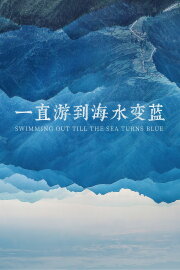
Prominent Chinese writers and scholars gather in a village in Shanxi, a province of China and the hometown of Jia Zhang-Ke. This starts an 18-chapter symphony about Chinese society since 1949. Narrated by three important novelists born in the 1950s, 1960s and 1970s respectively, telling their own stories with literature and reality, the film weaves a 70-year spiritual history of the Chinese people.... (Full plot summary below)
Enjoy FREE movies and series with your Prime (USA) subscription or when you start a 30-day free trial!
Sorry, we can't find any suggestions at the moment.
Prominent Chinese writers and scholars gather in a village in Shanxi, a province of China and the hometown of Jia Zhang-Ke. This starts an 18-chapter symphony about Chinese society since 1949. Narrated by three important novelists born in the 1950s, 1960s and 1970s respectively, telling their own stories with literature and reality, the film weaves a 70-year spiritual history of the Chinese people.
Leave your thoughts about Swimming Out Till the Sea Turns Blue.
| Film ThreatSabina Dana PlasseThe writings of Ma Feng appear to have evoked much of the themes Zhangke captures in his beautiful story and its surface simplicity and deeper subtext. Although it is a bit lengthy, Swimming Out Till the Sea Turns Blue is a well-done and beautifully expressed film for understanding a people and their history. |
| The Film StageRory O'ConnorJia’s earnest approach has always been endearing and Swimming Out sees it in full flight. |
| The A.V. ClubIgnatiy VishnevetskyAcross the extended, handsomely shot sit-down interviews (with Ma’s daughter and the three other writers), what emerges is a fragmentary oral history of Chinese rural life across several transformative decades of the 20th century: family stories, tragedies, remembered slogans, the particulars of trying to grow crops in alkaline soil or coming of age as the son of a declared “counterrevolutionary.” |
| RogerEbert.comGlenn KennyIf you’re not too conversant with the regions or works under consideration, the viewer has a choice of laboring to connect the dots unassisted, or just kicking back and letting the people and their recollections and philosophical reflections wash over you, like the sea of the movie’s title. |
| TheWrapRobert AbeleIf Swimming Out Till the Sea Turns Blue and its intimate tapestry of peasant fortitude and artistic endeavor won’t be as immediately resonant to audiences outside of China as his expansive masterpieces “A Touch of Sin” or “Still Life” are, it’s still a valuable document. |
| The New York TimesA.O. ScottThe movie is an affecting group portrait and also a complex and subtle piece of literary criticism. |
| Los Angeles TimesJustin ChangThe rhythms are uneven, the patterns of meaning often elusive. But they coalesce into a moving glimpse of lives lived and artistic legacies forged in the shadow — and sometimes the harsh, glaring light — of momentous historical change. |
| The Hollywood ReporterDeborah YoungIt’s the opposite of sensational; quiet, dignified and ruminative, it gets far closer to real Chinese people than a TV-style travelogue, though its many references to events in modern Chinese history will probably lose the casual viewer. |
| Slant MagazineChris BarsantiJia Zhang-ke’s film is a quietly reflective, intermittently rambling rumination on an explosively momentous period in Chinese history. |
| VarietyGuy LodgeThe result, though intermittently stirring and often luminously shot, represents something of a chore for all but the most ardent Jia completists — and even some of them may be left adrift by the literary scope of a film that does surprisingly little to contextualize its subjects for viewers unfamiliar with their work. |