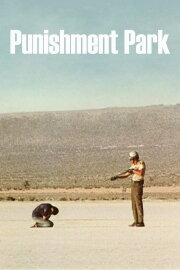
"Punishment Park" is a pseudo-documentary purporting to be a film crews's news coverage of the team of soldiers escorting a group of hippies, draft dodgers, and anti-establishment types across the desert in a type of capture the flag game. The soldiers vow not to interfere with the rebels' progress and merely shepherd them along to their destination. At that point, having obtained their goal, they will be released. The film crew's coverage is meant to insure that the military... (Full plot summary below)
Enjoy FREE movies and series with your Prime (USA) subscription or when you start a 30-day free trial!
| Movie Source | Available | Offers | Added | Views | Quality | Format | Rating | Link | Share |
|---|---|---|---|---|---|---|---|---|---|
 | UK only | 1 Month Free Trial | 17 Jun 2015 | 4581 | HD | Watch OnlineStream Instantly | 66% |  Report: Broken Link Report: Broken Link |   |
| USA only | 1 Month Free Trial | 15 May 2021 | 5365 | HD | Watch OnlineStream Instantly | 81% | Report: Broken Link | |
| IRELAND only | 1 Month Free Trial | 05 Apr 2018 | 842 | HD | Watch OnlineStream Instantly | 95% | Report: Broken Link | |
 | UK only | 30 Day Free Trial | 16 Oct 2014 | 593 | HD | Watch OnlineStream Instantly | 89% | Report: Broken Link | |
![Its HD [Punishment Park]](/images/logos/icons/itshd.png) | WORLDWIDE | ? | 10 Jun 2018 | 3027 | HD | Watch OnlineStream Instantly | 93% | Report: Broken Link | |
 | UK only | 30 Day Free Trial | 04 Jun 2022 | 155 | HD | Watch OnlineStream Instantly | 52% | Report: Broken Link | |
 | UK only | Free Credit | 08 Aug 2023 | 134 | HD | Watch OnlineStream Instantly | 42% | Report: Broken Link | |
 | WORLDWIDE | ? | 01 Jan 2014 | 129 | HD | Watch OnlineStream Instantly | 18% | Report: Broken Link | |
 | WORLDWIDE | ? | 10 Apr 2015 | 22 | SD / TV | Watch OnlineStream Instantly | 12% | Report: Broken Link | |
 | WORLDWIDE | ? | 02 Feb 2020 | 208 | HD | Watch OnlineStream Instantly | 21% | Report: Broken Link | |
 | WORLDWIDE | ? | 12 Oct 2013 | 3 | SD / TV | Watch OnlineStream Instantly | 6% | Report: Broken Link | |
Links compiled using automated software. Availability of offers subject to change / might be region specific / out of date.
| Movie Source | Available | Offers | Added | Views | Quality | Format | Rating | Link | Share |
|---|---|---|---|---|---|---|---|---|---|
| UK only | 30 Day Free Trial | 20 May 2019 | 1596 | SD / DVD | DVD RentalRent by Post | 72% |  Report: Broken Link Report: Broken Link | |
 | UK only | N/A | 20 May 2019 | 109 | SD / DVD | DVD RentalRent by Post | 50% | Report: Broken Link | |
 | USA only | 1 Month Free Trial | 20 May 2019 | 148 | SD / DVD | DVD RentalRent by Mail | 12% | Report: Broken Link | |
| USA only | 1 Month Free Trial | 20 May 2019 | 2775 | SD / DVD | DVD RentalRent by Mail | 99% | Report: Broken Link | |
| Movie Source | Available | Offers | Added | Views | Quality | Format | Rating | Link | Share |
|---|---|---|---|---|---|---|---|---|---|
| UK only | 30 Day Free Trial | 19 Aug 2021 | 282 | HD / BR | Blu Ray RentalRent by Post | 85% | Report: Broken Link | |
| UK only | N/A | 19 Aug 2021 | 47 | HD / BR | Blu Ray RentalRent by Post | 21% | Report: Broken Link | |
| USA only | 1 Month Free Trial | 20 May 2019 | 542 | HD / BR | Blu Ray RentalRent by Mail | 11% | Report: Broken Link | |
| USA only | 1 Month Free Trial | 19 Aug 2021 | 6651 | HD / BR | Blu Ray RentalRent by Mail | 88% | Report: Broken Link | |
"Punishment Park" is a pseudo-documentary purporting to be a film crews's news coverage of the team of soldiers escorting a group of hippies, draft dodgers, and anti-establishment types across the desert in a type of capture the flag game. The soldiers vow not to interfere with the rebels' progress and merely shepherd them along to their destination. At that point, having obtained their goal, they will be released. The film crew's coverage is meant to insure that the military's intentions are honorable. As the representatives of the 60's counter-culture get nearer to passing this arbitrary test, the soldiers become increasingly hostile, attempting to force the hippies out of their pacifist behavior. A lot of this film appears improvised and in several scenes real tempers seem to flare as some of the "acting" got overaggressive. This is a interesting exercise in situational ethics. The cinéma vérité style, hand-held camera, and ambiguous demands of the director - would the actors be able to maintain their roles given the hazing they were taking - pushed some to the brink. The cast's emotions are clearly on the surface. Unfortunately this film has gone completely underground and is next to impossible to find. It would offer a captivating document of the distrust that existed between soldiers willfully serving in the military and those persons who opposed the war peacefully.
Leave your thoughts about Punishment Park.
| Filmcritic.comChris Barsantia troubling document from a time when the country seemed about to tip into chaos |
| Not Coming to a Theater Near YouLeo GoldsmithThe film is as widely applicable to our own factious state of the union as it was to that of America in the 1970s. |
| Village VoiceJ. HobermanShot during the post-Kent State "law and order" election of 1970, Punishment Park can seem so outrageous as to verge on camp, but few other movies capture so painfully the rhetoric and desperation of the times. |
| User ReviewMarissa Rthis movie aged well. everything in it still holds up well today. A compelling film that really gets you involved with what it's characters are going through. |
| User ReviewRahul SFor me this movie really defy the power of documentary cinema at best. This movie may be a fiction, but the impact that it's leave on you is for real.Set up in a fictional world where anyone who rebel against govt and ask for freedom is taken to task and put in punishment park. This movie needs to mandatory seen by anyone with a conscience. Please note the content is of very mature nature and should not be seen just for fun. It will definitely shock you and make you think. |
| User ReviewPeter C"Do you think you'll last two-three days?" "I don't think I'll last two-three minutes!" Peter Watkins' film Punishment Park is nothing if not a sincere cry for justice. Of course the film is a metaphor, a provocation, a sort of alternate reality that could have been a science fiction fable if it wasn't so naturalistic as a "fake" documentary. And of course there weren't 'Punishment Parks' in America in 1970 when the film was made, where dissidents and rabble-rousers and draft dodgers were taken and given the chance to either participate in the 'game' or go to prison without a fair trial. And sure, at the time, the film got panned for being too blunt an instrument of provocation, of being so much about its subjects of the US versus THEM element that it was too much. But what can be said of the film today? At the time for those who didn't know it was a "fake" documentary, like in Finland, they panned the US government for allowing such a thing like this to happen! This is, perhaps, the best kind of compliment Peter Watkins could have received - certainly he fared better there than with the film critics who panned it and, ultimately, the film got four days of distribution by a no-nothing company before being pulled from NY city screens (it fared worse in being shown on TV or elsewhere, where for years it was just unavailable). Seeing it in 2010 is still a shocker some forty years later. Not because of what it says about its time and place, that's a given, about the rift between those in power and those not, but that it could still happen, in a slightly less extreme form, today (just look at the atrocity of justice with Guantanamo Bay for that). There's something about this film that gets under my skin. It got its way in within the first ten minutes, by sinking its teeth with its structure, of it being a British documentary on this 'Punishment Park' out in the California baron wasteland (it could be Death Valley, but whatever it is it's unbearable conditions), and how nothing is made to look fantastic. The nerve of the film is like that of Night of the Living Dead in its no-holds-barred hand-held approach to photography (only in this case the police seem to be the zombies, albeit with more of a brain which is perhaps much more frightening). Watkins cuts between this demonstration of what the 'Park' is - a three to four day excursion from one point to another where those who volunteer (and there are many, as the alternative is years in prison) who have to get to an American flag. Which is not easy when you have police just getting ready and more than willing to kick the crap out of those dissidents and, of course, shoot to kill. This is all meant as metaphor, and the most contemporary example I could think of as comparison would be District 9 (though that film didn't carry out its artistic premise anywhere near as thoroughly as this). But the metaphor is strong because of a) what was happening at the time, with Chicago and Kent State and the trial of the Chicago 7 (Bobby Seale's gagging during the trial is recreated here with one such African American on "trial"), and of the attitudes at the time. The what if shouldn't be diminished because of thinking practically about what would happen if this really did occur. What matters is making it seem real, carrying the documentary aesthetic and toying with it - Watkins goes from objective reporter to subjective "WTF"-ing at the police killing and maiming people from one scene to the next, which is chillingly effective - to make the experience last in the mind. Aside from it being a rigorous example of filmmaking, and a satire that is about as funny as a burning school-bus on a field trip, Punishment Park gets some major points. And the fact that many in the film never acted before or wouldn't again (some of which were actual dissidents and protestors as the kids, and some of the cops were actual cops) heightens the tension and moral identity of the scenes. But really its ultimate impact is that it lasts, in the mind as well as the consciousness of a nation. The US has laws in place to keep this from happening, to be sure, but at what point does the line thin away? Most recently there's been question of how to put on trial those accused of terrorism against the US. That, too, is an extreme example, but, again, where is that line drawn? A question I was left with at the end, or thought people might have by the end of it, is "What will be done about it?" Or, more precisely, "What can be done?" It's a call to arms that shook me up and made me depressed, but I can't say it didn't do it in the way that matters. It's one of the great incendiary films in our history; that it's also an experimental piece in the realm of documentary-meets-fiction, breaking all boundaries for its message, is further extraordinary. |
| User ReviewArt SCe film prend la forme d'un docu-fiction ayant pour cible l'Amérique de Nixon. Des pacifistes / poetes / black panthers, bref, tout ce que n'est pas un Bon Americain, sont juges puis envoyes dans les Punishment Park. Une equipe de la BBC suit un jugement et en parallele le parcours d'un groupe de prisonniers dans le Punishment Park. Si la critique contre le gouvernement de Nixon est evidente, le film prend une resonance particuliere par rapport a celui de Bush, et dans une moindre mesure a celui de Sarkozy. D'un point de vue cinematographique, on tient un docu-fiction parfait, tant dans le jeu des acteurs totalement possedes par leur role que par ces angles de camera toujours choisis avec soin tout en donnant l'impression du chaos de la camera a l'epaule du reporter. Ca serait un crime de ne pas le regarder, il suffit de demander. |
| User ReviewBrendan BA brutal and incendiary film that riles up and provokes its audience as much as it forces them to examine the nature of America, violence and government. It's astonishingly realistic and manages the remarkable task of not taking sides in the central conflict between the counterculture and the system. Whether you're a conservative or a liberal or just plain apathetic, this film will make mad and then make you think. Terrific. |
| User ReviewCodie EBrutal, harrowing and breathtaking. Peter Watkins' faux-documentary may be somewhat one sided and contrived but it still impacts with a power rarely found. A true masterpiece. |
| User ReviewNathan A"No man is fit to inflict punishment until he has banished hate from his heart." |