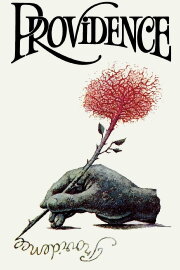
Clive Langham (Sir John Gielgud) spends one tormenting night in his bed suffering from health problems and thinking up a story based on his relatives. He is a bitter man and he shows, through flashbacks, how spiteful, conniving and treacherous his family is. But is this how they really are or is it his own vindictive slant on things?... (Full plot summary below)
Enjoy FREE movies and series with your Prime (USA) subscription or when you start a 30-day free trial!
| Movie Source | Available | Offers | Added | Views | Quality | Format | Rating | Link | Share |
|---|---|---|---|---|---|---|---|---|---|
 | UK only | 1 Month Free Trial | 21 Nov 2013 | 5709 | HD | Watch OnlineStream Instantly | 66% |  Report: Broken Link Report: Broken Link |   |
| USA only | 1 Month Free Trial | 08 Oct 2025 | 4966 | HD | Watch OnlineStream Instantly | 96% | Report: Broken Link | |
| IRELAND only | 1 Month Free Trial | 11 Nov 2015 | 1345 | HD | Watch OnlineStream Instantly | 73% | Report: Broken Link | |
 | UK only | 30 Day Free Trial | 09 Jan 2016 | 739 | HD | Watch OnlineStream Instantly | 96% | Report: Broken Link | |
![Its HD [Providence]](/images/logos/icons/itshd.png) | WORLDWIDE | ? | 28 Jan 2022 | 3407 | HD | Watch OnlineStream Instantly | 85% | Report: Broken Link | |
 | UK only | 30 Day Free Trial | 11 Feb 2013 | 536 | HD | Watch OnlineStream Instantly | 43% | Report: Broken Link | |
 | UK only | Free Credit | 23 Aug 2017 | 173 | HD | Watch OnlineStream Instantly | 40% | Report: Broken Link | |
 | WORLDWIDE | ? | 04 Jan 2016 | 113 | HD | Watch OnlineStream Instantly | 22% | Report: Broken Link | |
 | WORLDWIDE | ? | 28 Dec 2017 | 21 | SD / TV | Watch OnlineStream Instantly | 25% | Report: Broken Link | |
 | WORLDWIDE | ? | 17 Oct 2014 | 174 | HD | Watch OnlineStream Instantly | 35% | Report: Broken Link | |
 | WORLDWIDE | ? | 17 Aug 2025 | 17 | SD / TV | Watch OnlineStream Instantly | 16% | Report: Broken Link | |
Links compiled using automated software. Availability of offers subject to change / might be region specific / out of date.
| Movie Source | Available | Offers | Added | Views | Quality | Format | Rating | Link | Share |
|---|---|---|---|---|---|---|---|---|---|
| UK only | 30 Day Free Trial | 19 May 2023 | 779 | SD / DVD | DVD RentalRent by Post | 67% |  Report: Broken Link Report: Broken Link | |
 | UK only | N/A | 19 May 2023 | 99 | SD / DVD | DVD RentalRent by Post | 58% | Report: Broken Link | |
 | USA only | 1 Month Free Trial | 19 May 2023 | 80 | SD / DVD | DVD RentalRent by Mail | 18% | Report: Broken Link | |
| USA only | 1 Month Free Trial | 19 May 2023 | 7227 | SD / DVD | DVD RentalRent by Mail | 100% | Report: Broken Link | |
| Movie Source | Available | Offers | Added | Views | Quality | Format | Rating | Link | Share |
|---|---|---|---|---|---|---|---|---|---|
| UK only | 30 Day Free Trial | 16 May 2017 | 307 | HD / BR | Blu Ray RentalRent by Post | 62% | Report: Broken Link | |
| UK only | N/A | 16 May 2017 | 99 | HD / BR | Blu Ray RentalRent by Post | 14% | Report: Broken Link | |
| USA only | 1 Month Free Trial | 19 May 2023 | 362 | HD / BR | Blu Ray RentalRent by Mail | 15% | Report: Broken Link | |
| USA only | 1 Month Free Trial | 16 May 2017 | 9116 | HD / BR | Blu Ray RentalRent by Mail | 78% | Report: Broken Link | |
Clive Langham (Sir John Gielgud) spends one tormenting night in his bed suffering from health problems and thinking up a story based on his relatives. He is a bitter man and he shows, through flashbacks, how spiteful, conniving and treacherous his family is. But is this how they really are or is it his own vindictive slant on things?
Leave your thoughts about Providence.
| Chicago ReaderJonathan RosenbaumThe superb performances and Miklos Rozsa's sumptuous Hollywood-style score give the film's conceit a moving monumentality and depth, and Resnais' insights into the fiction-making process are mesmerizing and beautiful. |
| Ozus' World Movie ReviewsDennis SchwartzIt's one of the best films from the 1970s. |
| EmanuelLevy.ComEmanuel LevyMisunderstood and underrated when it came out, Resnais first English-speaking film is a provocative meditation on time and memory, fiction and reality (his dominant themes) in the life of a dying novelist, astoundly played by John Gielgud. |
| New York TimesVincent CanbyProvidence is a lot of fuss and fake feathers about nothing. |
| User ReviewIan BIf there's one film that made me want to work in cinema more than any other, this is it. |
| User ReviewKenneth LUnfortunately, you'll probably never see this movie. Despite the fact that it won pretty much everything at the French equivalent of the Oscars when it came out (although it is in English) and has a bunch of famous actors and was directed by Alain Resnais, this movie has largely for whatever reason been forgotten, and is not available on DVD in America. I only got to see it on a worn-out VHS copy because of a film class I'm in. It's too bad, because this is one heck of a weird and interesting movie. It starts off seeming somewhat dour and serious, but eventually turns out to be insanely postmodern and wacky. This review would theoretically spoil some of the movie for you, but like I said, you'll probably never see it anyway. The movie was written by an English playwright named David Mercer, but it has enough layers of meta playfulness to have been written by John Barth. It starts off with an English soldier (David Warner) being prosecuted by snarky lawyer (Dirk Bogarde) after he mercy-kills an old man apparently turning into a werewolf. Then, the lawyer's unhappy wife (Ellen Burstyn) tries to seduce the soldier. Then, we find out the lawyer is having an affair with an old woman (Elaine Stritch, aka Jack's mother on 30 Rock!) who looks like his dead mother. At some point, we eventually figure out that none of these people actually exist - they're all just characters in a story being drafted in the head of an old, sick, dying English novelist (John Gielgud). Then some other weird stuff happens that I can't really even describe to you. So, the movie goes back and forth between the novelist in the "real" world, and the characters he's messing around with in the fictional one. We can see his direct interference, as when his voiceover tells a character to say something, and then they actually say it; or when he suddenly decides the characters should be in a different place and, poof, they magically are. Their story becomes impossibly tangled and weird, and it all starts to take on additional dimensions when we realize that these characters weren't randomly generated, but may actually have some connection to the novelist's life. The only actor who gets a consistent character to play throughout the whole film is John Gielgud, who gives a great performance. The other actors are all subject to the whims of the plot, but they mostly are very engaging and often funny, especially Bogarde. Resnais's direction is visually quite clever, and he has a grand old time breaking every continuity rule in the book. If you ever get a chance to see this movie, take it, because it's super-weird and not quite like anything else. |
| User ReviewMEC rRenais "Providence" has all the hallmarks of cinema at its artistic best. Every component of film making is expertly handled. David Mercer's literary screenplay is a joy to listen to, especially when delivered by the likes of Dirk Bogarde and of course the legendary John Gielgud. The visuals are haunting and perfectly shot with detailed attention to set and costume. Miklos Rosza's soundtrack is in total accordance with the work as a whole, never intrusive, while adding to the rich tapestry that is "Providence". Renais too has assembled a wonderful if somewhat odd cast, which suitably serve this somewhat odd film. Gielgud plays a dying author whose mind is racing with fantasies peopled by members of his family. His character Clive Langham is depicted as a ribald, sensual, womanizer. Yet his fantasies, making up the bulk of the film, are curiously cold and stark. They are played in bleak settings with an ever present sense of impending catastrophe, though remaining totally devoid of emotion. These imaginings are at completely at odds with their creator. The extreme incongruousness of these fantasies with the character to whom they belong, remains a mystery. This detracts much in the way of emotional impact which is very much lacking in the film, whether intentional or not. The elimination of emotion leaves "Providence" a cold, wonderfully intelligent exercise in the art of film making. Renais has assembled an intriguing cast headed by the superb Gielgud. Dirk Bogarde whose performances have often been tinged with a cold, sauve superciliousness brings this unpleasant quality to an unparalleled level of extremity. Even the usually over emoting Ellen Burstyn delivers a restrained performance. Elaine Stritch has to be the oddest choice for the role being so contrary to her well known persona. Never has a more unlikely coupling been presented than Stitch and Bogarde as lovers. Yet in this emotionless void, even that becomes acceptable. "Providence" is a highly unusual, important film and shouldn't be missed by the discerning film enthusiast. Yet despite the wealth of cinematic craft on display it remains an unsatisfying experience. |
| User Reviewroger tFrom the opening scenes of Providence it is evidently clear that we're in the skilled hands of Alain Resnais. His trademark slow, wandering pan shots wander turned up towards tree branches, around magnificent buildings and so on. A patrol roams the forest, shooting into the brush. One man wounds and old man, then shoots him he says out of pity. The old man is turning into a werewolf, apparently. The military man is Kevin Woodford, and he is prosecuted in court by Claude Langham, as his wife watches. She is sympathetic to Woodford, and after he is acquitted, shows up to lunch with him. She leaves with him and takes him to their home where she attempts to seduce him. All the while a voice narrates, somewhat confused. We learn it is a dying author, Clive Langham, Claude's father, struggling to hammer out the plot to a novel while he lays in bed, drinking, suffering through the pain. The author depicts his characters, based on his family, as cold, adulterous, and spiteful. Claude and his wife quarrel, as he takes on Woodford as he hangs around their home, share drinks, and so on. It's for the most part a detached battle of passive aggression. Woodford seems a layman to Claude's bourgeoisie. In traditional fashion, Resnais constructs conflicts for the most part through discussion, double entendre and suggestive and layered dialogue. Bombs and gunshots go off from the army and apparant terrorists, but none strike so sharply as the dialogue. Many have complained that Providence, like Marienbad, are too confusing, too inaccessible to truly enjoy. Certainly, Resnais hides the point of his films deep within, but that is one of their most endearing qualities. Also especially enjoyable is the construction of his films. Resnais, like his Italian counter part Antonioni, was always obsessed with architecture, and used it frequently as a mammoth point of symbolism in his films. In Providence sets and locations change with the mood of the author's interpretations, from stately hotels and restaurants, to courtrooms, forests, and at one point a white cottage on a beach that is intentionally done with matte paintings to accentuate the lucid dreaming of the author's drunken and possibly hallucinatory mind. The construction of the characters dialogue also highlights the wandering mind. Often characters in a discussion with each other seem to be on about entirely different subjects. The film's big pay off comes at the end when the author's real life family come to visit him on his birthday. It's here we found out why the author's perception of his characters are filtered as they have been. It may seem something of a mystery, and certainly is not going to spelled out for you, however. Alain Resnais is often overshadowed in history by his Nouvelle Vague counterparts such as Jean-Luc Goddard (though Resnais is more closely associated with the Left Bank of artists in France). Yet his influence and importance to equally, if not more, significant to the evolution of filmmaking. His additions to the arts, stylistic and intellectual, are extraordinary. His abstractness and impenetrability have made him something of a fringe filmmaker in comparison to others. But though his most well known works were his first three (Night and Fog, Hiroshima Mon Amour, and Last Year at Marienbad - all three revolutionary achievements in narrative assembly), Resnais had a long and fruitful career, and still does: his latest film will debut at this years Cannes film festival. |
| User ReviewPrivate UA labyrinth of brilliant ideas that makes your mind and heart jump in loops. This movie gets as close as any to an actual train of thoughts. |
| User ReviewEric BNew Wave icon Alain Resnais continues to test his audience with the marvelous "Providence," a surreal tale in which a dying, cantankerous novelist (John Gielgud, never better) uses people from his life as placeholders to map out an unfinished book. The bulk of the film's action is taken straight from the writer's head and thus is pure fantasy. As if Gielgud's presence isn't impressive enough, the cast is loaded with other world-class talents such as Dirk Bogarde (dark and testy as ever), Ellen Burstyn, Elaine Stritch and David Warner. Warner does seem somewhat miscast, mainly seen as a guileless naif -- it's best to view this performance alongside early roles like "Morgan: A Suitable Case of Treatment" and "Work Is a 4-Letter Word" and forget all the sadistic villains he played later. The internal story is primarily a love triangle in which Burstyn cheats on husband Bogarde with Warner. There's also a bizarre, undeveloped werewolf motif that hopefully was deleted from the book's final draft (this is a work in progress, after all). "Providence" is a delightful brainteaser -- just do your best to ignore how grating the characters' incessant wine-slurping becomes. |