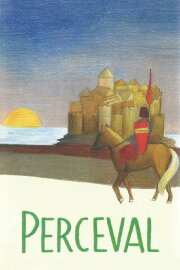
The exploits of Sir Perceval, a legendary exemplar of knightly chivalry and one of the champions of King Arthur's Round Table.... (Full plot summary below)
Enjoy FREE movies and series with your Prime (USA) subscription or when you start a 30-day free trial!
| Movie Source | Available | Offers | Added | Views | Quality | Format | Rating | Link | Share |
|---|---|---|---|---|---|---|---|---|---|
 | UK only | 1 Month Free Trial | 06 Nov 2023 | 2962 | HD | Watch OnlineStream Instantly | 60% |  Report: Broken Link Report: Broken Link |   |
| USA only | 1 Month Free Trial | 11 Nov 2017 | 4286 | HD | Watch OnlineStream Instantly | 100% | Report: Broken Link | |
| IRELAND only | 1 Month Free Trial | 26 Oct 2025 | 1821 | HD | Watch OnlineStream Instantly | 84% | Report: Broken Link | |
 | UK only | 30 Day Free Trial | 06 Nov 2019 | 851 | HD | Watch OnlineStream Instantly | 83% | Report: Broken Link | |
![Its HD [Perceval]](/images/logos/icons/itshd.png) | WORLDWIDE | ? | 21 Mar 2020 | 3565 | HD | Watch OnlineStream Instantly | 93% | Report: Broken Link | |
 | UK only | 30 Day Free Trial | 07 Apr 2019 | 700 | HD | Watch OnlineStream Instantly | 55% | Report: Broken Link | |
 | UK only | Free Credit | 21 Jun 2016 | 123 | HD | Watch OnlineStream Instantly | 41% | Report: Broken Link | |
 | WORLDWIDE | ? | 26 Mar 2016 | 115 | HD | Watch OnlineStream Instantly | 31% | Report: Broken Link | |
 | WORLDWIDE | ? | 25 Mar 2024 | 23 | SD / TV | Watch OnlineStream Instantly | 23% | Report: Broken Link | |
 | WORLDWIDE | ? | 19 Feb 2021 | 297 | HD | Watch OnlineStream Instantly | 29% | Report: Broken Link | |
 | WORLDWIDE | ? | 10 Jul 2016 | 12 | SD / TV | Watch OnlineStream Instantly | 18% | Report: Broken Link | |
Links compiled using automated software. Availability of offers subject to change / might be region specific / out of date.
| Movie Source | Available | Offers | Added | Views | Quality | Format | Rating | Link | Share |
|---|---|---|---|---|---|---|---|---|---|
| UK only | 30 Day Free Trial | 12 May 2018 | 2861 | SD / DVD | DVD RentalRent by Post | 84% |  Report: Broken Link Report: Broken Link | |
 | UK only | N/A | 12 May 2018 | 77 | SD / DVD | DVD RentalRent by Post | 50% | Report: Broken Link | |
 | USA only | 1 Month Free Trial | 12 May 2018 | 173 | SD / DVD | DVD RentalRent by Mail | 5% | Report: Broken Link | |
| USA only | 1 Month Free Trial | 12 May 2018 | 21583 | SD / DVD | DVD RentalRent by Mail | 85% | Report: Broken Link | |
| Movie Source | Available | Offers | Added | Views | Quality | Format | Rating | Link | Share |
|---|---|---|---|---|---|---|---|---|---|
| UK only | 30 Day Free Trial | 01 Nov 2024 | 243 | HD / BR | Blu Ray RentalRent by Post | 64% | Report: Broken Link | |
| UK only | N/A | 01 Nov 2024 | 41 | HD / BR | Blu Ray RentalRent by Post | 28% | Report: Broken Link | |
| USA only | 1 Month Free Trial | 12 May 2018 | 223 | HD / BR | Blu Ray RentalRent by Mail | 9% | Report: Broken Link | |
| USA only | 1 Month Free Trial | 01 Nov 2024 | 7918 | HD / BR | Blu Ray RentalRent by Mail | 80% | Report: Broken Link | |
The exploits of Sir Perceval, a legendary exemplar of knightly chivalry and one of the champions of King Arthur's Round Table.
Leave your thoughts about Perceval.
| Chicago ReaderJonathan RosenbaumEric Rohmer's least typical and least popular film also happens to be his best... |
| Time OutGeoff AndrewThe film marries medieval passion with modern perspective and sires its own special magic. |
| Ozus' World Movie ReviewsDennis SchwartzThe naïve Perceval's odyssey is depicted as a moral investigation, but is shot with a deft touch exhibiting great humor, wit and style. |
| Film Comment MagazineElliott SteinA conservative director's entry into new territory is a priori fascinating; observing him gradually painting himself into a corner of that territory is less so. |
| User ReviewFrank PEccentric, innovative, and recklessly enjoyable. Enough has already been said about the film's astonishing beauty, but I shall emphasize that the climatic Passion play completely dwarfs Mel Gibson's cartoons. If you like Medieval music, then you will love Perceval. |
| User ReviewMargarita Jwhenever you feel naive watch this philosophical tale about coming of age |
| User ReviewSteve MQuintessential Rohmer, even though it is more of a filmed book than a movie. Anyone who knows and loves Chretien de Troyes will love this movie. As for anyone who is not of the latters, there is maybe one chance in a 1000 the movie will appeal. |
| User ReviewDavid HCompletely bizarre version of one of the King Arthur legends. In French, it's just kind of hard to describe... closer to a school play than a movie. I loved it. |
| User ReviewJean-Francois VThis is probably the most medieval film ever produced. Director Eric Rohmer translated the original work by Chretien de Troyes, a XIIth century French poet, and had the actors deliver the lines in a rather antiquated French. The narration is sung by minstrels accompanied by medieval instruments, or told by background characters, and sometimes even by the main characters themselves (who, for instance, will say: "He tells him the reason" instead of actually telling the reason.) The whole film is shot on a very small set, almost a theater stage, with a few stylised trees, painted horizons, a few disproportionately small castles (as in medieval illuminations) and a few simple interiors. The story itself is poorly structured by modern standards, like the original itself, probably, being interrupted by a side-story about another knight, itself left unresolved, and a short passion play in which Luchini himself is crucified. I first saw this film about thirty years ago on French television and really enjoyed it. It was a real pleasure to see it again after all these years, all the more so as, having become a traditional Catholic in the meantime, I knew what the bleeding spear and the Grail were about, and I could even understand most of the unsubtitled latin of the passion play. The film's greatest achievement is to treat the material with the utmost respect, resisting any temptation to sneer at its naivete, values (especially piety) or esthetics. Having also greatly enjoyed Rohmer's "The Lady and the Duke", a visually innovative recreation of the French Revolution, I am curious to discover whether he has made other interesting films of the same caliber. |
| User ReviewLyndon GThe colorful fake sets, the peculiar narration, the simplistic quality of the 12th century source material. Zany? It takes itself seriously. The story is told in Old French couplets sung by minstrels at interludes and recited by the characters, often in third person. (This actually really works.) The music is pleasant, the stage like what you'd see at a play, only much more immersive. Perceval's first encounter with a knight reminds me of 2001 (an alien, monolithic knight). Determined to become one of these creatures, Perceval wanders around misapplying his mother's simple teachings until a knight mentor tells him to stop telling everyone what his mother taught him, and in fact to stop talking so much, unless absolutely necessary. Soon there is a scene with the opposite lesson: talking too little is just as bad as talking too much. The subject matter may be simplistic, but such old stories have a way of catching you off-guard with their directness, then just so with circumspectness. |