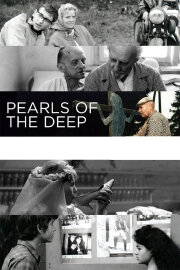
Set against the backdrop of a repressed Czechoslovakia, five non-related vignettes are presented, each showcasing the need and want for human connection. In "Mr. Baltazar's Death", a middle aged couple who are experts at mechanics, travel to a motorcycle race where they congregate with the masses on the section of the course where historically there has been the most action of the destructive kind. In "Imposters", two elderly hospital patients talk about their past profession... (Full plot summary below)
Enjoy FREE movies and series with your Prime (USA) subscription or when you start a 30-day free trial!
| Movie Source | Available | Offers | Added | Views | Quality | Format | Rating | Link | Share |
|---|---|---|---|---|---|---|---|---|---|
 | UK only | 1 Month Free Trial | 08 May 2022 | 5403 | HD | Watch OnlineStream Instantly | 67% |  Report: Broken Link Report: Broken Link |   |
| USA only | 1 Month Free Trial | 26 Jun 2020 | 3604 | HD | Watch OnlineStream Instantly | 84% | Report: Broken Link | |
| IRELAND only | 1 Month Free Trial | 23 Jan 2014 | 2900 | HD | Watch OnlineStream Instantly | 86% | Report: Broken Link | |
 | UK only | 30 Day Free Trial | 18 Jun 2021 | 377 | HD | Watch OnlineStream Instantly | 80% | Report: Broken Link | |
![Its HD [Pearls of the Deep]](/images/logos/icons/itshd.png) | WORLDWIDE | ? | 29 Jul 2013 | 3259 | HD | Watch OnlineStream Instantly | 92% | Report: Broken Link | |
 | UK only | 30 Day Free Trial | 14 Jul 2022 | 389 | HD | Watch OnlineStream Instantly | 38% | Report: Broken Link | |
 | UK only | Free Credit | 26 May 2015 | 161 | HD | Watch OnlineStream Instantly | 42% | Report: Broken Link | |
 | WORLDWIDE | ? | 19 Oct 2013 | 134 | HD | Watch OnlineStream Instantly | 12% | Report: Broken Link | |
 | WORLDWIDE | ? | 01 Feb 2018 | 20 | SD / TV | Watch OnlineStream Instantly | 24% | Report: Broken Link | |
 | WORLDWIDE | ? | 12 Aug 2022 | 216 | HD | Watch OnlineStream Instantly | 27% | Report: Broken Link | |
 | WORLDWIDE | ? | 28 May 2024 | 11 | SD / TV | Watch OnlineStream Instantly | 14% | Report: Broken Link | |
Links compiled using automated software. Availability of offers subject to change / might be region specific / out of date.
| Movie Source | Available | Offers | Added | Views | Quality | Format | Rating | Link | Share |
|---|---|---|---|---|---|---|---|---|---|
| UK only | 30 Day Free Trial | 11 Mar 2019 | 2516 | SD / DVD | DVD RentalRent by Post | 80% |  Report: Broken Link Report: Broken Link | |
 | UK only | N/A | 11 Mar 2019 | 94 | SD / DVD | DVD RentalRent by Post | 11% | Report: Broken Link | |
 | USA only | 1 Month Free Trial | 11 Mar 2019 | 253 | SD / DVD | DVD RentalRent by Mail | 3% | Report: Broken Link | |
| USA only | 1 Month Free Trial | 11 Mar 2019 | 21039 | SD / DVD | DVD RentalRent by Mail | 82% | Report: Broken Link | |
| Movie Source | Available | Offers | Added | Views | Quality | Format | Rating | Link | Share |
|---|---|---|---|---|---|---|---|---|---|
| UK only | 30 Day Free Trial | 09 May 2025 | 207 | HD / BR | Blu Ray RentalRent by Post | 88% | Report: Broken Link | |
| UK only | N/A | 09 May 2025 | 21 | HD / BR | Blu Ray RentalRent by Post | 22% | Report: Broken Link | |
| USA only | 1 Month Free Trial | 11 Mar 2019 | 539 | HD / BR | Blu Ray RentalRent by Mail | 18% | Report: Broken Link | |
| USA only | 1 Month Free Trial | 09 May 2025 | 8896 | HD / BR | Blu Ray RentalRent by Mail | 90% | Report: Broken Link | |
Set against the backdrop of a repressed Czechoslovakia, five non-related vignettes are presented, each showcasing the need and want for human connection. In "Mr. Baltazar's Death", a middle aged couple who are experts at mechanics, travel to a motorcycle race where they congregate with the masses on the section of the course where historically there has been the most action of the destructive kind. In "Imposters", two elderly hospital patients talk about their past professional glories as a journalist and light opera star respectively. Each man wants to hear about the other more than tell his own story for good reason. In "The House of Joy", two national insurance agents believe they have an easy sale when they visit an elderly goat farmer/amateur painter, who uses whatever surface as his canvass, and paints his life and his dreams. But the sale will not be as easy as the men first believe it will be. In "The Restaurant the World", a wedding reception is taking place in one part of a busy self-serve diner. The reception guests are oblivious to the sadness of real life taking place all around their small current vacuum of a world, with the bride determined to make the most of *her* night. And in "Romance", a working class lad, out on the town on his own, is mesmerized by a young Romani girl.
Leave your thoughts about Pearls of the Deep.
| The SpectatorPenelope HoustonTwo episodes (Jiri Menzel's, about an eccentric and ageing quartet watching a motor-cycle race, and Jan Nemec's, about two old men in hospital and the lies they tell each other) are fascinating. |
| User ReviewEdgar C1) Q: Who is Ji?í Menzel? A: Renowned Czcech New Wave contributor known for Closely Watched Trains (1966), Capricious Summer (1968), Larks on a String (1990) and I Served the King of England (2006). Q: Did he direct a segment here? A: Yes. Q: Name? A: The Death of Mr. Baltazar Q: Verdict? A: Playful, then draggy, then incendiary, then ironic. 81/100 2) Q: Who is Jan N?mec? A: Renowned Czcech New Wave contributor known for Diamonds of the Night (1964) and A Report on the Party and the Guests (1966). Q: Did he direct a segment here? A: Yes. Q: Name? A: The Swindlers Q: Verdict? A: Anecdotic, then nostalgic, then regretful, then reflective on trascendence. 75/100 3) Q: Who is Evald Schorm? A: Renowned Czcech New Wave contributor known for Courage for Every Day (1964) and The Return of the Prodigal Son (1967). Q: Did he direct a segment here? A: Yes. Q: Name? A: The House of Joy Q: Verdict? A: Dissonant, then impressionistic, then Oedipal, then supernatural. 82/100 4) Q: Who is V?ra Chytilová? A: Renowned Czcech New Wave rebellious girl known for Something Different (1963), Daisies (1966) and Fruit of Paradise (1970). Q: Did she direct a segment here? A: Yes. Q: Name? A: The Globe Buffet Q: Verdict? A: Celebrative, then inconsequential, then grim, then dreamlike. 86/100 5) Q: Who is Jaromil Jire? A: Renowned Czcech New Wave contributor known for The Joke (1968) and Valerie and Her Week of Wonders (1970). Q: Did he direct a segment here? A: Yes. Q: Name? A: Romance Q: Verdict? A: Romantic, then erotic, then socially idealistic, then metaphorically disturbing. 77/100 Bonus Q: Who is Bohumil Hrabal? A: He is regarded by many Czechs as one of the best writers of the 20th Century. Q: What does he have to do with anything? A: The five directors joined forces in this 1966 collage called Pearls of the Deep, where every single segment is based on one of his short stories. Q: Result? A: The Czech New Wave is probably the only movement that gathered the revolutionary visions of five excellent, and yet drastically different visions on the visual and symbolic capabilities of cinema. Put together, the film is entrancing, mysterious, utterly symbolic and yet socially appealing, displaying the ironies, the politics, the affairs, the nostalgic remnants, the art, the dreams and the divisions of complimentary social stratas seen through what might be perceived as a promotional collage of a movement that was beginning to adopt a shape, a voice, a statement, a whole vision... FINAL SCORE: (81 + 75 + 82 + 86 + 77) / 5 = 80.2 80/100 |
| User ReviewGreg SAn anthology of adaptations of the short stories of Bohumil Hrabal by the young directors of the Czech New Wave. Suffers from the unevenness inherent in all omnibus films; unfortunately, the two opening segments (about some death-obssesed racing fans and two old men at a nursing home) are pointless. The better installments involve a crazy man who paints every inch of his house, a surreal story of an artist who may be a serial killer, and an unlikely romantic encounter between a fiery Gypsy teenager and a timid young plumber's apprentice. |