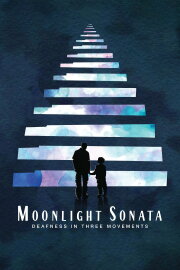
Moonlight Sonata is a deeply personal memoir about a deaf boy growing up, his deaf grandfather growing old, and Beethoven the year he was blindsided by deafness and wrote his iconic sonata. Their lives weave a story about what we discover when we push beyond loss.... (Full plot summary below)
Enjoy FREE movies and series with your Prime (USA) subscription or when you start a 30-day free trial!
Sorry, we can't find any suggestions at the moment.
Moonlight Sonata is a deeply personal memoir about a deaf boy growing up, his deaf grandfather growing old, and Beethoven the year he was blindsided by deafness and wrote his iconic sonata. Their lives weave a story about what we discover when we push beyond loss.
Leave your thoughts about Moonlight Sonata: Deafness in Three Movements.
| RogerEbert.comMatt Zoller SeitzIt isn’t until deep into “Moonlight Sonata” that you start to realize how many patterns Brodsky has woven into the fabric of this tale. |
| Washington PostMichael O'Sullivan“Moonlight” is actually not about one thing, but many, and Brodsky threads her themes together nicely. The film also charts Paul Taylor’s incipient dementia, a development that “Moonlight” weaves into its other story lines by noting, poetically, that our mistakes — the metaphorical, and inevitable, false notes we play in life — can become, as Brodsky puts it, “our music.” |
| Movie NationRoger MooreIt’s a meditative movie, as one underscored with Beethoven’s solo piano pieces “Moonlight Sonata” and “Für Elise” would have to be. Brodsky isn’t the first to get across what it feels like to experience the world without hearing it, so she doesn’t dwell on that, even if it is her central thesis. |
| Los Angeles TimesGary GoldsteinThe movie works best when it focuses on the senses and the specific connections between hearing, language (both ASL and oral) and music. |
| Wall Street JournalJohn AndersonMoonlight Sonata is not a children’s film, of course. What it deals in, regardless of how buoyant its characters, are the most serious issues imaginable. Not that there aren’t moments of pure mirth. “Did Beethoven ever play it?” Jonas asks of the sonata, “and is it on YouTube?” Even the formidable Ms. Connolly is given pause by that. |
| The New York TimesTeo BugbeeThe film’s deaf subjects feel creatively and philosophically shortchanged. |
| The Hollywood ReporterJohn DeForeThe documentary plays like a home movie that snowballed, causing its maker to overestimate her subject's relevance to the outside world. Though parts of it will certainly resonate within the deaf community (assuming it is made available with closed captioning), the film has little of the philosophical appeal of other documentaries on this topic, and sometimes seems willfully solipsistic. |