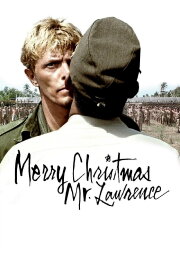
In 1942 British soldier Jack Celliers comes to a Japanese prison camp. The camp is run by Yonoi, who has a firm belief in discipline, honor and glory. In his view, the allied prisoners are cowards when they chose to surrender instead of committing suicide. One of the prisoners, interpreter John Lawrence, tries to explain the Japanese way of thinking, but is considered a traitor.... (Full plot summary below)
Enjoy FREE movies and series with your Prime (USA) subscription or when you start a 30-day free trial!
| Movie Source | Available | Offers | Added | Views | Quality | Format | Rating | Link | Share |
|---|---|---|---|---|---|---|---|---|---|
 | UK only | 1 Month Free Trial | 07 Oct 2018 | 3039 | HD | Watch OnlineStream Instantly | 69% |  Report: Broken Link Report: Broken Link |   |
| USA only | 1 Month Free Trial | 01 Jul 2014 | 4114 | HD | Watch OnlineStream Instantly | 86% | Report: Broken Link | |
| IRELAND only | 1 Month Free Trial | 30 Nov 2021 | 4485 | HD | Watch OnlineStream Instantly | 66% | Report: Broken Link | |
 | UK only | 30 Day Free Trial | 04 Oct 2018 | 778 | HD | Watch OnlineStream Instantly | 99% | Report: Broken Link | |
![Its HD [Merry Christmas, Mr. Lawrence]](/images/logos/icons/itshd.png) | WORLDWIDE | ? | 05 Jul 2024 | 3141 | HD | Watch OnlineStream Instantly | 84% | Report: Broken Link | |
 | UK only | 30 Day Free Trial | 25 Dec 2020 | 387 | HD | Watch OnlineStream Instantly | 42% | Report: Broken Link | |
 | UK only | Free Credit | 01 May 2024 | 162 | HD | Watch OnlineStream Instantly | 44% | Report: Broken Link | |
 | WORLDWIDE | ? | 01 Dec 2016 | 87 | HD | Watch OnlineStream Instantly | 21% | Report: Broken Link | |
 | WORLDWIDE | ? | 03 Jul 2019 | 20 | SD / TV | Watch OnlineStream Instantly | 19% | Report: Broken Link | |
 | WORLDWIDE | ? | 10 Apr 2020 | 144 | HD | Watch OnlineStream Instantly | 28% | Report: Broken Link | |
 | WORLDWIDE | ? | 28 Mar 2013 | 11 | SD / TV | Watch OnlineStream Instantly | 5% | Report: Broken Link | |
Links compiled using automated software. Availability of offers subject to change / might be region specific / out of date.
| Movie Source | Available | Offers | Added | Views | Quality | Format | Rating | Link | Share |
|---|---|---|---|---|---|---|---|---|---|
| UK only | 30 Day Free Trial | 30 Aug 2025 | 3349 | SD / DVD | DVD RentalRent by Post | 70% |  Report: Broken Link Report: Broken Link | |
 | UK only | N/A | 30 Aug 2025 | 16 | SD / DVD | DVD RentalRent by Post | 54% | Report: Broken Link | |
 | USA only | 1 Month Free Trial | 30 Aug 2025 | 148 | SD / DVD | DVD RentalRent by Mail | 16% | Report: Broken Link | |
| USA only | 1 Month Free Trial | 30 Aug 2025 | 17746 | SD / DVD | DVD RentalRent by Mail | 83% | Report: Broken Link | |
| Movie Source | Available | Offers | Added | Views | Quality | Format | Rating | Link | Share |
|---|---|---|---|---|---|---|---|---|---|
| UK only | 30 Day Free Trial | 19 Jan 2023 | 238 | HD / BR | Blu Ray RentalRent by Post | 91% | Report: Broken Link | |
| UK only | N/A | 19 Jan 2023 | 68 | HD / BR | Blu Ray RentalRent by Post | 10% | Report: Broken Link | |
| USA only | 1 Month Free Trial | 30 Aug 2025 | 186 | HD / BR | Blu Ray RentalRent by Mail | 10% | Report: Broken Link | |
| USA only | 1 Month Free Trial | 19 Jan 2023 | 4788 | HD / BR | Blu Ray RentalRent by Mail | 99% | Report: Broken Link | |
In 1942 British soldier Jack Celliers comes to a Japanese prison camp. The camp is run by Yonoi, who has a firm belief in discipline, honor and glory. In his view, the allied prisoners are cowards when they chose to surrender instead of committing suicide. One of the prisoners, interpreter John Lawrence, tries to explain the Japanese way of thinking, but is considered a traitor.
Leave your thoughts about Merry Christmas, Mr. Lawrence.
| New York TimesJanet MaslinMerry Christmas Mr. Lawrence is closer to a curiosity than to a triumph, though its conception is certainly ambitious. |
| Slant MagazineBill WeberA prisoner-of-war drama as fever dream, Merry Christmas Mr. Lawrence fascinates mostly for the hit-and-miss alchemy of its discordant elements: in performance, pop-star charisma versus British actorliness; in narrative style, genre expectations coming up against modernist psychosexual undercurrents. |
| Radio TimesDavid ParkinsonIf you can excuse the sight of the then 35-year-old David Bowie in a school uniform, this will prove most rewarding. |
| Q Network Film DeskJames KendrickThe film?s attention is split fairly evenly across the major characters, and their interactions are consistently fascinating in the way they illustrate both the cultural divide and the halting attempts to somehow bridge it. |
| Village VoiceAaron HillisFrom Oshima’s later career (after one stroke, he made 1999’s Taboo; after two strokes, it’s unclear whether he’ll direct again), most notable is this bilingual, end-of-WWII tearjerker about forgiveness and understanding between cultures, which could have been dubbed The Man Who Fell to Java. |
| Chicago ReaderDave KehrThe elliptical narrative centers on the unspoken erotic attraction between Sakamoto and Bowie, and Oshima appears to be treating ideas of elegantly transmogrified, purified emotions, yet the context and frequent incontinence of the execution bring the film uncomfortably close to the pseudophilosophical bondage fantasies of Yukio Mishima. |
| Combustible CelluloidJeffrey M. AndersonIt's relentlessly grim, constantly off-balance, occasionally moving, and often striking. |
| Chicago Sun-TimesRoger EbertIt's awkward, not because of the subject matter, but because of the contrasting acting styles. Here are two men trying to communicate in a touchy area and they behave as if they're from different planets. |
| Spirituality and PracticeFrederic and Mary Ann BrussatA compelling cross-cultural study of friendship and bravery |
| EmpireAdam SmithAs an exploration of cultural discord, Nagisa Oshima's film is pretty thin stuff, despite its reputation. Bowie is a potent irritant, but Tom Conti is solid in support and Sakamoto's mesmerising score sparkles anew. |