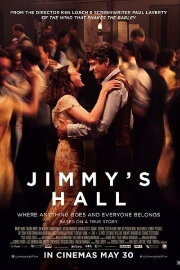
1932. Jimmy Gralton is back home in the Irish countryside after ten years of forced exile in the USA. His widowed mother Alice is happy, Jimmy's friends are happy, all the young people who enjoy dancing and singing are happy. Which is not the case of Father Sheridan, the local priest, nor of the village squire, nor of Dennis O'Keefe, the chief of the fascists. The reason is simple: Jimmy is a socialist activist. So when the "intruder" reopens the village hall, thus enabling t... (Full plot summary below)
Enjoy FREE movies and series with your Prime (USA) subscription or when you start a 30-day free trial!
| Movie Source | Available | Offers | Added | Views | Quality | Format | Rating | Link | Share |
|---|---|---|---|---|---|---|---|---|---|
 | UK only | 1 Month Free Trial | 25 Jun 2020 | 3131 | HD | Watch OnlineStream Instantly | 71% |  Report: Broken Link Report: Broken Link |   |
| USA only | 1 Month Free Trial | 12 Feb 2018 | 6717 | HD | Watch OnlineStream Instantly | 100% | Report: Broken Link | |
| IRELAND only | 1 Month Free Trial | 25 Sep 2016 | 3443 | HD | Watch OnlineStream Instantly | 66% | Report: Broken Link | |
 | UK only | 30 Day Free Trial | 29 Oct 2015 | 417 | HD | Watch OnlineStream Instantly | 85% | Report: Broken Link | |
![Its HD [Jimmys Hall]](/images/logos/icons/itshd.png) | WORLDWIDE | ? | 22 Nov 2015 | 3048 | HD | Watch OnlineStream Instantly | 85% | Report: Broken Link | |
 | UK only | 30 Day Free Trial | 08 Nov 2022 | 809 | HD | Watch OnlineStream Instantly | 43% | Report: Broken Link | |
 | UK only | Free Credit | 10 Dec 2017 | 161 | HD | Watch OnlineStream Instantly | 50% | Report: Broken Link | |
 | WORLDWIDE | ? | 08 Jun 2018 | 139 | HD | Watch OnlineStream Instantly | 35% | Report: Broken Link | |
 | WORLDWIDE | ? | 13 May 2024 | 16 | SD / TV | Watch OnlineStream Instantly | 14% | Report: Broken Link | |
 | WORLDWIDE | ? | 02 Jul 2013 | 109 | HD | Watch OnlineStream Instantly | 9% | Report: Broken Link | |
 | WORLDWIDE | ? | 09 Mar 2018 | 18 | SD / TV | Watch OnlineStream Instantly | 5% | Report: Broken Link | |
Links compiled using automated software. Availability of offers subject to change / might be region specific / out of date.
| Movie Source | Available | Offers | Added | Views | Quality | Format | Rating | Link | Share |
|---|---|---|---|---|---|---|---|---|---|
| UK only | 30 Day Free Trial | 25 Mar 2022 | 2580 | SD / DVD | DVD RentalRent by Post | 85% |  Report: Broken Link Report: Broken Link | |
 | UK only | N/A | 25 Mar 2022 | 103 | SD / DVD | DVD RentalRent by Post | 22% | Report: Broken Link | |
 | USA only | 1 Month Free Trial | 25 Mar 2022 | 193 | SD / DVD | DVD RentalRent by Mail | 17% | Report: Broken Link | |
| USA only | 1 Month Free Trial | 25 Mar 2022 | 13540 | SD / DVD | DVD RentalRent by Mail | 81% | Report: Broken Link | |
| Movie Source | Available | Offers | Added | Views | Quality | Format | Rating | Link | Share |
|---|---|---|---|---|---|---|---|---|---|
| UK only | 30 Day Free Trial | 09 Jun 2013 | 344 | HD / BR | Blu Ray RentalRent by Post | 80% | Report: Broken Link | |
| UK only | N/A | 09 Jun 2013 | 79 | HD / BR | Blu Ray RentalRent by Post | 29% | Report: Broken Link | |
| USA only | 1 Month Free Trial | 25 Mar 2022 | 653 | HD / BR | Blu Ray RentalRent by Mail | 11% | Report: Broken Link | |
| USA only | 1 Month Free Trial | 09 Jun 2013 | 5209 | HD / BR | Blu Ray RentalRent by Mail | 95% | Report: Broken Link | |
1932. Jimmy Gralton is back home in the Irish countryside after ten years of forced exile in the USA. His widowed mother Alice is happy, Jimmy's friends are happy, all the young people who enjoy dancing and singing are happy. Which is not the case of Father Sheridan, the local priest, nor of the village squire, nor of Dennis O'Keefe, the chief of the fascists. The reason is simple: Jimmy is a socialist activist. So when the "intruder" reopens the village hall, thus enabling the villagers to gather to sing, dance, paint, study or box, they take a dim view of the whole thing. People who think and unite are difficult to manipulate, aren't they? From that moment on they will use every means possible to get rid of Jimmy and his "dangerous" hall.
Leave your thoughts about Jimmy's Hall.
| Film Journal InternationalErica AbeelA lovely addition to Ken Loach's cinema of working-class heroes, this true story of Irish agitator James Gralton is intelligent, gorgeously shot, and makes the heart sing. |
| Commercial Appeal (Memphis, TN)John BeifussIt's rare to see a film that presents its characters -- working-class 'bog' folk and haughty clergy alike -- without a trace of condescension or caricature; it's rarer still to see a movie that unambiguously champions so-called radical politics. |
| Jerusalem PostHannah BrownIt's mildly entertaining but suffers from the one problem common to all these movies -- that the enemy is so vile, there is little shading. |
| Mountain Xpress (Asheville, NC)Ken HankeDeeply political, but warm, human and completely engaging drama from British director Ken Loach. |
| Times-PicayuneMike ScottIt's a comfortable and tidily assembled story of human perseverance in the face of adversity. Which is yet another thing about which the Irish know a thing or two. |
| NUVO NewsweeklyEdward Johnson-OttEntertaining, but the movie doesn't feel as substantial as it should be. |
| Seattle TimesJohn HartlLoach is clearly on Gralton's side, but he's remarkably evenhanded about it. Norton is a formidable villain, while Ward is just vulnerable enough to make the showdown dramatically persuasive. |
| Reeling ReviewsLaura CliffordIt may not be one of [Loach's] very best, the film's repressed protagonists whitewashed of any vice, but Ward is a sympathetic and charismatic lead... |
| Philadelphia InquirerSteven ReaThere's humanity here, on all sides, and a gentle wisdom beneath the raging rhetoric. |
| Los Angeles Daily NewsBob StraussThe result is a smart and occasionally mirthful spit in the face of Catholic repression, with dancing, fighting and just enough political tragedy to make it extra-strength Irish. |