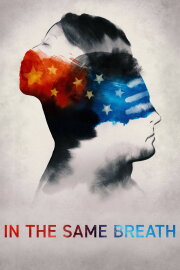
How did the Chinese government turn pandemic cover ups in Wuhan into a triumph for the Communist party?... (Full plot summary below)
Enjoy FREE movies and series with your Prime (USA) subscription or when you start a 30-day free trial!
How did the Chinese government turn pandemic cover ups in Wuhan into a triumph for the Communist party?
Leave your thoughts about In the Same Breath.
| RogerEbert.comRobert DanielsWith her harrowing film In the Same Breath, Wang has established herself as the preeminent documenter of the pain inflicted by oppressive regimes on their people. |
| The New York TimesManohla DargisIf In the Same Breath — the title becomes more resonant with each new scene and shock — were simply about China and its handling (mishandling) of the pandemic, it would be exemplary. But the story that she tells is larger and deeper than any one country because this is a story that envelops all of us, and it is devastating. |
| Slant MagazineChuck BowenIn Wang Nanfu’s extraordinary documentary, contemporary political structures are as much of a disease as Covid-19, and, in the long run, the deadlier foes. |
| Film ThreatSabina Dana PlasseThrough Wang’s intimate and gifted storytelling, and her filmmaking abilities, she offers a lens of understanding to the delicate nature of life and death, especially for the frontline men and women who were tackling this faceless and mysterious illness changing life as we know it. |
| TheWrapCarlos AguilarOnce Wang gets into the murky waters of the hoaxers here, one wishes she could dig deeper and examine the evolution of those fringe factions at length. That unfortunately doesn’t happen — likely given how much ground there is to cover with this story — yet her hard-hitting doc, both explores complex ideological battles and maps how a humanitarian calamity morphed into a political one in both countries. |
| Los Angeles TimesJustin ChangAt the simplest level, the stories of trauma and loss told in In the Same Breath exist as a necessary corrective. |
| The Film StageDavid KatzWhat emerges most clearly, in Wang’s argument, is the pandemic being as much of a battle between citizens and their lawmakers, as against humanity versus an ever-mutating virus. |
| IndieWireEric KohnWang’s absorbing first-person account of the coronavirus outbreak initially seems like it’s treading familiar ground, tracking the outbreak of the virus in Wuhan and government propaganda efforts to pretend it’s under control. With time, however, Wang turns the tables on her Western audience, illustrating how those same lies emanated from American airwaves months later. |
| The Hollywood ReporterDavid RooneyEven when accessing the situation remotely via camera operators and citizen journalists on the ground, Wang deftly balances factoids with first-hand experiences to show the emotional cost, both for people unable to say goodbye to their loved ones and front-line health care workers and funeral home staff, absorbing the trauma of unrelenting losses. |
| The GuardianCharles BramescoBusiness as usual has largely resumed in Wuhan, but Wang’s film contends that that’s just the problem. The same apparatuses of messaging and censorship are still in operation, ensuring that the full extent of the malfeasance may never be fully known |