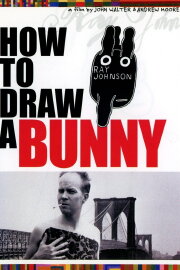
The story of the life of artist Ray Johnson is cloaked in mystery not only at the moment of his death, but also throughout a career that was difficult to know and to understand. As one of the seminal figures in the Pop Art era, Johnson is known as the founding father of mail art and as a collagist extraordinaire. But, overshadowed by those like Warhol who manipulated that world in a very dissimilar manner, he was also a reclusive and sometimes enigmatic figure who has been ca... (Full plot summary below)
Enjoy FREE movies and series with your Prime (USA) subscription or when you start a 30-day free trial!
| Movie Source | Available | Offers | Added | Views | Quality | Format | Rating | Link | Share |
|---|---|---|---|---|---|---|---|---|---|
 | UK only | 1 Month Free Trial | 28 Jun 2020 | 5225 | HD | Watch OnlineStream Instantly | 68% |  Report: Broken Link Report: Broken Link |   |
| USA only | 1 Month Free Trial | 18 Apr 2023 | 5885 | HD | Watch OnlineStream Instantly | 86% | Report: Broken Link | |
| IRELAND only | 1 Month Free Trial | 06 Jan 2020 | 4847 | HD | Watch OnlineStream Instantly | 93% | Report: Broken Link | |
 | UK only | 30 Day Free Trial | 28 Oct 2025 | 621 | HD | Watch OnlineStream Instantly | 99% | Report: Broken Link | |
![Its HD [How to Draw a Bunny]](/images/logos/icons/itshd.png) | WORLDWIDE | ? | 20 Oct 2024 | 3366 | HD | Watch OnlineStream Instantly | 86% | Report: Broken Link | |
 | UK only | 30 Day Free Trial | 19 Dec 2023 | 403 | HD | Watch OnlineStream Instantly | 40% | Report: Broken Link | |
 | UK only | Free Credit | 25 Jun 2016 | 149 | HD | Watch OnlineStream Instantly | 33% | Report: Broken Link | |
 | WORLDWIDE | ? | 29 Aug 2015 | 167 | HD | Watch OnlineStream Instantly | 24% | Report: Broken Link | |
 | WORLDWIDE | ? | 02 Aug 2022 | 17 | SD / TV | Watch OnlineStream Instantly | 18% | Report: Broken Link | |
 | WORLDWIDE | ? | 31 Mar 2018 | 246 | HD | Watch OnlineStream Instantly | 23% | Report: Broken Link | |
 | WORLDWIDE | ? | 28 Oct 2019 | 31 | SD / TV | Watch OnlineStream Instantly | 5% | Report: Broken Link | |
Links compiled using automated software. Availability of offers subject to change / might be region specific / out of date.
| Movie Source | Available | Offers | Added | Views | Quality | Format | Rating | Link | Share |
|---|---|---|---|---|---|---|---|---|---|
| UK only | 30 Day Free Trial | 13 Dec 2018 | 3163 | SD / DVD | DVD RentalRent by Post | 68% |  Report: Broken Link Report: Broken Link | |
 | UK only | N/A | 13 Dec 2018 | 104 | SD / DVD | DVD RentalRent by Post | 16% | Report: Broken Link | |
 | USA only | 1 Month Free Trial | 13 Dec 2018 | 254 | SD / DVD | DVD RentalRent by Mail | 10% | Report: Broken Link | |
| USA only | 1 Month Free Trial | 13 Dec 2018 | 3907 | SD / DVD | DVD RentalRent by Mail | 78% | Report: Broken Link | |
| Movie Source | Available | Offers | Added | Views | Quality | Format | Rating | Link | Share |
|---|---|---|---|---|---|---|---|---|---|
| UK only | 30 Day Free Trial | 23 Jan 2021 | 264 | HD / BR | Blu Ray RentalRent by Post | 88% | Report: Broken Link | |
| UK only | N/A | 23 Jan 2021 | 42 | HD / BR | Blu Ray RentalRent by Post | 33% | Report: Broken Link | |
| USA only | 1 Month Free Trial | 13 Dec 2018 | 439 | HD / BR | Blu Ray RentalRent by Mail | 17% | Report: Broken Link | |
| USA only | 1 Month Free Trial | 23 Jan 2021 | 3538 | HD / BR | Blu Ray RentalRent by Mail | 84% | Report: Broken Link | |
Sorry, we can't find any suggestions at the moment.
The story of the life of artist Ray Johnson is cloaked in mystery not only at the moment of his death, but also throughout a career that was difficult to know and to understand. As one of the seminal figures in the Pop Art era, Johnson is known as the founding father of mail art and as a collagist extraordinaire. But, overshadowed by those like Warhol who manipulated that world in a very dissimilar manner, he was also a reclusive and sometimes enigmatic figure who has been called New York's most famous unknown artist, but who challenged the commercial and critical establishment.
Leave your thoughts about How to Draw a Bunny.
| Los Angeles TimesManohla DargisA seamless model of form and content. (My only quibble is the poor quality of the digital video, which doesn't do justice to Johnson's work.) |
| Film ThreatTim MerrillMaybe How to Draw a Bunny itself is really Ray Johnson's final testament, created with a mischievous wink from beyond the grave. After watching this extraordinary documentary, one has no doubt that such an act is well within Johnson's creative powers. |
| San Francisco ChronicleKenneth BakerHow to Draw Bunny won the Special Jury Prize at the 2002 Sundance Film Festival, which must go to show how scarce noteworthy documentaries are. |
| New York PostV.A. MusettoProbably the most definitive portrait of Johnson that we are likely to get. |
| New York Daily NewsElizabeth WeitzmanA fascinating exploration of the mysteries of the artist's life. |
| L.A. WeeklyElla TaylorUnlike most documentaries about arty types, John Walter's wonderfully capricious, wittily edited film about Johnson seeks to make precise all the different ways in which the artist managed to remain opaque. |
| The A.V. ClubNoel MurrayThe opportunity to dig into the trove of Johnson's art is an ultimate reward beyond all offbeat attempts to understand the artist himself. At its best, How To Draw A Bunny amounts to a shadow history of the American avant-garde. |
| The New York TimesLawrence Van GelderAn intriguing and entertaining introduction to Johnson through his varied art; the mystery surrounding his death, which may have been his final performance piece, and the reminiscences of contemporaries. |
| VarietyDennis HarveyDebuting helmer Walter assembles an aptly colorful package, with stylistic integration of elements from Johnson's delightful visual art. A major plus is the skittering percussion score by bebop jazz great Max Roach. |
| TV Guide MagazineMaitland McDonaghJohn Walter's documentary suggests that Johnson, who made no distinction between his life and his art, designed every detail of his own mysterious 1995 suicide with the same whimsical care that went into his painstakingly assembled pieces, and provides an engaging overview of Johnson's eccentric career in the process. |