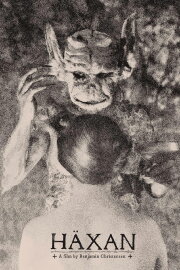
Part history lesson followed by re-enactments with actors, this film depicts the history of witchcraft from its earliest days through to the present day (in this case,1922 or thereabouts). The result is a documentary-like film that must be among the first to use re-enactments as a visual and narrative tool. From pagan worship to satanic rites to hysteria, the film takes you on a journey through the ages with highly effective visual sequences.... (Full plot summary below)
Enjoy FREE movies and series with your Prime (USA) subscription or when you start a 30-day free trial!
| Movie Source | Available | Offers | Added | Views | Quality | Format | Rating | Link | Share |
|---|---|---|---|---|---|---|---|---|---|
 | UK only | 1 Month Free Trial | 24 Oct 2024 | 5581 | HD | Watch OnlineStream Instantly | 76% |  Report: Broken Link Report: Broken Link |   |
| USA only | 1 Month Free Trial | 26 Feb 2026 | 4581 | HD | Watch OnlineStream Instantly | 88% | Report: Broken Link | |
| IRELAND only | 1 Month Free Trial | 01 Jan 2016 | 3867 | HD | Watch OnlineStream Instantly | 62% | Report: Broken Link | |
 | UK only | 30 Day Free Trial | 29 Jun 2013 | 747 | HD | Watch OnlineStream Instantly | 84% | Report: Broken Link | |
![Its HD [Häxan]](/images/logos/icons/itshd.png) | WORLDWIDE | ? | 28 Dec 2018 | 3105 | HD | Watch OnlineStream Instantly | 87% | Report: Broken Link | |
 | UK only | 30 Day Free Trial | 21 Mar 2025 | 538 | HD | Watch OnlineStream Instantly | 56% | Report: Broken Link | |
 | UK only | Free Credit | 03 May 2016 | 129 | HD | Watch OnlineStream Instantly | 38% | Report: Broken Link | |
 | WORLDWIDE | ? | 14 Jun 2026 | 123 | HD | Watch OnlineStream Instantly | 32% | Report: Broken Link | |
 | WORLDWIDE | ? | 14 Jul 2024 | 23 | SD / TV | Watch OnlineStream Instantly | 20% | Report: Broken Link | |
 | WORLDWIDE | ? | 28 Jun 2026 | 109 | HD | Watch OnlineStream Instantly | 8% | Report: Broken Link | |
 | WORLDWIDE | ? | 03 Feb 2023 | 29 | SD / TV | Watch OnlineStream Instantly | 13% | Report: Broken Link | |
Links compiled using automated software. Availability of offers subject to change / might be region specific / out of date.
| Movie Source | Available | Offers | Added | Views | Quality | Format | Rating | Link | Share |
|---|---|---|---|---|---|---|---|---|---|
| UK only | 30 Day Free Trial | 09 Oct 2015 | 2414 | SD / DVD | DVD RentalRent by Post | 87% |  Report: Broken Link Report: Broken Link | |
 | UK only | N/A | 09 Oct 2015 | 23 | SD / DVD | DVD RentalRent by Post | 45% | Report: Broken Link | |
 | USA only | 1 Month Free Trial | 09 Oct 2015 | 199 | SD / DVD | DVD RentalRent by Mail | 7% | Report: Broken Link | |
| USA only | 1 Month Free Trial | 09 Oct 2015 | 7542 | SD / DVD | DVD RentalRent by Mail | 99% | Report: Broken Link | |
| Movie Source | Available | Offers | Added | Views | Quality | Format | Rating | Link | Share |
|---|---|---|---|---|---|---|---|---|---|
| UK only | 30 Day Free Trial | 25 Jan 2020 | 204 | HD / BR | Blu Ray RentalRent by Post | 62% | Report: Broken Link | |
| UK only | N/A | 25 Jan 2020 | 37 | HD / BR | Blu Ray RentalRent by Post | 48% | Report: Broken Link | |
| USA only | 1 Month Free Trial | 09 Oct 2015 | 124 | HD / BR | Blu Ray RentalRent by Mail | 16% | Report: Broken Link | |
| USA only | 1 Month Free Trial | 25 Jan 2020 | 9825 | HD / BR | Blu Ray RentalRent by Mail | 88% | Report: Broken Link | |
Part history lesson followed by re-enactments with actors, this film depicts the history of witchcraft from its earliest days through to the present day (in this case,1922 or thereabouts). The result is a documentary-like film that must be among the first to use re-enactments as a visual and narrative tool. From pagan worship to satanic rites to hysteria, the film takes you on a journey through the ages with highly effective visual sequences.
Leave your thoughts about Häxan.
| Bryant Frazer's Deep FocusBryant FrazerOne of the earliest films that takes misogyny and sexual repression as its subject. |
| MovieMartyr.comJeremy HeilmanThe film stands as a fascinating historical document, and, more surprisingly, as a thoroughly watchable film. |
| Q Network Film DeskJames KendrickA truly unique work that still holds the power to unnerve even in today's jaded era. |
| VarietyVariety StaffSwedish and Danish pictures easily hold the palm for morbid realism and in many cases for brilliant acting and production. |
| DVDJournal.comMark BourneOstensibly an exposé of religious persecution born from ignorance of science ... or, when filtered through the bong water of the psychedelic '60s to become Witchcraft Through the Ages, a trippy exercise in surreal pop filmmaking extravagance. |
| Goatdog's MoviesMichael W. Phillips, Jr.Viewers who think "silent" films are boring and primitive would do well to start with this one as an example of how advanced they really were. |
| Filmcritic.comChristopher NullBenjamin Christensen's pioneering look at ancient Scandinavian witchcraft is impressive and genuinely disturbing. |
| User Reviewpeter hHaxan: Witchcraft through the ages (1922): It was the most expensive silent Scandinavian film ever produced in the silent era of cinema. Haxan: Witchcraft through the ages a Swedish and Danish silent film is without a doubt a landmark in documentary filmmaking and even a land mark in horror cinema. The films bizarre, surreal, eerie and hypnotic feel creates one unnatural atmosphere for a said documentary. The film documents the belief of Witchcraft in the Middle Ages ranging from the superstitions of the era though to the Hysteria and paranoia associated with the fear of the devil. The film is split into seven acts; the first act introduces the audiences to the belief of witchcraft in Western society, the second act theatrically recreates superstitions in the Middle Ages and the belief of witchcraft, then in the following four acts the movie jumps into a narrative set in the year 1488 about an old woman accused of committing an act of witchcraft by a dying man's family were the audience is shown some dark and nightmarish depictions of the devil. The final act ends in the early 1900's with the comparison that people that were old or suffer from mental illnesses would have been accused of witchcraft in the past. Although Haxan is a ground breaking documentary, it's also a definite forerunner to the horror genre with the films nightmarish imagery and depiction of the Devil. On a note of trivia it should be noted in the first act of this film an illustration of an ancient depiction of the devil appears on screen for a brief instant. That exact same depiction devil is quite clearly seen in the form of a statute in the opening scenes of THE EXORCIST (1973) when one of the priests stands directly in front of it. Also the makers of THE BLAIR WITCH PROJECT (1999) named their production company after this film. My personal impression on Haxan: Witchcraft through the ages (1922): A brilliant silent horror film and documentary recommended to all fans of cinema. 100% anything less wouldn't do. |
| User ReviewJustin RAwesome silent movie - part doc/part drama - about witches. |
| User ReviewAl MBenjamin Christensen's original 1929 flim remains a masterpiece of horror in its exploration of witchcraft, satanism, and demonology. Alongside Nosferatu, The Cabinet of Dr. Caligari, Vampyr, etc., Haxan represents one of cinema's first great horror films. While technically a documentary about the history of European and America concepts of witchcraft, Christensen's film is actually a series of horror tableaux tied together by this common theme. Across the course of the film, the viewer witnesses horrors that would not be repeated in cinematic history until at least the 1960s: witches' sabbaths (including witches kissing the ass of satan), corrupted nuns (yes, Haxan could arguably be the first nunsploitation flick), descents into nightmarish hellscapes, etc. Haxan also proves rather astute for drawing a connection between witches, demon possession, etc. and mental illness, a connection that will continue to be explored in later possession films such as The Exorcist. Aside from the original version of the film, it becomes an even more interesting text in the 1960s when the Americanized version is released under the direciton of Wliliam S. Burroughs, Bryon Gysin, and friends. Featuring a stellar, experimental jazz score (with Jean-Luc Ponty on violen) and absolutely unforgettable, creepy, and brilliant narration from Burroughs, this American version of Haxan becomes a classic in its own right. It demonstrates Burroughs cut-up method for one thing--his (and Gysin's) belief that any two (or more) texts could be cut-up and recombined with another. In this case, Christensen's flim has been cut-up with Burroughs's narration and with the jazz score which create a level of humor and satire not as prevalent in the original film. Fortunately, the Criterion edition of Haxan offers both cuts, so you can experience the original surrealistic horror of the silent documentary as well as the even more surrealistic, tongue-in-cheek horror of the 60s version. |