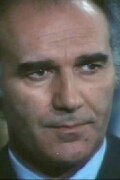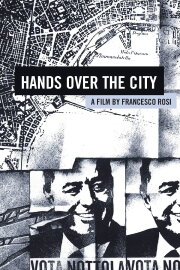
Prior to a city council election, the collapse of a building leaves a land developer and his political backers defending themselves against a scandal.... (Full plot summary below)
Enjoy FREE movies and series with your Prime (USA) subscription or when you start a 30-day free trial!
| Movie Source | Available | Offers | Added | Views | Quality | Format | Rating | Link | Share |
|---|---|---|---|---|---|---|---|---|---|
 | UK only | 1 Month Free Trial | 30 Nov 2020 | 4061 | HD | Watch OnlineStream Instantly | 78% |  Report: Broken Link Report: Broken Link |   |
| USA only | 1 Month Free Trial | 07 Jul 2026 | 2788 | HD | Watch OnlineStream Instantly | 100% | Report: Broken Link | |
| IRELAND only | 1 Month Free Trial | 20 Apr 2023 | 2649 | HD | Watch OnlineStream Instantly | 74% | Report: Broken Link | |
 | UK only | 30 Day Free Trial | 23 Sep 2025 | 435 | HD | Watch OnlineStream Instantly | 89% | Report: Broken Link | |
![Its HD [Hands Over the City]](/images/logos/icons/itshd.png) | WORLDWIDE | ? | 21 Sep 2016 | 3732 | HD | Watch OnlineStream Instantly | 94% | Report: Broken Link | |
 | UK only | 30 Day Free Trial | 25 Apr 2013 | 298 | HD | Watch OnlineStream Instantly | 65% | Report: Broken Link | |
 | UK only | Free Credit | 13 Jan 2022 | 137 | HD | Watch OnlineStream Instantly | 51% | Report: Broken Link | |
 | WORLDWIDE | ? | 22 Aug 2024 | 93 | HD | Watch OnlineStream Instantly | 35% | Report: Broken Link | |
 | WORLDWIDE | ? | 05 Feb 2022 | 11 | SD / TV | Watch OnlineStream Instantly | 22% | Report: Broken Link | |
 | WORLDWIDE | ? | 24 Jan 2014 | 99 | HD | Watch OnlineStream Instantly | 15% | Report: Broken Link | |
 | WORLDWIDE | ? | 21 Dec 2016 | 6 | SD / TV | Watch OnlineStream Instantly | 6% | Report: Broken Link | |
Links compiled using automated software. Availability of offers subject to change / might be region specific / out of date.
| Movie Source | Available | Offers | Added | Views | Quality | Format | Rating | Link | Share |
|---|---|---|---|---|---|---|---|---|---|
| UK only | 30 Day Free Trial | 18 Nov 2025 | 2671 | SD / DVD | DVD RentalRent by Post | 61% |  Report: Broken Link Report: Broken Link | |
 | UK only | N/A | 18 Nov 2025 | 19 | SD / DVD | DVD RentalRent by Post | 20% | Report: Broken Link | |
 | USA only | 1 Month Free Trial | 18 Nov 2025 | 192 | SD / DVD | DVD RentalRent by Mail | 7% | Report: Broken Link | |
| USA only | 1 Month Free Trial | 18 Nov 2025 | 22006 | SD / DVD | DVD RentalRent by Mail | 94% | Report: Broken Link | |
| Movie Source | Available | Offers | Added | Views | Quality | Format | Rating | Link | Share |
|---|---|---|---|---|---|---|---|---|---|
| UK only | 30 Day Free Trial | 04 May 2018 | 286 | HD / BR | Blu Ray RentalRent by Post | 92% | Report: Broken Link | |
| UK only | N/A | 04 May 2018 | 38 | HD / BR | Blu Ray RentalRent by Post | 32% | Report: Broken Link | |
| USA only | 1 Month Free Trial | 18 Nov 2025 | 849 | HD / BR | Blu Ray RentalRent by Mail | 17% | Report: Broken Link | |
| USA only | 1 Month Free Trial | 04 May 2018 | 5608 | HD / BR | Blu Ray RentalRent by Mail | 98% | Report: Broken Link | |
Prior to a city council election, the collapse of a building leaves a land developer and his political backers defending themselves against a scandal.
Leave your thoughts about Hands Over the City.
| Filmcritic.comJake Eukera bracingly muckraking piece of filmmaking |
| Ozus' World Movie ReviewsDennis SchwartzOne of cinema's most complex looks at how democracy is corrupted by a system that doesn't work. |
| User ReviewAndrea MWonderful black and white reality movie on the real estate racket in Naples in the 1960s, when investigative journalism was still possible in Italy (now it is way too risky). Rod Steiger gives one of his best performances. |
| User ReviewJaime GPor fin una brillante película de crítica social que no tiene desenlace feliz ni martirio final. Esta película debería ser obligatoria para todos los estudiantes de leyes, aspirantes a políticos o simplemente para quienes desean ser educados en como se manejan los asuntos de estado en nuestro tiempo y en todo lugar. |
| User ReviewKevin PA brave and denouncing film on corruption and complicity between politics and business in Naples. |
| User ReviewThomas GItalian social realism at its height with Francesco Rosi. Rod Steiger and Carlo Fermariello are brilliant in this movie. Piccioni's score is kind of goofy, but in a complementary way. |
| User ReviewDavid BExcellent Italian social realism about corruption and opportunism among right-wing and centrist members of a city government. |
| User ReviewPrivate UGreat, great movie. Very realistic and relevent! |
| User ReviewDan BJust the thing to escape from a corrupt government fighting to shore itself up during a cynical election year: a film about a corrupt government fighting to shore itself up during a cynical election year. |
| User ReviewBlake PThis Golden Lion-winning political drama, helmed by ambitious journalistic Italian filmmaker Francesco Rosi, makes a performance of a pursuit, a miscarried pursuit, but informative nonetheless for the inside scoop it wagers before us. The investigators are members of the Naples City Council, who are grindingly provoked by the collapse of a building in a congested blue-collar back street. Did the building wreck, with some tragic results, due to hazardous construction at a neighboring site? Most of the council is willing to draw the line of their inquiry at this particular question, having already settled that the answer is no. Initially, the sole proponent for further examination is convinced that the root cause is one of everyday profiteering, as personified by Rod Steiger's council member and real estate developer named Nottola. His right-wing party commands the government, which governs the city's construction and planning offices, which permit Nottola charge of whatever development he favors. The gluttonous profits come full circle to the right-wing party. With an election coming up, the noble sole proponent is fixed on fracturing this cycle by exposing it, yet in doing so he is exposed to infuriating bureaucracy. In reality, he is played not by a professional actor but a member of the city council and secretary of the chamber of commerce. Fermariello's good guy appears more emotionally decipherable than Steiger's Nottola, who in spite of being the axial character is cold and unapproachable in most scenes. Nottola disappears for extensive segments of the movie. His son, the engineer at fault for the building disaster, evaporates for the entire film after one small and obscure appearance. The film is quite reminiscent of the much more recent film There Will Be Blood by Paul Thomas Anderson, and with a very similarly remote main character. As for Nottola's feelings for his son, they never surface at any point. At the moment when Nottola faces the urgency to choose between his son or his business concerns, Rosi denies even a suggestion of his internal life. While Nottola remains silent and ponderous, Rosi's camera ranges his nondescript office and juxtaposes him with the window's view of the darkened city, for almost three full minutes, as the disonant musical score awakes in a sother of brass, shapelessly building like a migraine before it's shattered by a menacing jazz wallop. Pay close attention to the first few scenes of this eager sociological morality tale. While this succession economically summarizes the era's Neapolitan chain of graft, there are lush leaps in framing and scope like when we see Nottola's hands in close-up against the outlying background, high-reaching overhead purviews first of an architectural facsimile and then of the real city, abrupt cuts that jar you in and out of runaway and overlapping dialogues, and curt pauses during which you read the faces of an "industriopolitical" (my word) mass. This sequence of jarrings delves into how Rosi gets away with his conversational portrayal, half council-chamber public speaking and the other half clandestine political scheming. While the dialogue by itself would be a courtroom-like chore, Rosi's stylistic visual appeal keeps one enthralled. So the circle of the film closes, and the camera cranks back through the city council chamber, and then you see the same high-flying aerial shots as at the beginning. And yet, although Rosi appears to be suggesting a sort of sighing and giving up, a point of view not so irrational when one sees how far beyond Naples this perpetuated cycle of underhanded government puppeteering remains several decades later, the stylized realism of this, what I call an everyday disaster movie, leaves you feeling resilient and energized. |