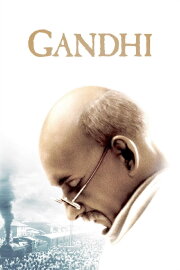
In 1893, Mohandas K. Gandhi is thrown off a South African train for being an Indian and traveling in a first class compartment. Gandhi realizes that the laws are biased against Indians and decides to start a non-violent protest campaign for the rights of all Indians in South Africa. After numerous arrests and the unwanted attention of the world, the government finally relents by recognizing rights for Indians, though not for the native blacks of South Africa. After this victo... (Full plot summary below)
Enjoy FREE movies and series with your Prime (USA) subscription or when you start a 30-day free trial!
| Movie Source | Available | Offers | Added | Views | Quality | Format | Rating | Link | Share |
|---|---|---|---|---|---|---|---|---|---|
 | UK only | 1 Month Free Trial | 04 Sep 2014 | 2708 | HD | Watch OnlineStream Instantly | 78% |  Report: Broken Link Report: Broken Link |   |
| USA only | 1 Month Free Trial | 04 Aug 2024 | 4316 | HD | Watch OnlineStream Instantly | 89% | Report: Broken Link | |
| IRELAND only | 1 Month Free Trial | 28 Nov 2020 | 1581 | HD | Watch OnlineStream Instantly | 83% | Report: Broken Link | |
 | UK only | 30 Day Free Trial | 08 Apr 2014 | 358 | HD | Watch OnlineStream Instantly | 100% | Report: Broken Link | |
![Its HD [Gandhi]](/images/logos/icons/itshd.png) | WORLDWIDE | ? | 29 Mar 2017 | 3344 | HD | Watch OnlineStream Instantly | 96% | Report: Broken Link | |
 | UK only | 30 Day Free Trial | 20 Dec 2018 | 204 | HD | Watch OnlineStream Instantly | 53% | Report: Broken Link | |
 | UK only | Free Credit | 28 Jul 2013 | 132 | HD | Watch OnlineStream Instantly | 48% | Report: Broken Link | |
 | WORLDWIDE | ? | 20 Jan 2014 | 103 | HD | Watch OnlineStream Instantly | 14% | Report: Broken Link | |
 | WORLDWIDE | ? | 05 Feb 2025 | 10 | SD / TV | Watch OnlineStream Instantly | 17% | Report: Broken Link | |
 | WORLDWIDE | ? | 16 Jul 2022 | 210 | HD | Watch OnlineStream Instantly | 35% | Report: Broken Link | |
 | WORLDWIDE | ? | 23 Nov 2014 | 23 | SD / TV | Watch OnlineStream Instantly | 12% | Report: Broken Link | |
Links compiled using automated software. Availability of offers subject to change / might be region specific / out of date.
| Movie Source | Available | Offers | Added | Views | Quality | Format | Rating | Link | Share |
|---|---|---|---|---|---|---|---|---|---|
| UK only | 30 Day Free Trial | 24 Jan 2026 | 2521 | SD / DVD | DVD RentalRent by Post | 87% |  Report: Broken Link Report: Broken Link | |
 | UK only | N/A | 24 Jan 2026 | 45 | SD / DVD | DVD RentalRent by Post | 29% | Report: Broken Link | |
 | USA only | 1 Month Free Trial | 24 Jan 2026 | 18 | SD / DVD | DVD RentalRent by Mail | 19% | Report: Broken Link | |
| USA only | 1 Month Free Trial | 24 Jan 2026 | 5179 | SD / DVD | DVD RentalRent by Mail | 88% | Report: Broken Link | |
| Movie Source | Available | Offers | Added | Views | Quality | Format | Rating | Link | Share |
|---|---|---|---|---|---|---|---|---|---|
| UK only | 30 Day Free Trial | 01 Aug 2019 | 277 | HD / BR | Blu Ray RentalRent by Post | 65% | Report: Broken Link | |
| UK only | N/A | 01 Aug 2019 | 53 | HD / BR | Blu Ray RentalRent by Post | 38% | Report: Broken Link | |
| USA only | 1 Month Free Trial | 24 Jan 2026 | 158 | HD / BR | Blu Ray RentalRent by Mail | 16% | Report: Broken Link | |
| USA only | 1 Month Free Trial | 01 Aug 2019 | 3439 | HD / BR | Blu Ray RentalRent by Mail | 81% | Report: Broken Link | |
In 1893, Mohandas K. Gandhi is thrown off a South African train for being an Indian and traveling in a first class compartment. Gandhi realizes that the laws are biased against Indians and decides to start a non-violent protest campaign for the rights of all Indians in South Africa. After numerous arrests and the unwanted attention of the world, the government finally relents by recognizing rights for Indians, though not for the native blacks of South Africa. After this victory, Gandhi is invited back to India, where he is now considered something of a national hero. He is urged to take up the fight for India's independence from the British Empire. Gandhi agrees, and mounts a non-violent non-cooperation campaign of unprecedented scale, coordinating millions of Indians nationwide. There are some setbacks, such as violence against the protesters and Gandhi's occasional imprisonment. Nevertheless, the campaign generates great attention, and Britain faces intense public pressure. Too weak from World War II to continue enforcing its will in India, Britain finally grants India's independence. Indians celebrate this victory, but their troubles are far from over. Religious tensions between Hindus and Muslims erupt into nation-wide violence. Gandhi declares a hunger strike, saying he will not eat until the fighting stops. The fighting does stop eventually, but the country is divided. It is decided that the northwest area of India, and eastern part of India (current day Bangladesh), both places where Muslims are in the majority, will become a new country called Pakistan (West and East Pakistan respectively). It is hoped that by encouraging the Muslims to live in a separate country, violence will abate. Gandhi is opposed to the idea, and is even willing to allow Muhammad Ali Jinnah to become the first prime minister of India, but the Partition of India is carried out nevertheless. Gandhi spends his last days trying to bring about peace between both nations. He thereby angers many dissidents on both sides, one of whom finally gets close enough to assassinate him.
Leave your thoughts about Gandhi.
| Time OutFrances DickinsonIts faults rather pale beside the epic nature of its theme, and Kingsley's performance in the central role is outstanding. |
| About.comFred TopelSolid biopic, a little long, but well done. |
| NetflixJames RocchiEpic tale about one man's journey down the transforming path of wisdom and peace. |
| The NationRobert HatchRichard Attenborough's Gandhi is every bit as sumptuous as everyone had expected. |
| The TelegraphMartin ChiltonAttenborough's stately film is in every sense of the word an epic and Ben Kingsley is superb as Mahatma Ghandi, aging as he does 50 years during the three-hour film, and transforming from dapper young lawyer to loin-cloth wearing ascetic. |
| Chicago Sun-TimesRoger EbertWhat is important about this film is not that it serves as a history lesson (although it does) but that, at a time when the threat of nuclear holocaust hangs ominously in the air, it reminds us that we are, after all, human, and thus capable of the most extraordinary and wonderful achievements, simply through the use of our imagination, our will, and our sense of right. |
| Boston GlobeMichael BlowenAlthough Gandhi may lack the depth of a more academic approach, it is an old-fashioned, inspirational ode to a man who dared to challenge military power with self-restraint and political cunning. |
| Washington PostGary ArnoldWhile literate and coherent in digest-of-history terms, the chronicle of Gandhi's remarkable career as a mass political organizer and spiritual inspiration distilled from the biographical record by Attenborough and screenwriter John Briley remains grievously doting and squeamishly evasive. |
| SlateReihan SalamYes, Gandhi is a hagiography and not a nuanced, darkly shaded, or even very convincing portrait of an ambitious and deeply strange man. And as an account of the muddled, messy origins of Indian independence, the film is guilty of historical malpractice. But taken as a black-and-white morality play, Gandhi is unmatched. Simplifications and all, this is the movie my parents wanted me to see as a child—and it's the movie I'd want my own (purely theoretical) children to see as well. |
| The GuardianPhilip FrenchWith the help of his cinematographers, Billy Williams and Ronnie Taylor, Attenborough has produced a very beautiful-looking movie that is maybe a little too seductive for its own good. But Attenborough shows once again his skill in managing the big set-piece. |