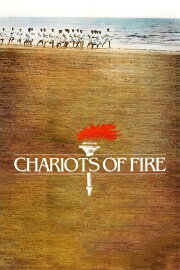
It's the post-World War I era. Britons Harold Abrahams and Eric Liddell are both naturally gifted fast sprinters, but approach running and how it fits into their respective lives differently. The son of a Lithuanian Jew, Harold, who lives a somewhat privileged life as a student at Cambridge, uses being the fastest to overcome what he sees as the obstacles he faces in life as a Jew despite that privilege. In his words to paraphrase an old adage, he is often invited to the trou... (Full plot summary below)
Enjoy FREE movies and series with your Prime (USA) subscription or when you start a 30-day free trial!
| Movie Source | Available | Offers | Added | Views | Quality | Format | Rating | Link | Share |
|---|---|---|---|---|---|---|---|---|---|
 | UK only | 1 Month Free Trial | 01 Jul 2013 | 4390 | HD | Watch OnlineStream Instantly | 83% |  Report: Broken Link Report: Broken Link |   |
| USA only | 1 Month Free Trial | 21 Oct 2025 | 4855 | HD | Watch OnlineStream Instantly | 79% | Report: Broken Link | |
| IRELAND only | 1 Month Free Trial | 23 Sep 2025 | 4745 | HD | Watch OnlineStream Instantly | 61% | Report: Broken Link | |
 | UK only | 30 Day Free Trial | 20 May 2021 | 451 | HD | Watch OnlineStream Instantly | 90% | Report: Broken Link | |
![Its HD [Chariots of Fire]](/images/logos/icons/itshd.png) | WORLDWIDE | ? | 10 Jun 2022 | 3144 | HD | Watch OnlineStream Instantly | 88% | Report: Broken Link | |
 | UK only | 30 Day Free Trial | 02 Oct 2019 | 509 | HD | Watch OnlineStream Instantly | 56% | Report: Broken Link | |
 | UK only | Free Credit | 06 Mar 2018 | 169 | HD | Watch OnlineStream Instantly | 51% | Report: Broken Link | |
 | WORLDWIDE | ? | 14 Jul 2014 | 90 | HD | Watch OnlineStream Instantly | 23% | Report: Broken Link | |
 | WORLDWIDE | ? | 25 Oct 2025 | 22 | SD / TV | Watch OnlineStream Instantly | 24% | Report: Broken Link | |
 | WORLDWIDE | ? | 19 Mar 2023 | 273 | HD | Watch OnlineStream Instantly | 12% | Report: Broken Link | |
 | WORLDWIDE | ? | 13 Mar 2020 | 16 | SD / TV | Watch OnlineStream Instantly | 16% | Report: Broken Link | |
Links compiled using automated software. Availability of offers subject to change / might be region specific / out of date.
| Movie Source | Available | Offers | Added | Views | Quality | Format | Rating | Link | Share |
|---|---|---|---|---|---|---|---|---|---|
| UK only | 30 Day Free Trial | 22 Dec 2016 | 1387 | SD / DVD | DVD RentalRent by Post | 60% |  Report: Broken Link Report: Broken Link | |
 | UK only | N/A | 22 Dec 2016 | 44 | SD / DVD | DVD RentalRent by Post | 22% | Report: Broken Link | |
 | USA only | 1 Month Free Trial | 22 Dec 2016 | 133 | SD / DVD | DVD RentalRent by Mail | 8% | Report: Broken Link | |
| USA only | 1 Month Free Trial | 22 Dec 2016 | 20413 | SD / DVD | DVD RentalRent by Mail | 96% | Report: Broken Link | |
| Movie Source | Available | Offers | Added | Views | Quality | Format | Rating | Link | Share |
|---|---|---|---|---|---|---|---|---|---|
| UK only | 30 Day Free Trial | 20 Sep 2021 | 313 | HD / BR | Blu Ray RentalRent by Post | 80% | Report: Broken Link | |
| UK only | N/A | 20 Sep 2021 | 64 | HD / BR | Blu Ray RentalRent by Post | 39% | Report: Broken Link | |
| USA only | 1 Month Free Trial | 22 Dec 2016 | 815 | HD / BR | Blu Ray RentalRent by Mail | 4% | Report: Broken Link | |
| USA only | 1 Month Free Trial | 20 Sep 2021 | 4744 | HD / BR | Blu Ray RentalRent by Mail | 83% | Report: Broken Link | |
It's the post-World War I era. Britons Harold Abrahams and Eric Liddell are both naturally gifted fast sprinters, but approach running and how it fits into their respective lives differently. The son of a Lithuanian Jew, Harold, who lives a somewhat privileged life as a student at Cambridge, uses being the fastest to overcome what he sees as the obstacles he faces in life as a Jew despite that privilege. In his words to paraphrase an old adage, he is often invited to the trough, but isn't allowed to drink. His running prowess does earn him the respect of his classmates, especially his running teammates, and to some extent the school administration, if only he maintains what they consider proper gentlemanly decorum, which isn't always the case in their minds. Born in China, the son of Christian missionaries, Eric, a Scot, is a devout member of the Church of Scotland who eventually wants to return to that missionary work. He sees running as a win-win in that the notoriety of being fast gives him an added outlet to spread the word of God, while he sees his speed as being a gift from God, and he wants to run to honor God and that gift. This view does not sit well with his sister, Jennie Liddell, who sees his running as only taking away time from his work to God. Harold and Eric's lives do intersect in national races, but it is the one hundred meter track event at the 1924 Paris Olympics which the two men and their supporters most anticipate. Beyond the fact that Americans Charles Paddock and Jackson Scholz are favored in the event, the much anticipated head to head between Harold and Eric may be further shadowed by other issues, especially as it affects Eric's Christian beliefs.
Leave your thoughts about Chariots of Fire.
| New York Daily NewsKathleen CarrollChariots of Fire reasserts the importance of the so-called old-fashioned virtues of moral courage and personal integrity and, as such, it is a movie that, with the help of Vangelis Papathanassiou’s wonderfully stirring music, lifts the spirits to a new high. The actors seem to have been born to play their roles. |
| Chicago Sun-TimesRoger EbertChariots of Fire is one of the best films of recent years, a memory of a time when men still believed you could win a race if only you wanted to badly enough. |
| Common Sense MediaNell MinowBrilliant true story of 1924 Olympic footrace. |
| Daily Express (UK)Henry FitzherbertEnhanced considerably by Vangelis's stirring score - has a film ever owed so much to its music? - the picture also works as a poignant paen to youthful hopes and the passing of time. |
| Daily Telegraph (UK)Robbie CollinChariots of Fire covers arduous ground — faith, conviction and history (both the making of it and the living up to it) — but it does so with the same courage and sincerity that drives the two young men at its heart. |
| Radio TimesJohn MarriottUnfairly dismissed by some as an empty exercise in cheap schmaltz, this has an old-fashioned innocence that celebrates the human spirit with a lot of careful detail. |
| GuardianPeter BradshawA bold, intelligent, romantic film with all the lineaments of a classic, and a score by Vangelis as instantly hummable as the music for Jaws. |
| NewsweekJack KrollThe casting is pin point. Charleson and Cross, neither meaningful to film fans up to now, come over as plausible types rather than stereotypes. John Gielgud and Lindsay Anderson contribute sharply as university officials dismayed by the upstart young Jew. Nigel Davenport is very good as the Olympic squad’s titular leader, and Patrick Magee is excellent in a brief turn as a blimpish peer of the realm. |
| The New York TimesVincent CanbyUnashamedly rousing, invigorating but very clear-eyed evocat ion of values of the oldfashioned sort that are today more easily satirized than celebrated...It's an exceptional film, about some exceptional people. |
| EmpireIan FreerThe filmmaking is immaculate and the emotional wallop undeniable. |