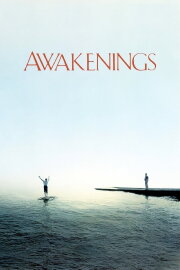
1969. Dr. Malcolm Sayer is hired as a clinical physician at a local hospital in the Bronx, despite he only having a research background. The job is not ideal on his side as he has difficulties relating to people which is the reason he has focused on research projects not involving human subjects, while the hospital hires him somewhat out of desperation in not finding anyone else with the qualifications who wants the job. Most of his patients are in a semi-catatonic state and ... (Full plot summary below)
FREE with your Prime (USA) subscription or when you start a 30-day free trial!
| Movie Source | Available | Offers | Added | Views | Quality | Format | Rating | Link | Share |
|---|---|---|---|---|---|---|---|---|---|
 | UK only | 1 Month Free Trial | 18 Jul 2014 | 2899 | HD | Watch OnlineStream Instantly | 72% |  Report: Broken Link Report: Broken Link |   |
| USA only | 1 Month Free Trial | 23 Jan 2022 | 4051 | HD | Watch OnlineStream Instantly | 84% | Report: Broken Link | |
| IRELAND only | 1 Month Free Trial | 15 Dec 2019 | 5655 | HD | Watch OnlineStream Instantly | 74% | Report: Broken Link | |
 | UK only | 30 Day Free Trial | 05 Feb 2025 | 863 | HD | Watch OnlineStream Instantly | 78% | Report: Broken Link | |
![Its HD [Awakenings]](/images/logos/icons/itshd.png) | WORLDWIDE | ? | 11 Oct 2018 | 3328 | HD | Watch OnlineStream Instantly | 87% | Report: Broken Link | |
 | UK only | 30 Day Free Trial | 24 Jun 2025 | 775 | HD | Watch OnlineStream Instantly | 60% | Report: Broken Link | |
 | UK only | Free Credit | 05 Apr 2023 | 149 | HD | Watch OnlineStream Instantly | 40% | Report: Broken Link | |
 | WORLDWIDE | ? | 26 May 2020 | 137 | HD | Watch OnlineStream Instantly | 27% | Report: Broken Link | |
 | WORLDWIDE | ? | 01 Oct 2018 | 24 | SD / TV | Watch OnlineStream Instantly | 12% | Report: Broken Link | |
 | WORLDWIDE | ? | 02 Oct 2020 | 268 | HD | Watch OnlineStream Instantly | 20% | Report: Broken Link | |
 | WORLDWIDE | ? | 06 Sep 2021 | 35 | SD / TV | Watch OnlineStream Instantly | 12% | Report: Broken Link | |
Links compiled using automated software. Availability of offers subject to change / might be region specific / out of date.
| Movie Source | Available | Offers | Added | Views | Quality | Format | Rating | Link | Share |
|---|---|---|---|---|---|---|---|---|---|
| UK only | 30 Day Free Trial | 30 Jun 2016 | 664 | SD / DVD | DVD RentalRent by Post | 73% |  Report: Broken Link Report: Broken Link | |
 | UK only | N/A | 30 Jun 2016 | 54 | SD / DVD | DVD RentalRent by Post | 16% | Report: Broken Link | |
 | USA only | 1 Month Free Trial | 30 Jun 2016 | 85 | SD / DVD | DVD RentalRent by Mail | 5% | Report: Broken Link | |
| USA only | 1 Month Free Trial | 30 Jun 2016 | 11251 | SD / DVD | DVD RentalRent by Mail | 77% | Report: Broken Link | |
| Movie Source | Available | Offers | Added | Views | Quality | Format | Rating | Link | Share |
|---|---|---|---|---|---|---|---|---|---|
| UK only | 30 Day Free Trial | 23 Jul 2014 | 151 | HD / BR | Blu Ray RentalRent by Post | 73% | Report: Broken Link | |
| UK only | N/A | 23 Jul 2014 | 44 | HD / BR | Blu Ray RentalRent by Post | 27% | Report: Broken Link | |
| USA only | 1 Month Free Trial | 30 Jun 2016 | 178 | HD / BR | Blu Ray RentalRent by Mail | 6% | Report: Broken Link | |
| USA only | 1 Month Free Trial | 23 Jul 2014 | 3610 | HD / BR | Blu Ray RentalRent by Mail | 95% | Report: Broken Link | |
1969. Dr. Malcolm Sayer is hired as a clinical physician at a local hospital in the Bronx, despite he only having a research background. The job is not ideal on his side as he has difficulties relating to people which is the reason he has focused on research projects not involving human subjects, while the hospital hires him somewhat out of desperation in not finding anyone else with the qualifications who wants the job. Most of his patients are in a semi-catatonic state and are housed in what some of the orderlies coin the "garden" ward, where all they can do for the patients is water and feed them. He notices that some of the patients, despite their generally catatonic state, respond in unusual ways to certain stimuli. In doing some research, he also finds that some common bonds between these patients are that they suffered from encephalitis in the 1920s or 1930s, and that their physical states are like they have Parkinson's disease frozen in time. As such, he is able to convince, albeit reluctantly, his skeptical boss, Dr. Kaufman, to administer an expensive experimental drug therapy on only one patient with family consent. That patient is forty-one year old Leonard Lowe, who has been in his current state since he was eleven years old, and who has been supported by his loving mother through all these years. As the drug therapy "awakens" Leonard, there are several issues that come into play. Malcolm has to try and convince Kaufman and the hospital administration to extend the therapy to the other patients. Despite not knowing the long term effects, Leonard, who was aware of his surroundings through his catatonic state, may have mixed emotions about his situation, wanting both to be treated as human being and an experiment guinea pig to ensure that what is happening benefits him and others in the long run. Mrs. Lowe may be unprepared for the new Leonard, she expecting who she remembers as a sweet eleven year old boy. Through all these issues, what may be the most illuminating issue for Malcolm is the need to stimulate the human spirit, including his own in dealing with people around him.
Leave your thoughts about Awakenings.
| Chicago Sun-TimesRoger EbertAfter seeing Awakenings, I read it, to know more about what happened in that Bronx hospital. What both the movie and the book convey is the immense courage of the patients and the profound experience of their doctors, as in a small way they reexperienced what it means to be born, to open your eyes and discover to your astonishment that "you" are alive. |
| Seattle Post-IntelligencerWilliam ArnoldMarshall masterfully plays our strings without becoming either melodramatic or maudlin. Like Brian De Palma's "Bonfire of the Vanities," hers is an adaptation that ends with a wake-up call, only here it's done successfully and in context. |
| Boston GlobeJay CarrAnd so even if you're held (as I was) by the acting, you may find yourself fighting the film's design. It reflects a certain lack of faith in your audience to take a performance as authentic as De Niro's and reduce it to the level of a glorified reach-out-and-touch-someone commercial. |
| QuickflixSimon Miraudoa curiously-underloved film... Awakenings will get a re-evaluation in the wake of Williams' passing, and that's great. It's just a tragedy it took a tragedy to precipitate it. |
| MovieholeClint MorrisTour-de-force performances and one memorable storyline |
| Common Sense MediaNell MinowNonfunny Robin Williams role in moving story. |
| FulvueDrive-in.comChuck O'LearyA beautifully moving, life-affirming true story. |
| TimeRichard CorlissBut the material is still powerful, and the offbeat story of the patients remains both engrossing and moving even after all this abridgment. |
| Washington PostDesson HoweKnee-jerk tears aside, there's nothing tremendously special. It's very watchable, but it doesn't stand out. Which is not to say the film is badly done; it's just decently done. |
| The New RepublicStanley KauffmannWilliams gives his best "straight" performance, shorn of all his marvelous manic vaudeville. The man he plays here is not a performer, which he was even in Dead Poets Society, but simply a man. |