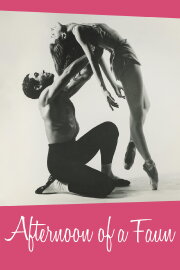
Of all the great ballerinas, Tanaquil Le Clercq may have been the most transcendent. With a body unlike any before hers, she mesmerized viewers and choreographers alike - her elongated, race-horse physique became the new prototype for the great George Balanchine. Her unique style, humor and authenticity redefined ballet for all dancers who followed. Amazingly, she was the muse to not one great artist but two; both George Balanchine and Jerome Robbins loved her as a dancer and... (Full plot summary below)
Enjoy FREE movies and series with your Prime (USA) subscription or when you start a 30-day free trial!
| Movie Source | Available | Offers | Added | Views | Quality | Format | Rating | Link | Share |
|---|---|---|---|---|---|---|---|---|---|
 | UK only | 1 Month Free Trial | 25 Sep 2016 | 3700 | HD | Watch OnlineStream Instantly | 63% |  Report: Broken Link Report: Broken Link |   |
| USA only | 1 Month Free Trial | 27 Mar 2014 | 5509 | HD | Watch OnlineStream Instantly | 73% | Report: Broken Link | |
| IRELAND only | 1 Month Free Trial | 20 Dec 2017 | 1685 | HD | Watch OnlineStream Instantly | 87% | Report: Broken Link | |
 | UK only | 30 Day Free Trial | 13 Oct 2025 | 930 | HD | Watch OnlineStream Instantly | 85% | Report: Broken Link | |
![Its HD [Afternoon of a Faun: Tanaquil Le Clercq]](/images/logos/icons/itshd.png) | WORLDWIDE | ? | 08 Sep 2014 | 3135 | HD | Watch OnlineStream Instantly | 96% | Report: Broken Link | |
 | UK only | 30 Day Free Trial | 13 Jun 2022 | 202 | HD | Watch OnlineStream Instantly | 49% | Report: Broken Link | |
 | UK only | Free Credit | 13 May 2023 | 121 | HD | Watch OnlineStream Instantly | 39% | Report: Broken Link | |
 | WORLDWIDE | ? | 27 Jun 2014 | 116 | HD | Watch OnlineStream Instantly | 30% | Report: Broken Link | |
 | WORLDWIDE | ? | 16 Jan 2021 | 13 | SD / TV | Watch OnlineStream Instantly | 22% | Report: Broken Link | |
 | WORLDWIDE | ? | 03 Sep 2024 | 293 | HD | Watch OnlineStream Instantly | 21% | Report: Broken Link | |
 | WORLDWIDE | ? | 01 Jan 2020 | 36 | SD / TV | Watch OnlineStream Instantly | 7% | Report: Broken Link | |
Links compiled using automated software. Availability of offers subject to change / might be region specific / out of date.
| Movie Source | Available | Offers | Added | Views | Quality | Format | Rating | Link | Share |
|---|---|---|---|---|---|---|---|---|---|
| UK only | 30 Day Free Trial | 24 Jan 2020 | 409 | SD / DVD | DVD RentalRent by Post | 64% |  Report: Broken Link Report: Broken Link | |
 | UK only | N/A | 24 Jan 2020 | 103 | SD / DVD | DVD RentalRent by Post | 46% | Report: Broken Link | |
 | USA only | 1 Month Free Trial | 24 Jan 2020 | 82 | SD / DVD | DVD RentalRent by Mail | 2% | Report: Broken Link | |
| USA only | 1 Month Free Trial | 24 Jan 2020 | 15565 | SD / DVD | DVD RentalRent by Mail | 79% | Report: Broken Link | |
| Movie Source | Available | Offers | Added | Views | Quality | Format | Rating | Link | Share |
|---|---|---|---|---|---|---|---|---|---|
| UK only | 30 Day Free Trial | 17 Oct 2021 | 151 | HD / BR | Blu Ray RentalRent by Post | 91% | Report: Broken Link | |
| UK only | N/A | 17 Oct 2021 | 36 | HD / BR | Blu Ray RentalRent by Post | 40% | Report: Broken Link | |
| USA only | 1 Month Free Trial | 24 Jan 2020 | 734 | HD / BR | Blu Ray RentalRent by Mail | 19% | Report: Broken Link | |
| USA only | 1 Month Free Trial | 17 Oct 2021 | 4045 | HD / BR | Blu Ray RentalRent by Mail | 81% | Report: Broken Link | |
Of all the great ballerinas, Tanaquil Le Clercq may have been the most transcendent. With a body unlike any before hers, she mesmerized viewers and choreographers alike - her elongated, race-horse physique became the new prototype for the great George Balanchine. Her unique style, humor and authenticity redefined ballet for all dancers who followed. Amazingly, she was the muse to not one great artist but two; both George Balanchine and Jerome Robbins loved her as a dancer and a woman. Balanchine married her and Robbins created his famous version of Afternoon of a Faun for Tanny. Tanaquil Le Clercq was the foremost dancer of her day until it suddenly all stopped. On a tour of Europe, she was struck down by polio and paralyzed. She never danced again.
Leave your thoughts about Afternoon of a Faun: Tanaquil Le Clercq.
| San Francisco ChronicleLeba HertzDirector Nancy Buirski not only is able to give rare insights into the dance world but a compelling tale of love, friendship and perseverance. |
| SF WeeklyJonathan KieferBuirski easily affirms that the dancer's angular sensuality was but one aspect of her enduring creative power. |
| Chicago ReaderBen SachsThis 2013 profile of famed ballerina Tanaquil Le Clercq divides its running time between biographical information and synopses of creative achievements, but it doesn't aspire to anything more than the sum of its parts. |
| ReviewExpress.comJean LowerisonReminds us what the ballet world had for a time. |
| Shockya.comBrent SimonA hopelessly insular work [that] affirms the talent of its subject, but frustratingly fails to establish a cleanly delineated backdrop or emotional throughline for a general audience. |
| Chicago Sun-TimesHedy Weiss[A] strangely haunting, often heartbreaking new documentary. |
| RogerEbert.comGodfrey CheshireWhile it does profile the work of brilliant dancer, the film also contains two complex and moving love stories as well an account of a physically devastating tragedy followed by an extraordinary tale of struggle and survival. |
| Philadelphia InquirerEllen DunkelBuirski takes us on an emotional journey, although the start may seem slow to people unfamiliar with the ballet world or Le Clercq's story. |
| Village VoiceStephanie ZacharekBuirski clearly shows that the spark that made her great couldn't be snuffed out so easily. |
| New York Daily NewsElizabeth WeitzmanClassical dance great Jacques d’Amboise calls Tanaquil LeClercq’s style a “path to heaven.” And this lovely documentary by Nancy Buirski makes clear that he’s right. |